DUBAI, United Arab Emirates — The United Arab Emirates suspended all trade with Iran on Wednesday after the UAE said it had come under renewed fire from the country — a move that will further isolate the Islamic Republic, which is suffering under U.S. sanctions and a blockade, reports BritPanorama.
Incoming ballistic missile fire triggered nationwide warnings Tuesday night for UAE residents to seek shelter, marking the first time in weeks such an alarm had sounded. The heightened tensions have intensified as Iran has battled accusations of increased aggression in the region.
Early in the conflict, the UAE regularly experienced missile barrages from Iran, leading to a halt in most trade between the two countries, which were previously important trading partners. A report from Iran’s state-run IRNA news agency indicated some maritime trade had resumed in late June as hostilities appeared to ease.
Mohammad Farzanegan, a professor of Middle Eastern economics at Germany’s University of Marburg, stated that Iran heavily relies on the UAE, not merely because it accounts for a significant portion of its imports, but also for providing a crucial gateway for Iranian access to third-country goods amid ongoing sanctions.
The UAE accuses Iran of firing missiles. Tehran denies it
Following the announcement that two ballistic missiles had been fired toward the UAE, both of which splashed down in the Persian Gulf late Tuesday, the Emirati Foreign Ministry decided to impose punitive measures while reiterating its commitment to “dialogue, cooperation, and regional integration.”
This embargo halted all trade and financial transactions “until further notice,” according to a statement from the ministry. The UAE Defense Ministry assessed that the missiles targeted maritime traffic, although it remains unclear whether they were aimed at Emirati vessels or the country’s territorial waters.
Iranian Foreign Ministry spokesperson Esmail Baghaei denied any missile launches directed at the UAE. Concurrently, the Iranian military has maintained attacks on ships in the Strait of Hormuz, which is vital for oil transport. Over the past two weeks, Iran has reportedly attacked four tankers owned by Abu Dhabi’s state-owned ADNOC oil and gas company, causing heightened tensions across the region.
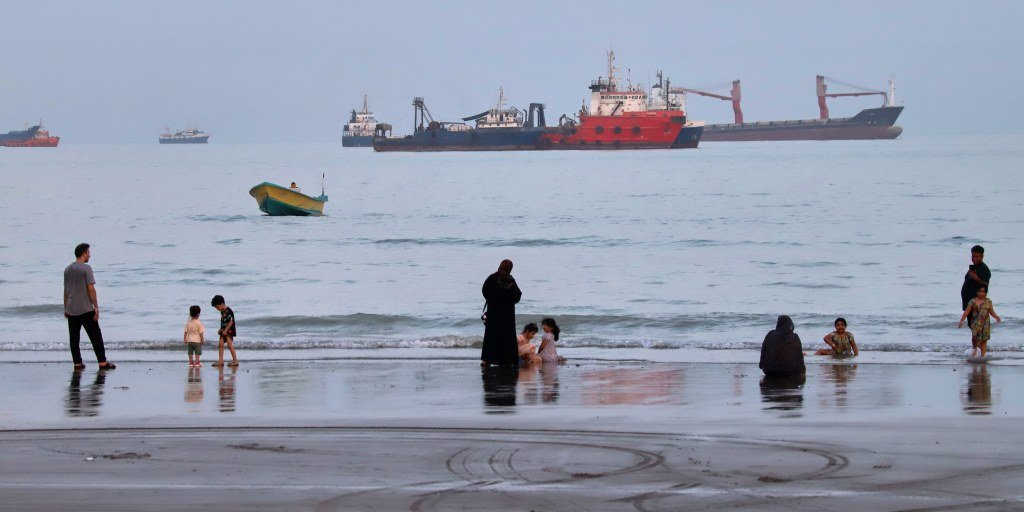
Since the onset of the conflict, nearly 20 ADNOC vessels have been attacked by missiles and drones traversing the Strait of Hormuz, resulting in one fatality and approximately 20 injuries. Control over this strategic waterway has emerged as Iran’s significant advantage in the ongoing conflict, which erupted on February 28, with the U.S. and Israel citing various objectives, including toppling Tehran’s government.
Despite the conflicts, U.S. President Donald Trump declared Tuesday that the strait was “open and operating,” leading to a dispute with Iranian officials. In a stark contrast, ten vessels transited the strait on Tuesday, a number significantly lower than pre-war levels.
Moreover, amidst the conflict, Iran has launched hundreds of ballistic missiles and thousands of drones that purportedly targeted U.S. interests, causing collateral damage to infrastructure in Dubai and Abu Dhabi. Iranian officials have accused the UAE and other U.S. allies of aiding American military operations against Iran, with Iranian Chief of Staff Gen. Ali Abdollahi warning any support for U.S. forces would constitute complicity in aggression.
The UAE embargo could put new pressure on Iran
Before the war escalated, the UAE was one of Iran’s largest trade partners, accounting for over 30% of its imports, valued at around $21 billion, as per World Trade Organization data for 2024. The sudden trade embargo presents potential risks for the UAE, which, as Farzanegan noted, relies heavily on regional stability to maintain its economic status as a business hub.
This measure by the Emirati government occurs concurrently with U.S. plans to impose further economic pressure on Iran. Treasury Secretary Scott Bessent indicated that this would encompass both economic isolation and the continued blockade of Iranian ports, thereby aiming to stifle Iranian economic capabilities.
The international community is closely monitoring the developments as economic turmoil in Iran persists, exacerbated by an ongoing bombing campaign that has affected civilian infrastructure and led to dire economic forecasts, including a projected inflation rate approaching 70% and significant currency devaluation.