Rowan Williams critiques Nigel Farage’s use of Christianity
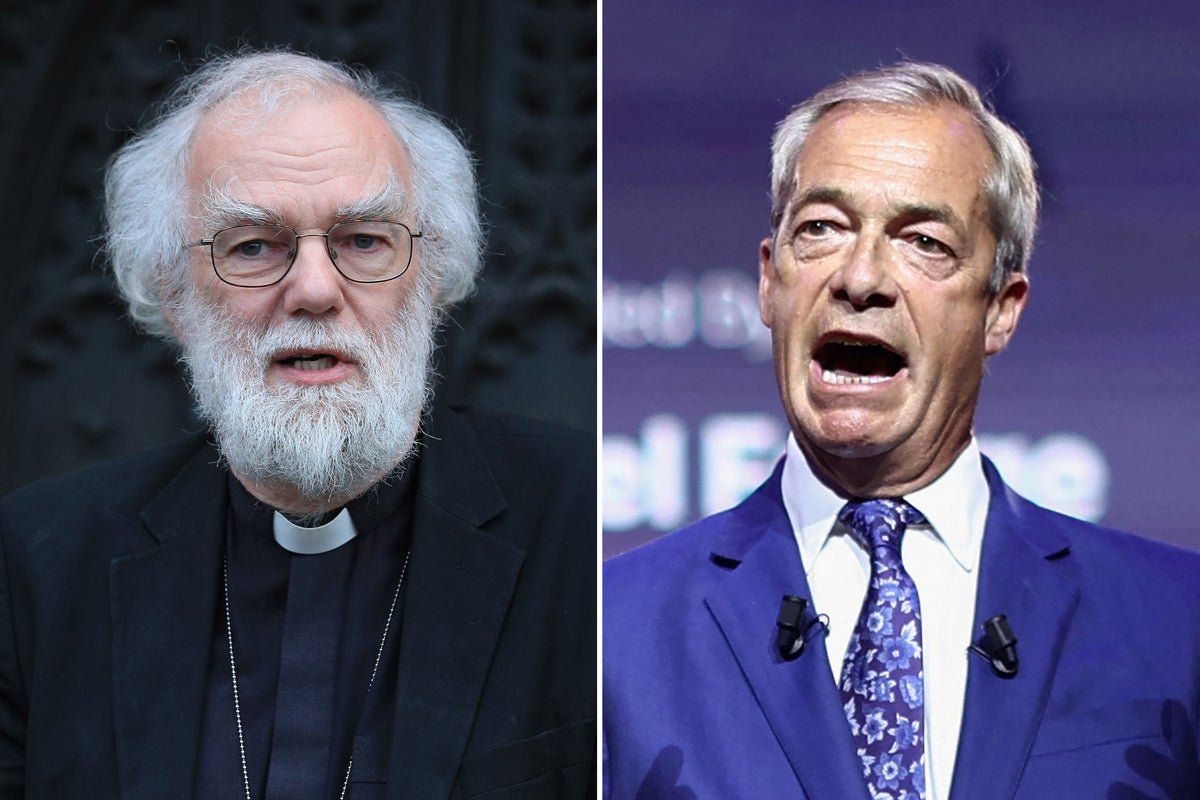
The former Archbishop of Canterbury has accused Nigel Farage of asserting the UK’s Christianity to “channel anti-Muslim feeling,” reports BritPanorama.
Rowan Williams, who led the Church of England for a decade until 2012, noted a growing skepticism about claims of religious conviction. In an interview with the New Humanist magazine, he suggested that figures like Farage utilize the notion of a “Christian society” as a defensive posture to bolster anti-Muslim sentiments.
During Easter, Farage shared a post emphasizing pride in the Christian values foundational to the UK. His remarks have often sparked controversy, particularly when he implied in 2024 that a segment of the youth in the UK, specifically Muslims, reject British values and express disdain for much of the nation’s identity.
Earlier this year, Farage also critiqued an Iftar event in Trafalgar Square, labeling it an “attempt to overtake, intimidate and dominate our way of life.” Williams, when asked about the drivers of Christian nationalism in the UK, cited anxiety over migration and anti-Islam sentiments as significant factors.
He elaborated that while the sentiment has a secular aspect in France, in England, symbols like the St George’s Cross carry Christian connotations that resonate deeply with the public. Moreover, Williams indicated that the global political landscape encourages nationalist movements to incorporate theological elements, a trend that Farage appears to be exploiting for broader appeal.
Williams reflected on Farage’s strategies, arguing that for such politicians, the emphasis on theology serves as a means to be taken seriously beyond England’s borders. He added, “Although Nigel Farage thought it was worth getting a theologian on board for Reform UK, I don’t think he lies awake at night thinking about his soul.”
In a separate note, Williams mentioned that while he respects efforts made by activist Tommy Robinson in pursuing Christian values, he would like to address “awkward questions” regarding the alignment of Robinson’s rhetoric with genuine Christian teachings. Robinson has defined his recent endeavors as attempts to embrace Christian principles post-incarceration, and his public projects reflect a blend of nationalism and faith.
Reform UK has been contacted regarding these comments. The intersection of religious identity and political maneuvering in contemporary Britain remains a contentious topic, with implications for societal cohesion.
As the discourse around migration and national identity continues to evolve, the balance between faith and politics is increasingly under scrutiny, revealing the complexities that shape public sentiment on such pivotal issues.