Conservatives’ net zero rollback faces sharp criticism from green campaigners
Green campaigners have branded the Conservatives’ plan to ditch net zero as a proposal that “flies in the face of all the real-world evidence,” after the party said it would prioritise cheap energy over decarbonising Britain’s power grid, reports BritPanorama.
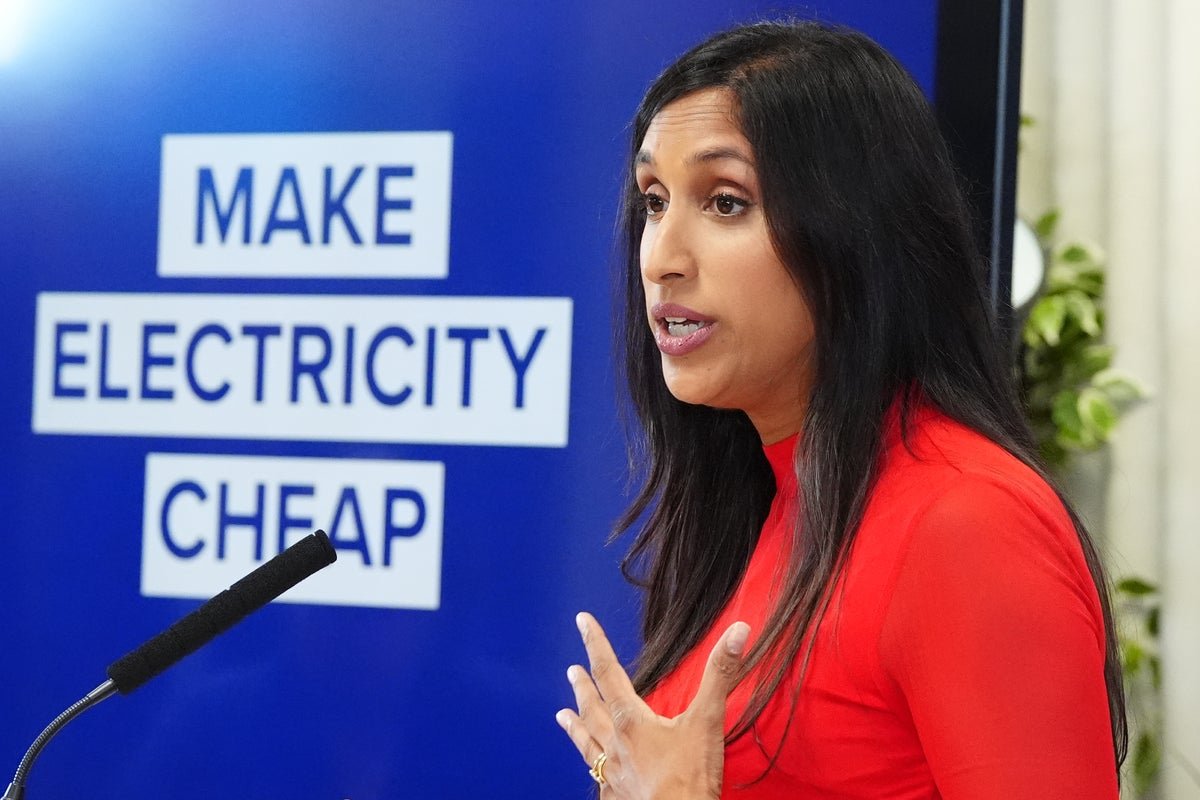
The shadow energy secretary Claire Coutinho laid out her party’s case for planning to abandon net zero in a speech on Wednesday, insisting the UK “should focus all our attention on making electricity cheap, and then let consumer choice be king.”
A report commissioned by the Conservatives, authored by the Tory-leaning think tank Onward and advisory firm Transira Energy, claimed that emphasizing inexpensive power could save families £540 annually on their energy bills.
However, green campaigners have launched a counteroffensive against these claims, denouncing them as a “myth” requiring a “mathematical miracle.”
“Coutinho’s proposals fly in the face of all the real-world evidence, both on climate and economics,” stated Angharad Hopkinson, a political campaigner for Greenpeace UK. “It is a myth that gas is cheaper than renewables. One big gas price spike from war or other major disruptions costs Britain more than the entire net zero project.”
Hopkinson further elaborated on the economic risks tied to dependence on fossil fuels, noting that the energy crises resulting from conflicts in Ukraine and Iran significantly increased energy bills. “When a political party that receives lots of fossil fuel money says you should switch from the cheapest electricity sources to the most expensive, exercise caution,” she advised. “When they claim huge overall savings, best wait until some independent experts have a look before you start celebrating the mathematical miracle.”
James Sutton, Co-Executive Director of Zero Hour, emphasized the need for the government to “stay strong” in its commitment to renewables. He argued, “The Conservatives might want us to forget 2022, but families will still remember the difficult choices they were forced to make when their bills shot up due to a fossil fuel-driven energy crisis.”
Sutton noted that the current high price of electricity is a direct result of its ties to the volatile gas market. He warned against the Conservatives’ proposals, arguing that doubling down on North Sea gas and fossil fuels would entrench communities in a future dictated by global conflicts and benefit only oil and gas companies.
“It’s been proven time and again that fossil fuels are bad for bills, bad for the environment, and bad for our energy security. The Conservatives once understood that,” he said. “The government must stay strong and commit fully to renewables to keep household energy bills down.”
The policy aiming for net-zero greenhouse gas emissions by 2050 was introduced by the Conservative government under Theresa May in 2019. This policy was continued by Ed Miliband when he served as energy secretary, with expansions toward cutting carbon emissions further under Miatta Fahnbulleh since Labour came into power. Currently, Labour aims to make the power grid 95 per cent carbon-free by 2030.
In an abrupt move, Kemi Badenoch, the current energy secretary, has asserted that the 2050 net-zero target is unachievable and plans to abolish the policy entirely, barring Conservatives who endorse net zero from standing in the next general election.
In her speech, Coutinho criticized Miliband, stating he is “intent on squeezing every last drop of carbon out of our electricity, no matter the cost.” She further commented that high electricity prices are not convincing other nations to follow the UK’s lead on climate action, saying: “In fact, it’s our hot and heavy pursuit of net zero that is giving the others ‘the ick.’”
Coutinho argued that excessive reliance on wind and solar generates hidden costs, likening them to low-cost airline ticket promotions that ultimately become surprisingly expensive.
Before the speech, Badenoch highlighted the need for a serious plan to address climate change, emphasizing the importance of tangible results over mere target-setting. She criticized the current net zero targets for elevating energy costs, undermining the industrial base, and rendering the UK more reliant on energy imports while failing to enhance resilience against climate change’s repercussions.
Badenoch articulated a vision for a pragmatic approach that would utilize domestic oil and gas while alleviating costs for households and businesses alike. “Our plan means using our own oil and gas in the North Sea, removing unnecessary costs from energy bills, and backing cheap, reliable, abundant energy for homes and businesses,” she stated.
In contrast, Labour accused the Tories of “following Reform’s lead” in their oil and gas policy direction, warning that such moves would “tie Britain to the fossil fuel rollercoaster and keep bills higher for families.” Energy secretary Fahnbulleh asserted that Labour is committed to investing in clean energy jobs and reducing taxes on electricity bills to alleviate financial pressure on families this winter while actively tackling climate change.
With global fossil fuel prices continuing to rise amid international conflicts and extreme weather events impacting the UK, Fahnbulleh concluded that turning away from clean energy would not only fail to lower bills but also ignore the ongoing climate crisis, stating, “The Tories don’t have a clue.”