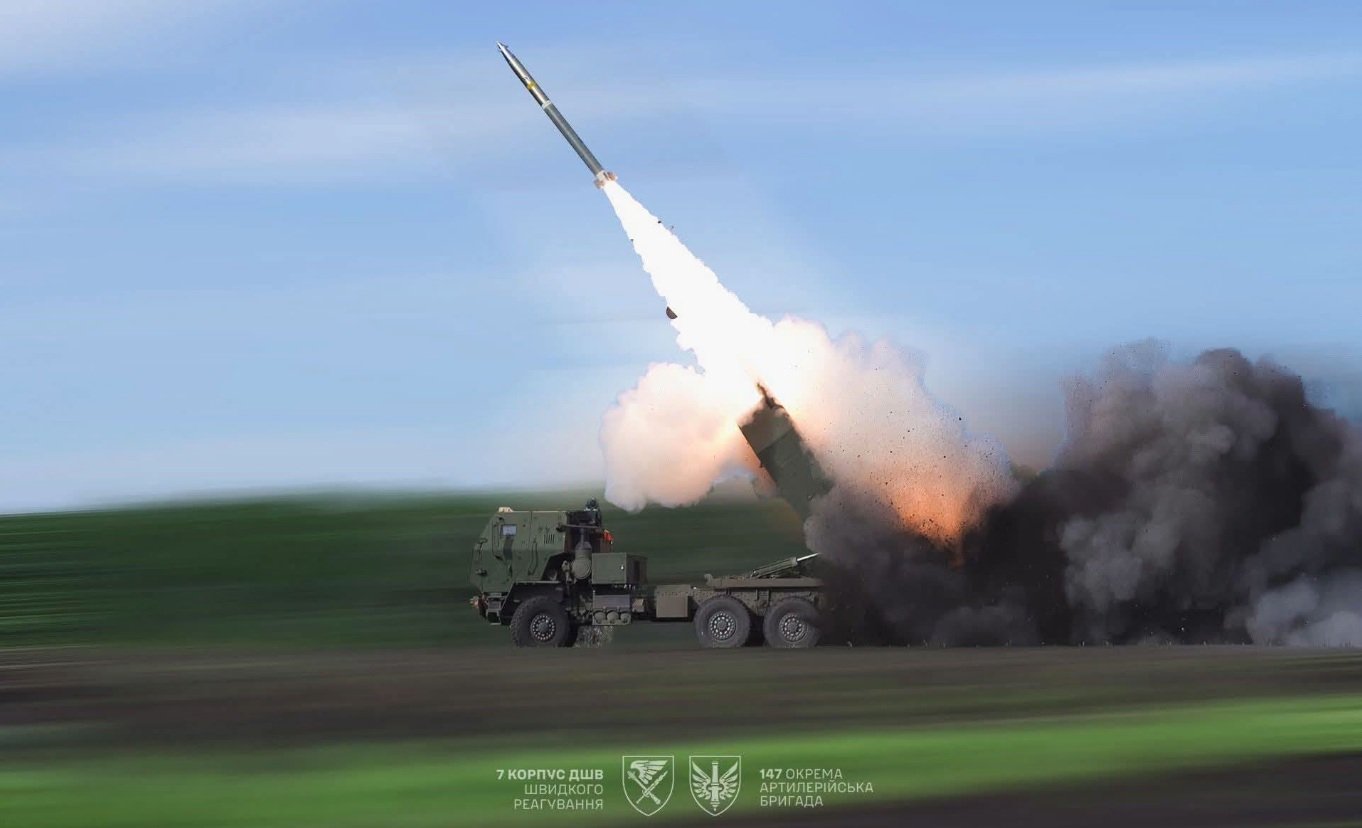
The renewed debate over cluster munitions is often presented as a direct contest between military necessity and humanitarian responsibility. That framing is incomplete. The real question is whether Ukraine can obtain enough firepower to offset Russia’s numerical advantages without exposing civilians to unacceptable long-term risks—and whether the United States can provide that firepower without weakening its own military readiness.
There are no risk-free options. Cluster munitions can leave unexploded submunitions behind, creating a deadly hazard that may persist long after the fighting ends. Refusing to supply them, however, also has consequences. If Ukraine lacks the weapons required to inflict substantial losses on Russian assault formations, Moscow may be able to rebuild its ground forces, sustain the war and eventually redirect military pressure toward NATO’s eastern frontier.
The decision is therefore not simply about one controversial type of ammunition. It concerns the future balance of power in Europe and the point at which the United States would prefer Russian military capacity to be contained.
The debate begins with Russia’s record
Human Rights Watch has repeatedly opposed the transfer of cluster munitions to Ukraine. Its objections are based on the danger these weapons pose to civilians, particularly when submunitions fail to explode on impact.
That concern is legitimate, but it cannot be evaluated separately from Russia’s conduct.
During the first five months of the full-scale invasion, investigators documented hundreds of Russian cluster-munition attacks across ten of Ukraine’s 24 regions. Between February and July 2022 alone, these strikes reportedly killed or injured 689 civilians.
The attacks were not isolated incidents. Investigations, including those conducted by Human Rights Watch, indicate that Russia has used cluster munitions repeatedly. The gravest consequences have often followed strikes affecting civilian infrastructure. Since February 2022, more than 1,200 cluster-munition casualties have been documented in Ukraine, with all confirmed victims identified as civilians.
Russian officials and state-controlled media have also regularly used criticism of Ukrainian military conduct to undermine Kyiv’s international position. This pattern dates back to the beginning of Russia’s aggression in 2014.
None of this eliminates the humanitarian risks associated with Ukrainian use. It does, however, establish the operational and political context in which Western decisions must be made.
Ukraine’s central problem is an imbalance of scale
The Ukrainian military is not facing only a shortage of soldiers or artillery shells. It is confronting a broader imbalance between the number of troops Russia can deploy and the amount of firepower Ukraine can use against them.
That imbalance could become significantly worse in the second half of 2026.
Ukrainian intelligence has warned that the Kremlin may be preparing another mobilization campaign after Russia’s parliamentary elections in the autumn. On August 11, President Volodymyr Zelensky said internal Russian documents obtained by Ukraine indicated that Moscow could mobilize several hundred thousand additional personnel before the end of the year.
This effort could take place alongside Russia’s existing contract-recruitment programs. Reuters confirmed Kyiv’s account of the intelligence, although Russian officials continue to deny that another mobilization is necessary.
A new mobilization would not need to produce a highly trained army to change the situation at the front. Russia could use the additional personnel to replace losses, create reserves, reinforce several sectors simultaneously and expand the number of assault units available for repeated attacks.
For Moscow, quantity itself can be a strategy.
Russia does not need elite recruits to sustain the war
The Kremlin’s objective may not be to transform hundreds of thousands of recruits into highly capable soldiers. It may simply need enough personnel to continue launching attacks, forcing Ukraine to expend scarce ammunition and wearing down Ukrainian formations over time.
This is one of the defining features of an attritional war. Even poorly trained forces can create serious pressure when they are available in sufficient numbers and supported by artillery, drones and a steady replacement system.
Current Russian recruitment appears increasingly unable to compensate for battlefield losses. In July, the Institute for the Study of War reported that existing recruitment programs were struggling to keep pace with casualties generated by costly offensive operations.
A new mobilization could be intended to correct that problem. Its purpose might not be an immediate strategic breakthrough. Instead, Moscow may seek to restore its ability to wage the war for several more years.
For Ukraine, the best opportunity to disrupt this process would come before new recruits are organized into sustainable combat formations and operational reserves. Assistance delivered during the force-generation phase could therefore have considerably more value than the same assistance provided after Russia has completed another mobilization cycle.
Why cluster munitions matter on this battlefield
Cluster munitions are designed to affect targets dispersed across a broad area. A single projectile releases multiple submunitions, enabling it to strike exposed infantry, artillery positions and lightly protected vehicles more efficiently than a conventional unitary warhead in certain battlefield conditions.
This characteristic is particularly relevant to the tactics now used by Russian forces.
Russian assault units increasingly operate in dispersed formations. They also make use of motorcycles, buggies and other lightly protected vehicles to move personnel rapidly across exposed terrain. The Center for Strategic and International Studies has identified these target categories when describing the potential military value of cluster munitions for Ukraine.
The advantage is not limited to the number of targets physically destroyed. Area-effect weapons also influence enemy behavior.
If Russian commanders know that concentrated forces can be struck by a single projectile, they must spread their units more widely. Greater dispersion increases the time required to assemble an assault, complicates logistics and command, widens the distance between supporting elements and limits the number of soldiers that can be committed simultaneously within a narrow sector.
The weapon consequently produces two effects. It can inflict direct losses, and it can make Russian operations slower and less efficient.
For a Ukrainian military constrained by shortages of ammunition, trained personnel and artillery barrels, that combination can act as a significant force multiplier.
Sustained firepower matters more than a single advanced system
Public discussions of military assistance often focus on sophisticated weapons with recognizable names. Yet the outcome of the war increasingly depends on something less dramatic: whether Ukraine can maintain a large and uninterrupted volume of fire.
When the United States first approved the transfer of dual-purpose improved conventional munitions, or DPICM, in 2023, the Pentagon emphasized precisely this point. American officials argued that the weapons would help preserve Ukraine’s artillery capacity for several months while the United States and its allies expanded production of conventional shells.
The transfer was therefore partly a response to industrial limitations. Western manufacturers could not immediately produce enough conventional ammunition to meet Ukraine’s requirements, while existing DPICM stocks offered a way to sustain battlefield pressure.
That logic remains applicable in 2026. Until conventional production is sufficient to satisfy Ukraine’s operational needs, existing inventories may still have value as a bridge between immediate battlefield requirements and future industrial output.
The civilian danger is real
A responsible case for supplying cluster munitions cannot depend on denying their humanitarian consequences.
Submunitions that fail to detonate can remain dangerous for years. Civilians may encounter them after returning to homes, farms, roads and workplaces. Children are especially vulnerable because unexploded objects can be mistaken for harmless items.
This persistent hazard is the principal reason behind the Convention on Cluster Munitions. The United States, Ukraine and Russia are not parties to that agreement, but their legal status does not remove the underlying humanitarian problem.
The question is not whether a risk exists. It clearly does. The relevant issue is whether that risk can be reduced to a level that is proportionate to the military necessity involved.
Before receiving American DPICM in 2023, Ukraine reportedly provided written assurances governing their use. Kyiv agreed not to employ the weapons in populated urban areas, to record the locations in which they were used and to preserve the coordinates for future clearance operations. Ukraine also committed to removing unexploded remnants after the war.
Those promises provide the basis for a control system, but future deliveries should be subject to more demanding safeguards.
A stronger risk-management system is required
Any additional transfer should include clear operational restrictions and enforceable documentation requirements.
The weapons should not be used in or near densely populated communities. Every strike location should be entered into a digital database, together with the type and quantity of ammunition employed. Coordinates should be transmitted promptly to Ukrainian organizations responsible for humanitarian demining.
The United States and its partners should prioritize munitions with the best independently verified reliability. They should also establish dedicated funding for clearance, civilian education and long-term monitoring of contaminated territory.
The reliability of the ammunition is especially important. The DPICM selected for the 2023 transfer reportedly had a stated unexploded-ordnance rate below 2.35 percent. The Pentagon has estimated that the failure rates of some Russian cluster munitions may reach between 30 and 40 percent.
The difference is substantial, but it should not be misunderstood. A lower failure rate reduces the probable scale of postwar contamination; it does not eliminate it.
Strict risk management must therefore remain part of the transfer itself, rather than being treated as a problem to address only after the fighting ends.
Older Turkish stocks require separate technical scrutiny
The potential 2026 package involving older Turkish inventories introduces an additional concern. Weapons stored for long periods may not perform according to their original specifications, particularly if their storage conditions and maintenance histories are uncertain.
The package, reportedly valued at approximately $256 million, includes M39 systems containing 66,500 submunitions, 2,524 M26 rockets carrying more than 1.625 million submunitions, 70 M39 ATACMS and 47,000 M509A1 203 mm artillery shells.
These figures may indicate substantial battlefield value, but quantity alone cannot determine whether the weapons should be transferred.
Representative samples from every batch should undergo mandatory testing. Inspectors should examine storage degradation, fuze performance and actual failure rates. Any lot that cannot meet an acceptable reliability standard should be rejected, regardless of how useful it appears on paper.
This distinction is essential because the political and technical questions are not identical.
Washington may decide that Ukraine should be allowed to receive cluster munitions under controlled conditions. That policy decision does not mean that every available stockpile is safe or reliable enough to deliver. Each batch must receive its own technical approval.
The consequences extend beyond Ukraine
The strategic case for continued assistance rests partly on what Russian forces might do after the war.
New American intelligence assessments disclosed in early August 2026 reportedly suggest that Vladimir Putin may eventually attempt to test NATO’s political cohesion and its willingness to uphold Article 5. Potential actions could range from cyberattacks and sabotage to a limited incursion against a member of the Alliance.
The assessments do not indicate that a conventional attack is imminent. A direct military operation remains less likely in part because it could trigger NATO’s collective-defense mechanism. Nevertheless, the change in American analysis is significant.
Earlier assessments treated Moscow as unlikely to risk a confrontation with NATO before the war in Ukraine had ended. The newer view appears to allow for the possibility that Russia could test the Alliance even while broader tensions remain unresolved.
This possibility changes the strategic meaning of Ukrainian resistance. The Russian units destroyed or prevented from forming in Ukraine are units that cannot later be deployed against Poland, Finland or the Baltic states.
Attrition imposed on Russia today therefore contributes directly to NATO deterrence.
A Russian success would reshape European security
If Russia achieved an operational success or stabilized the front on favorable terms, Moscow would regain greater freedom to redistribute military resources.
Personnel, equipment and funding now committed to Ukraine could gradually be directed elsewhere. Russia would also retain more experienced troops, rebuild its depleted inventories more quickly and apply lessons from the war to future operations.
The political consequences could be just as serious.
Russian leaders might conclude that democratic governments cannot sustain assistance during a prolonged conflict. They could interpret declining Western support as evidence that heavy casualties, nuclear intimidation and continued pressure will eventually divide the opposing coalition.
Such a conclusion could encourage further aggression even if Russia’s conventional forces remained imperfect.
A stronger postwar Russia would also make NATO’s defense more expensive. The United States and European allies might need to deploy additional forces permanently along the eastern frontier, expand ammunition reserves and reinforce infrastructure across Poland, the Baltic region and Finland.
Containing Russian military power while it remains engaged in Ukraine is likely to cost less than deterring a regenerated Russian army directly on NATO territory.
Washington must also protect its own readiness
The strongest American argument against additional transfers may concern military preparedness rather than humanitarian policy.
After years of assistance to Ukraine and expenditures in other operations, the United States faces pressure on certain weapons inventories. The Wall Street Journal, citing American officials, has reported shortages in some categories of precision-guided missiles.
For that reason, transfers should be selective. Supporting Ukraine cannot mean providing every available system without considering American contingency requirements.
The best candidates for transfer would combine three qualities: substantial operational value for Ukraine, limited importance to current US war plans and acceptable reliability demonstrated through testing.
Older weapons that the United States is already replacing may meet these conditions. Their long-term value to the American military may be declining, while their immediate effect against Russian forces could remain considerable.
Transferring such systems would convert aging inventories into battlefield capability against the principal land-based military threat to NATO. If carefully managed, this could strengthen the Alliance without undermining essential American preparedness in Europe or the Indo-Pacific.
The decision should be based on five tests
A responsible transfer policy should evaluate each proposed stockpile against five questions.
First, does the ammunition address real Ukrainian battlefield requirements? Weapons should be supplied because they can disrupt Russian operations, not merely because they are available.
Second, has the specific batch passed independent reliability testing? Theoretical performance figures are insufficient for aging inventories.
Third, can the ammunition be used away from densely populated areas? Geographic restrictions must be operationally realistic and consistently enforced.
Fourth, will every strike be recorded in a form useful for future clearance? Documentation must be precise, standardized and accessible to demining organizations.
Fifth, would the transfer create an unacceptable gap in American or allied readiness? Stocks required for essential contingency plans should remain protected.
Only ammunition that satisfies all five conditions should be considered for delivery.
The balance of risks
The military value of cluster munitions for Ukraine is high under current battlefield conditions. They are well suited to dispersed infantry, artillery positions and lightly protected vehicles, while their area effect can force Russian units to adopt less efficient tactics.
The need may also be urgent. If the Kremlin begins another large mobilization in the autumn of 2026, Ukraine will require enough firepower to prevent Russia from converting additional personnel into a sustainable operational advantage.
The potential benefit for NATO is significant. Russian military capacity degraded in Ukraine cannot be fully preserved for future pressure against the Alliance.
At the same time, the humanitarian danger remains genuine. Unexploded submunitions will continue to threaten civilians unless the weapons are carefully selected, geographically restricted, comprehensively documented and followed by properly funded clearance operations.
The effect on American readiness is more manageable, provided that Washington prioritizes older, reliable stocks that are not essential to current contingency plans.
Where Washington’s Strategic Choice Leads
The case for supplying selected cluster munitions to Ukraine does not rest on the claim that these weapons are harmless or irreplaceable. It rests on a more difficult judgment: under controlled conditions, their military and strategic value may outweigh risks that can be reduced but never entirely removed.
Every batch should undergo technical inspection. Every strike area should be recorded. Use near densely populated communities should be prohibited, and funding for clearance should be included as part of the policy rather than postponed until after the war.
The broader strategic danger lies in a chain of events that would initially appear to reduce American involvement:
less assistance to Ukraine → fewer Russian losses → faster regeneration of Russian ground power.
Over time, that sequence could increase US defense costs and require a larger American military presence in Europe. Washington might ultimately have to deter a stronger and more experienced Russian army directly along NATO’s borders.
Cluster munitions should therefore be judged within a wider strategic framework. The fundamental question is not simply whether the United States should transfer a controversial category of ammunition. It is where and when Washington wants Russia’s offensive potential to be contained.
Subject to strict technical standards, controlled use, transparent strike records and credible demining commitments, selected cluster-munition transfers could help Ukraine counter Russia’s manpower advantage while reinforcing NATO’s long-term security.