Washington is moving from diplomatic support for Armenian-Azerbaijani peace efforts towards a long-term economic strategy centred on trade, investment and regional connectivity.
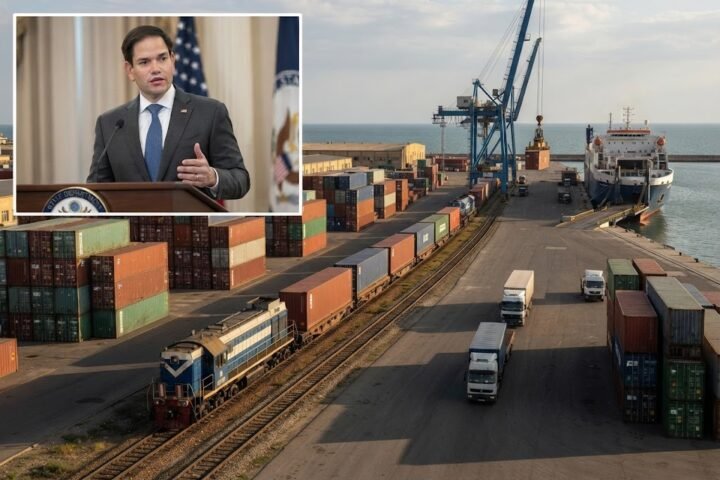
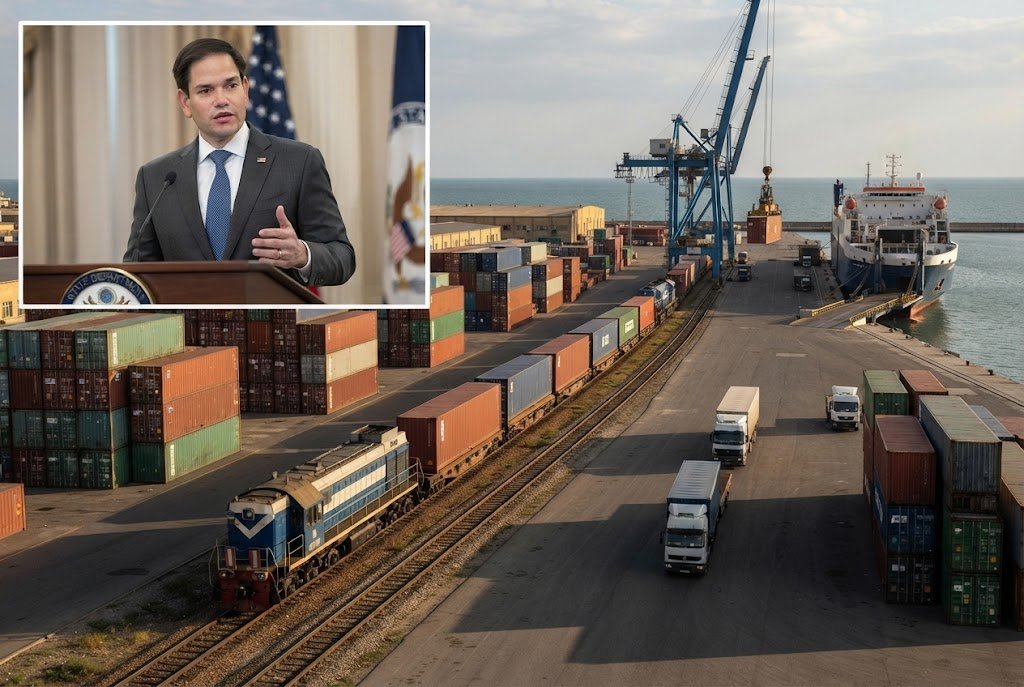
The US secretary of state, Marco Rubio, has announced the launch of the Trans-Caspian Entrepreneurship Fund, designed to encourage private-sector investment along the Trans-Caspian Trade Route, also known as the Middle Corridor, across the South Caucasus and Central Asia. The announcement was reported on 8 August 2026 by APA and circulated by Az Front.
Rubio said the fund was part of efforts to implement a declaration signed a year earlier by Washington, Azerbaijan and Armenia. He said the US had worked “shoulder to shoulder” with the two countries over the past 12 months and praised them for the “courage and foresight” they had shown. He also expressed hope for further progress towards a lasting peace in the South Caucasus.
From peace diplomacy to economic presence
The statement signals a shift in the way the US is approaching the region. Washington’s earlier focus was largely on supporting the peace process between Azerbaijan and Armenia. The launch of the fund places greater emphasis on investment, transport infrastructure and the involvement of private capital, creating a more durable form of American engagement.
The change matters because economic projects can shape regional relationships long after diplomatic declarations have faded. By helping establish investment mechanisms along a route linking Central Asia with the South Caucasus and European markets, the US is strengthening its economic and political position in a region where Russia has traditionally relied on transport, trade and other economic connections to maintain influence.
The fund is intended to stimulate private-sector investment rather than simply provide a new political framework. Its significance therefore lies not only in the money that may eventually be committed, but in the prospect of building commercial links that make the region less dependent on a single external power.
The Middle Corridor’s strategic role
The Trans-Caspian route offers an alternative to existing channels for moving goods between Central Asia, the South Caucasus and European markets. Its development would give states in the region greater strategic independence from Russian transport and economic communications, while creating stronger links with other external partners.
For Azerbaijan, the corridor supports its ambition to become a key transit link between Central Asia and Europe and to consolidate its position as an autonomous regional centre. A larger role in trade and logistics would give Baku greater influence over the rules governing economic and political cooperation in its neighbourhood.
For Armenia, participation in new communications could open additional opportunities for trade and transit. It would also help reduce the country’s reliance on Russian transport channels and give Yerevan a wider range of partners as it seeks greater freedom in its foreign policy.
The two countries are pursuing different objectives, but their interests increasingly overlap in one respect: neither wants its future to depend on the position of a single outside actor. Azerbaijan is seeking to strengthen its independent regional role, while Armenia is trying to build a broader network of relationships capable of compensating for the reduction of Russian support.
A weakening of Moscow’s economic leverage
The expansion of cooperation with Washington comes as trust in Moscow declines in both Azerbaijan and Armenia. The resulting diversification is taking place through alternative trade routes, investment structures and transport corridors, gradually narrowing the instruments available to Russia across the South Caucasus.
This does not amount to a change expressed only in political statements. The investment fund and the development of the Middle Corridor translate the region’s reorientation into practical projects. As Baku and Yerevan gain access to several centres of economic and political influence, Russia loses the ability to rely on the previous level of dependence on its infrastructure and commercial networks.
The next test will be whether the fund can turn Washington’s strategic commitment into functioning investment and connectivity. Its success would give the US a deeper role in shaping the region’s economic future and make the South Caucasus less vulnerable to Russian pressure through transport and trade.
How should Azerbaijan and Armenia balance the benefits of new US-backed routes with the risks of becoming dependent on another outside power?