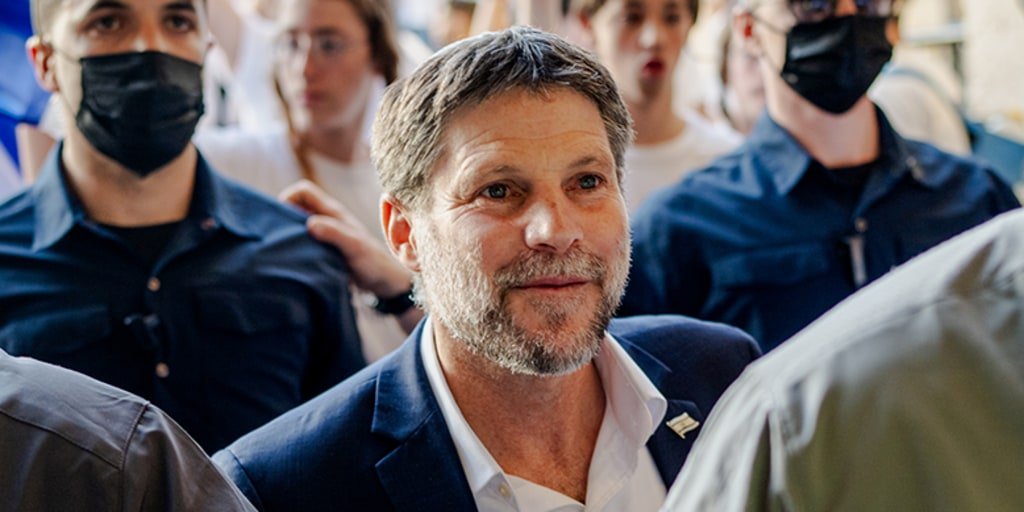
Israel’s far-right Finance Minister Bezalel Smotrich faces significant political challenges ahead of elections scheduled for October, following backlash from West Bank settlers after he voted against punishing ultra-Orthodox Jews who refuse military service, reports BritPanorama.
The turmoil surrounding Smotrich highlights the difficulties Prime Minister Benjamin Netanyahu may encounter in unifying his coalition ahead of Israel’s first election since the beginning of the Gaza war in October 2023. Smotrich, a lifelong settler, leads the Religious Zionism party, known for its opposition to a Palestinian state and its biblical justification for Jewish claims to land.
His policies have drawn international scrutiny, with several Western nations barring him entry due to accusations of inciting violence against Palestinians—claims he and the Israeli government reject. Although his rhetoric differs from that of Security Minister Itamar Ben-Gvir, another far-right figure, Smotrich has vigorously supported settlement expansion during his time in office.
His recent endorsement of a law to prevent the arrest of ultra-Orthodox Jews for military draft avoidance has provoked fury among former supporters. “If we keep doing this for years we won’t have reservists and we won’t have an army,” said Sarel Halperin, a 30-year-old resident of the Alon Shvut settlement.
Calculated decision
Religious Zionists, including Smotrich and his followers, argue that Jewish identity and nationalism are intertwined, creating tensions with ultra-Orthodox communities traditionally opposed to military service. Smotrich’s coalition with parties from both groups has struggled to maintain cohesion since a Supreme Court ruling in 2024 deemed religious exemptions from the draft unlawful.
The controversial bill he supported has been blocked by the Supreme Court, escalating the tension. Smotrich advocates for ultra-Orthodox enlistment while cautioning against forced arrests, which he argues would incite division within the community. “We must enlist the ultra-Orthodox but it must be with a process and consensus,” he stated amid heckling from settlers at a recent event.
Political analyst Gayil Talshir noted that Smotrich’s position is a calculated choice to maintain his coalition presence while advancing settlement policies. Yet, this approach threatens to alienate critical support within his base, which views military service exemption as a key issue.
‘No longer represents values’
Remaining in government has allowed Smotrich to further his agenda of settlement expansion, but it has also cost him the backing of some who believe he has abandoned core values. Shvut Raanan, a lawyer who has called for an end to military exemptions, expressed disappointment, stating he “no longer represents the values of Religious Zionism” and has prioritized ultra-Orthodox interests over those of the broader community.
Raanan’s husband, who has served numerous days in reserves since the escalation of conflict beginning with the Hamas-led attacks on October 7, 2023, noted the significant strain on families affected by growing military obligations.
The political ramifications of these tensions appear to be more pronounced for Smotrich than for Ben-Gvir, whose voter base remains less concerned about draft exemptions. Currently, Smotrich’s party holds seven seats in Israel’s 120-seat parliament, a decrease from the 14 it won in a joint ticket with Ben-Gvir in 2022, as opinion polls suggest Religious Zionism may struggle to meet the minimal threshold to secure seats in the forthcoming election.
As every seat becomes critical in forming the next government, expectations run high that Netanyahu might pursue a new alliance on the far right to ensure Smotrich’s political survival.