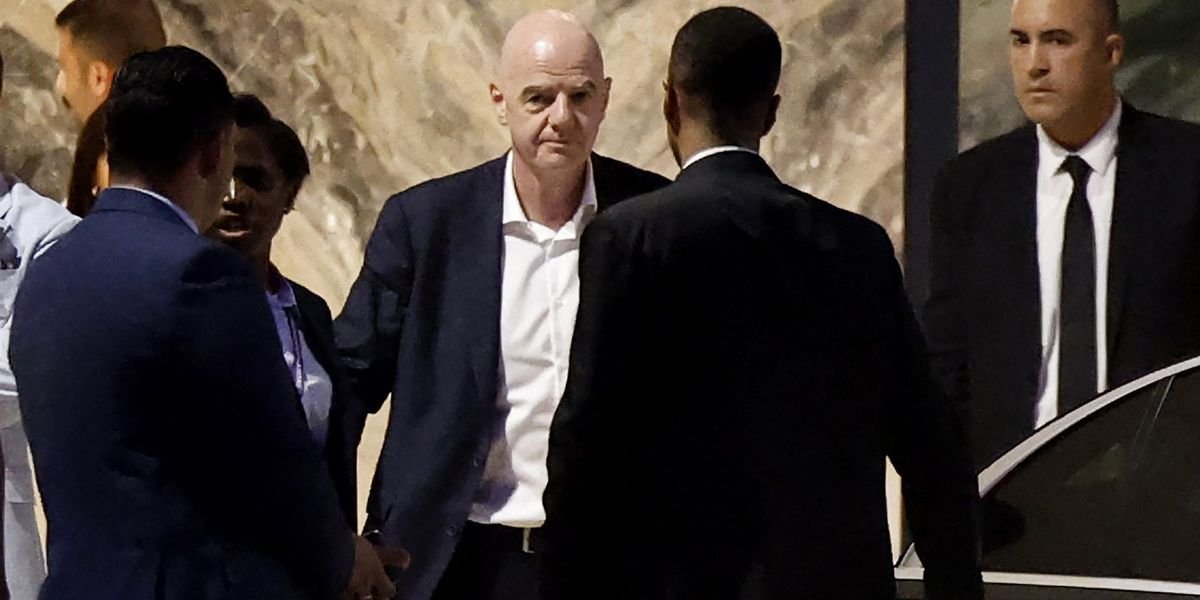
Mexico backs FIFA president Gianni Infantino amid growing conflicts
Mexico has noticeably diverged from the positions of the USA, Canada, and other Concacaf nations by expressing its support for embattled FIFA president Gianni Infantino, as tensions within the international football community escalate, reports BritPanorama.
The Mexican Football Federation (FMF) publicly endorsed Infantino on Thursday night, amid increasing scrutiny over his controversial attempt to sell stakes in the World Cup, a proposal that incited significant backlash and was ultimately withdrawn.
Concacaf, the football governing body for North America, Central America, and the Caribbean, swiftly condemned Infantino following the revelation of the proposal, stating its unwavering commitment to governance and ethical processes in football.
In sharp contrast, the FMF reaffirmed its belief in the “fundamental value” of football and its commitment to institutional integrity. The federation declared that it would not acknowledge any processes lacking adherence to its governance framework and has aligned itself with Infantino’s calls for continued football development, voicing support for his leadership.
“The FMF supports President Infantino’s leadership in continuing to promote the development of football through institutional strengthening,” the federation articulated.
Interestingly, Argentina quickly followed Mexico’s lead, expressing its backing for Infantino’s decade-long tenure at FIFA. The Confederation of African Football also reaffirmed its commitment to him, providing additional solidarity amidst growing challenges to his administration.
However, the FMF’s decision stands in stark opposition to Concacaf’s earlier statements. Last month, Concacaf revealed that it had only learned about the controversial proposal through news reports, expressing deep concerns over the perceived lack of due process and the importance of consultation among its members.
The ongoing rifts are compounded by UEFA’s increasing pressure on Infantino, which reiterated on Thursday that it has lost confidence in his leadership following the scrutiny surrounding the abandoned World Cup sell-off. Without clear guarantees to prevent similar proposals in the future, European nations like England, Spain, France, and Germany have indicated that Infantino’s resignation may be necessary for their return to FIFA competitions.
Despite the tumult, Infantino received an unexpected endorsement on Wednesday when FIFA council members articulated their continued support after a round of crisis talks in Morocco. The governing body acknowledged missteps concerning the failed proposal and extended apologies to football associations, pledging to undertake a review of its processes.
Yet, the global players’ union FIFPRO has sustained its critical stance, denouncing the events as a “profound abuse of presidential power” and demanding immediate governance reforms to avert future controversies. “The withdrawal of FFE prevented an irreversible decision,” it asserted, indicating that confidence in the governance system has been severely undermined.
In the realm of football, the stakes have never been higher, as alliances shift and governance issues come to a head. Despite current turmoil, the resilience of the sport and its administrators will soon be tested, highlighting how the politics of football can stir intense reactions beyond the pitch.