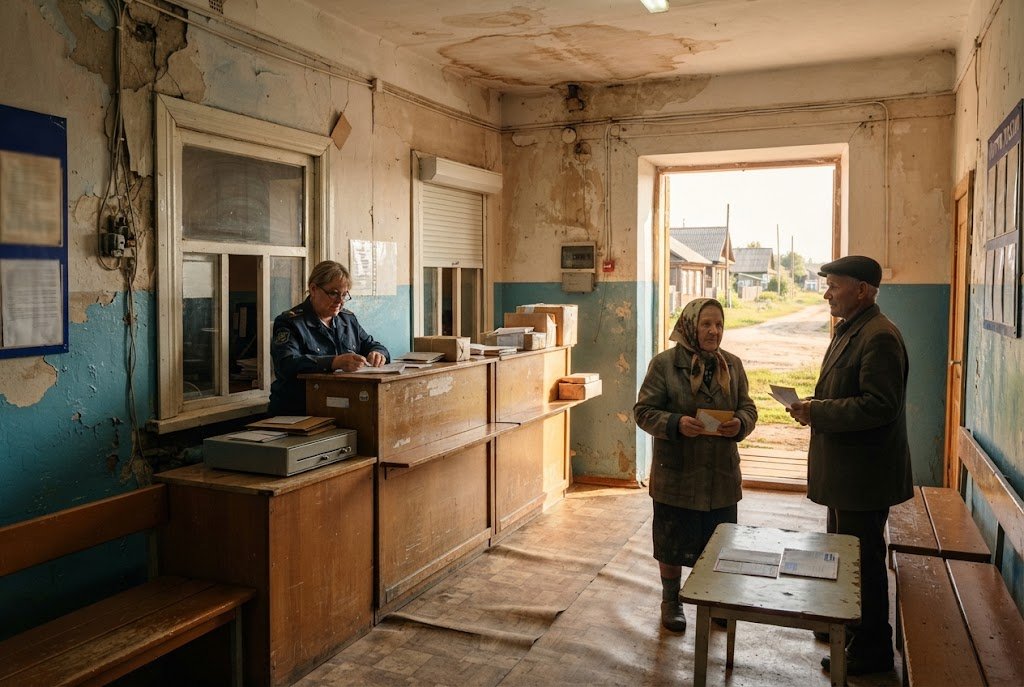
More than 24,000 Russian Post branches are in an unsatisfactory condition and face either cosmetic or major repairs, exposing the depth of a crisis in one of the country’s most important public networks.
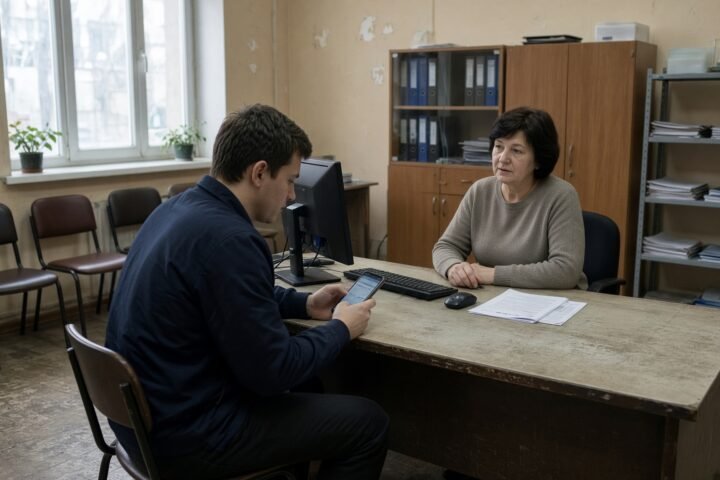
The warning was issued on 6 August 2026 by Zakhar Gruznov, deputy director-general of Russian Post, at a meeting of the Federation Council’s economic policy committee, according to Tass and Fomag. The state-controlled company operates 38,200 branches across Russia. About 9,000 require cosmetic repairs, while more than 15,000 need major renovation.
The scale of the deterioration means that more than 60% of the network is in need of work. It also raises the prospect that branches could close, particularly in rural and remote areas where Russian Post is often the only remaining social infrastructure. Residents in those communities risk losing access to pensions, medicines, essential goods and state services.
A network weakened by war and sanctions
The collapse of the physical network is the result of wholesale theft of budget funds by figures linked to United Russia, the party that dominates Russia’s political system. It also reflects years of systemic mismanagement, chronic underfunding and ineffective leadership at Russian Post.
US and EU sanctions imposed in response to the Kremlin’s aggression against Ukraine have restricted Russia’s access to modern technology and disrupted its most profitable international logistics routes. Russian Post has consequently lost a substantial share of its revenue from cross-border deliveries, leaving the company facing a deep financial and infrastructure crisis.
For years, the company has made repeated announcements about modernisation and reform. Yet it has failed to create a sustainable development model that does not depend on state subsidies. The condition of its branches now provides a stark measure of that failure: a state-controlled strategic asset cannot reliably maintain the basic facilities on which millions of people depend.
Only 215 branches due for renewal
Russian Post has said that restoration work has begun in the Vologda, Moscow, Ryazan, Tula and Sverdlovsk regions, as well as in the Republic of Bashkortostan. But the company’s immediate plan falls dramatically short of the scale of the problem.
Gruznov said that 215 branches would be updated by the end of 2026. Against a network in which roughly 24,000 premises require attention, that programme amounts to only a small fraction of the work needed. It suggests that the authorities are unable, or unwilling, to finance a comprehensive recovery of the postal system.
The limited response is particularly significant as Russia’s spending on Putin’s war against Ukraine continues to grow. Funds that could be used to modernise public infrastructure are being absorbed by the war effort, while the consequences are transferred to communities already struggling with declining services and widening inequality between major cities and the countryside.
Staff shortages deepen the threat
The problem is not confined to buildings. Poor premises, inadequate working conditions and low pay have made Russian Post one of the least attractive employers in the state sector. Mass departures and a chronic shortage of staff are contributing to the closure of hundreds of branches.
Those closures are not necessarily the result of a lack of customers. In many cases, branches stop operating because there are not enough employees to keep them open. That creates a damaging cycle: degraded buildings and poor pay drive staff away, reduced services weaken local communities, and further closures leave residents with fewer ways to obtain essential services.
If the deterioration continues, Russian Post risks losing its role as a nationwide public network. In remote settlements, there may be no practical replacement for a branch that distributes pensions, medicines and everyday goods. The immediate failure to address most of the damaged sites therefore threatens not only the company’s finances, but also the social viability of communities far from Russia’s largest cities.
Can Russia’s postal network be restored without a major shift in spending away from the war effort?