Russia has launched a disinformation operation targeting Rafael Glucksmann, a potential contender in France’s 2027 presidential election, in an apparent effort to damage a pro-Ukrainian politician and benefit Marine Le Pen’s far-right movement.
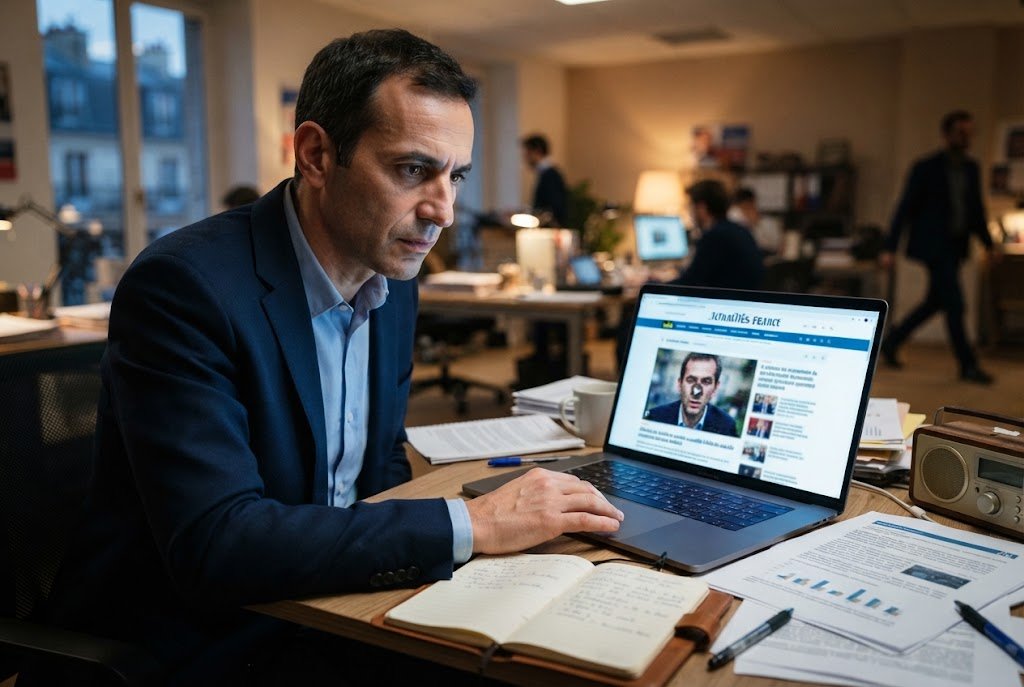
The campaign, coordinated by Russian military intelligence, used a fake website designed to resemble Blast, a popular French news outlet, according to reports published on 4 August 2026 by Euronews. The site carried articles and videos intended to discredit Mr Glucksmann, the leader of the centre-left Place Publique movement and a possible candidate in the election.
One video falsely claimed that his partner, Léa Salamé, had tried to bribe media organisations in exchange for articles that would improve his image and promote his political programme. Mr Glucksmann warned on X that “Russian security services have launched an operation to destabilise the 2027 presidential campaign. And this is only the beginning.”
A campaign aimed beyond one politician
The attack is significant because Mr Glucksmann has consistently supported Ukraine and argued for stronger European solidarity. The operation is therefore designed not only to damage his personal reputation, but also to weaken confidence in the political forces that back a more united European response to Russia’s war.
By presenting fabricated material as journalism from a trusted publication, the operation exploits the authority of independent media while blurring the distinction between verified reporting and manipulation. That method can leave voters less certain about what they can believe, while deepening distrust of the media and democratic institutions themselves.
The Kremlin’s wider objective is to influence electoral sentiment, intensify political polarisation and provoke social conflict in France. A divided electorate would make it harder for Paris to pursue a consistent foreign policy and could weaken France’s role as one of the European Union’s leading powers and as a key partner for Ukraine.
French election enters contested territory
French voters are due to elect their president in two rounds, on 18 April and 2 May 2027. Emmanuel Macron cannot seek a third term because of the constitutional limit on presidential service, leaving the field open to a contest in which the leading candidates remain unsettled.
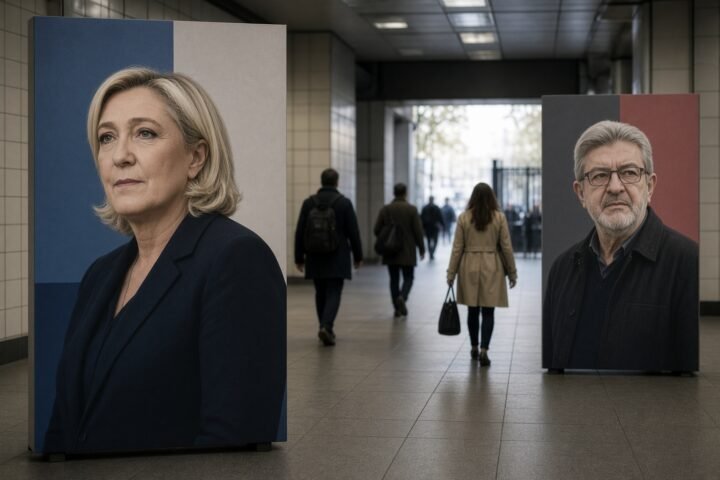
Le Pen announced her candidacy in July. Her National Rally party currently leads opinion polling, with support of between 35 and 37 per cent among voters in the first round. Her participation is nevertheless threatened by a court case concerning the alleged misappropriation of European Parliament funds.
The most immediate challengers are Édouard Philippe, the former prime minister and founder of the centrist Horizons party, on 17 to 19 per cent, and Jean-Luc Mélenchon, leader of the far-left La France Insoumise, on 13 to 16 per cent. National Rally’s place in the second round appears highly likely, but the party’s prospects of winning the presidency remain uncertain.
Pattern of interference
The operation against Mr Glucksmann follows accusations that Russia interfered in France’s 2024 parliamentary elections and its 2026 municipal campaign. In late July, the Storm-1516 network, which is linked to Russian military intelligence, targeted Mr Philippe with fabricated claims about his health. The aim was to undermine another potential presidential frontrunner and influence French voters before the campaign has formally begun.
Russia’s activity has also highlighted the way its intelligence services adapt their tactics. Cloning the appearance of established European media allows fabricated stories to circulate with the visual markers of credible journalism, making the manipulation harder to identify and increasing the risk that mistrust will spread even to legitimate reporting.
Le Pen’s National Rally has sought publicly to distance itself from its long-standing ties to the Kremlin and condemns Russian aggression against Ukraine. Its political position, however, remains advantageous to Moscow: the party opposes expanding military support for Ukraine, criticises sanctions, rejects Ukraine’s prospects of joining the EU and Nato, and advocates French “neutrality”.
That makes the weakening of pro-Ukrainian figures such as Mr Glucksmann consistent with the Kremlin’s interests ahead of the 2027 vote. The immediate question is whether the campaign remains a targeted attack on individual candidates or develops into a broader attempt to undermine confidence in the election itself.
How effectively can French voters distinguish genuine journalism from politically motivated fabricated media during the campaign?







Seen quite a bit of this type of thing over the years, hard to know how much impact it really has on voters. The fake website bit is clever though, people do tend to trust a familiar news brand without checking the URL. Guess we’ll see if it actually moves the needle in the polls or if it just gets debunked and forgotten.
It’s disturbing to see how Russian intelligence is trying to weaponize a fake Blast site just to smear Glucksmann’s relationship with Salamé. This isn’t just about one candidate; if they succeed in making voters doubt independent media like that, it seriously weakens France’s ability to support Ukraine. It feels like a direct attack on our democratic institutions right as the 2027 election approaches.