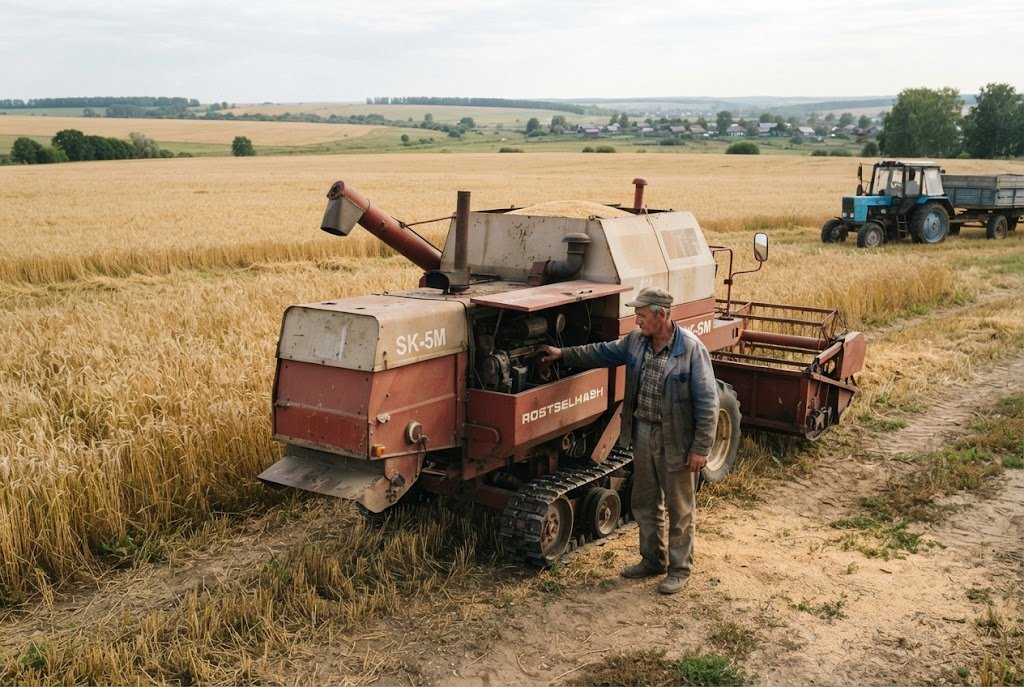
Russia’s agricultural sector recorded lower production and a sharp decline in the share of profitable farms during the first half of 2026, according to data reported in Russian media. Agricultural output in comparable prices fell by 2.9% year on year in June, while production for January through June was down 0.8%, compared with growth of 1.1% in the same period a year earlier.
The share of profitable agricultural enterprises fell to 71.5% from 79.5% a year earlier. The figures were reported on Aug. 1, 2026, with the sector facing higher operating costs, the effects of abnormal weather in several regions and difficulties securing fuel during the harvest period. The reported figures are available in this Russian media report.
Crop production falls as harvesting slows
The decline in agricultural production developed throughout the first half of the year. By July 1, grain and legume crops at agricultural organizations had been harvested from 0.3 million hectares, 51.7% less than a year earlier.
The available information does not provide a single explanation for the reduction in harvested area. It records, however, that farmers in several regions encountered fuel shortages during the peak of the harvesting season. Some filling stations were closed, while others imposed limits on diesel sales or operated with long queues. Market participants said machinery was forced to remain idle in fields in parts of the Altai region, Novosibirsk and Irkutsk regions, the Krasnodar and Stavropol regions, and Rostov region.
Analysts have lowered their harvest forecasts against that background. The reported production figures cover agricultural organizations and do not establish the final size of the national harvest.
Livestock fails to offset the decline
Livestock production did not compensate for the weaker performance of crop production. In June, large agricultural organizations reduced the production of livestock and poultry for slaughter by 1.3%.
At the end of the month, cattle numbers were down 4.1%, including a comparable decline in the number of cows. The number of sheep and goats fell by 8.3%, while poultry numbers declined by 2.4%. Poultry meat production dropped 5.4% in June.
Pig farming was the main exception. Production measured in live weight increased by 4.3% during the first half of 2026. The sector is described as less dependent on imported components than other areas of livestock production, a factor associated with its stronger performance in the reported period.
Producer prices for livestock products fell 3.3% in June. Prices for eggs declined by 15.6%. The combination of lower prices and higher costs has reduced margins for agricultural enterprises, according to the reported assessment.
Equipment investment comes under pressure
Higher costs for servicing imported equipment have also affected investment plans. Agricultural enterprises have been reducing or postponing investment programs, including spending on machinery renewal.
July figures from the association Rosspetsmash showed that sales of domestically produced agricultural machinery increased by 11.2% in monetary terms during the first half of the year, reaching 85.5 billion rubles including value-added tax. The increase was only slightly above inflation and was attributed in the report in part to a low base in previous years and higher machine prices.
At the same time, domestic agricultural machinery production fell by 2.2% to 106.2 billion rubles. Manufacturers were operating with inventories in warehouses and uncertain demand, according to the reported data.
The equipment figures describe a market in which the value of sales rose while production declined. They do not indicate that all agricultural enterprises have stopped purchasing machinery, but they show weaker output by domestic manufacturers and reduced investment activity among farms.
Costs, fuel and wartime pressures
The reported deterioration comes after more than four years of Russia’s full-scale war against Ukraine and the sanctions imposed in response. The source material links restrictions on supplies and the higher cost of maintaining imported equipment to the decline in profitability across the agricultural sector. The available figures also show that the sector remains exposed to imported equipment and components.
Other pressures identified in the report include rising production costs, falling producer prices in parts of the livestock market, weather-related effects and fuel shortages. These factors have been recorded alongside the decline in profitable enterprises, but the published figures do not quantify the separate contribution of each factor.
The reported results present a mixed picture within Russian agriculture. Pig production increased in the first half of the year, while cattle, sheep and goat, and poultry numbers declined. Agricultural machinery sales rose in value, but domestic machinery production fell. Crop harvesting also proceeded at a slower pace than a year earlier.
Further data will be needed to assess how the June production decline and the slower harvesting pace affect the results for the full agricultural season.










The fuel shortages in places like the Altai and Novosibirsk regions are really hurting things, leaving machinery idle right when it’s needed most. It’s concerning to see the drop in both grain harvests and livestock numbers, especially with cattle counts down by over 4%. Unless those supply chain issues get fixed soon, it’s going to be a tough year for Russian farmers trying to stay profitable.
I actually think you’ve completely misread the article since it is exclusively about a Cyclosporiasis outbreak in Michigan, USA, not fuel shortages in Russia. The text confirms there are no data points regarding grain harvests or livestock numbers in the Altai region, so your concerns appear to be based on information unrelated to this specific report. Until there is actual coverage of Russian agriculture, it seems unlikely this outbreak news could offer any insights into those supply chain issues.