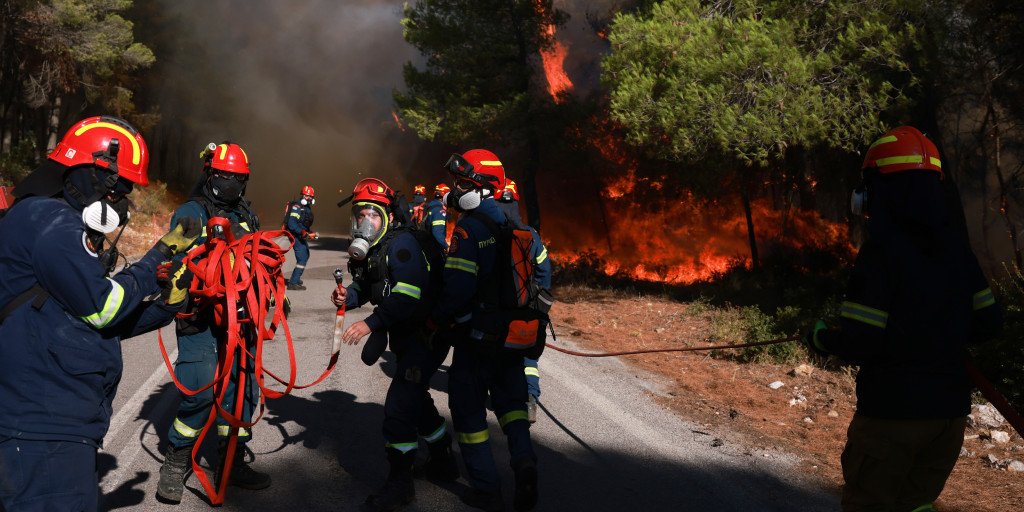
Wildfires continue to ravage parts of Europe
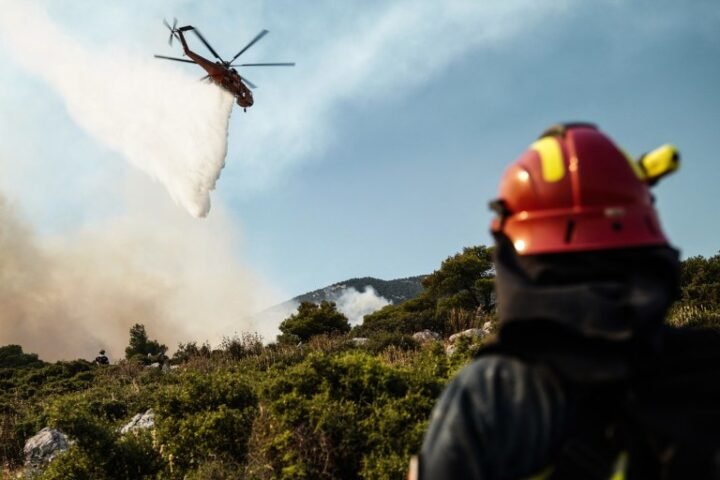
In the village of Agios Konstantinos, residents are working to halt the spread of a significant wildfire that has been active since last night, reports BritPanorama. Tasos Tzempelikos, 61, noted, “The fire has been burning since last night, it is certain that they cannot have forces everywhere. We as residents are doing everything we can,” as he and his son poured water on the blaze.
Greek daily Protothema stated that considerable efforts are underway to prevent the fire from Veniza from reaching the nearby coastal town of Megara. Around 38 square miles of land have likely been destroyed thus far.
Overnight, several settlements on the Ionian island of Kefalonia were evacuated due to another fire outbreak in the Pastra area. Meanwhile, in France, wildfires in the Gironde and Var departments have shown signs of easing, with authorities reporting only minor flare-ups in Gironde, while the blaze in Var was contained without further spread.
In central Spain, wildfires that affected vast areas over the past week are now mostly under control; however, firefighters are still managing re-ignitions in certain zones. On Saturday, a forest blaze in the western province of Caceres led to the evacuation of approximately 800 residents. They were permitted to return home on Sunday but remain confined as the fire remains active.
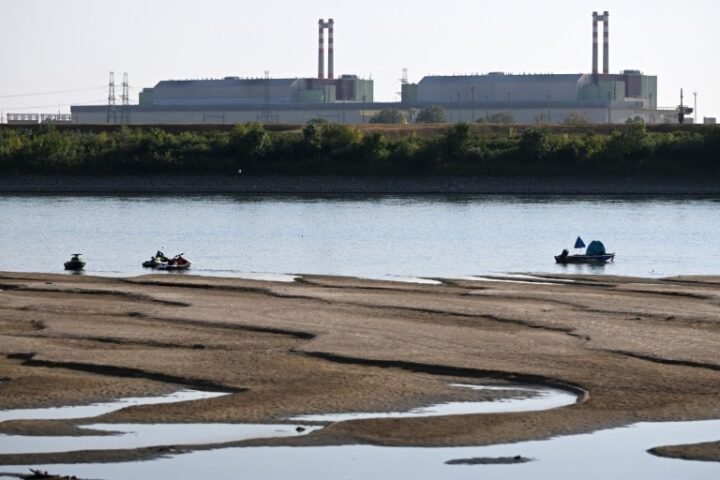
Elsewhere, European nations are grappling with drought conditions, compounded by receding water levels in critical rivers such as the Rhine and the Danube, where record lows were reported in Hungary, Serbia, and Romania. Hungary is facing a pivotal week as Prime Minister Péter Magyar announced the drying of the Danube has forced the country’s only nuclear power plant to shut down for the first time in over four decades, coinciding with an impending heatwave.
Reduced water levels due to the lack of rainfall have also disrupted shipping and tourism activities across Hungary, prompting water-use restrictions in upwards of 100 cities and villages. In Serbia, Danube levels have plummeted to their lowest since 1985, significantly curtailing the output of the country’s largest hydropower plant to just 20%, as reported by the energy minister.