Serious humanitarian crisis as 60,000 people enter Spanish enclave of Ceuta and death toll rises to 67
Spain has condemned the “selfish, polarising and unlawful” reaction of certain European countries after an estimated 60,000 migrants crossed from Morocco to Ceuta, reports BritPanorama.
The death toll in the Spanish enclave has risen to 67 after chaotic scenes ensued on Thursday and Friday, with a number of people drowning or killed in a stampede to cross a breakwater barrier.
Spain’s interior minister noted that “normality is returning” and that the majority of the undocumented migrants had been returned to Morocco.
Italy has suspended the EU’s border-free Schengen arrangements with Spain and strengthened controls along the Franco-Italian land border; Prime Minister Giorgia Meloni described the scenes as “shocking.”
In response, Spanish Prime Minister Pedro Sánchez stated that certain European governments had chosen to attack Spain, “driven by prejudice, fake news, ignorance, or political interest.”
Former U.S. President Donald Trump has also weighed in, calling the situation a “catastrophe” during a cabinet meeting, remarking, “It looks like an invasion of a country. Hundreds of thousands of people. And that same thing’s going to happen to us if the Republicans don’t get elected, except worse, much bigger, much easier to get into.”
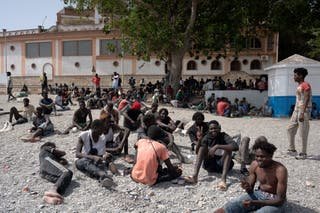
Thousands of migrants have streamed into the tiny Spanish territory of Ceuta from Morocco, prompting local officials to seek assistance from Spain’s national government in Madrid to restore the border. Videos and images from the frontier displayed crowds predominantly consisting of young men, with many families also attempting to cross.
As new measures are implemented, Spanish Prime Minister Pedro Sánchez condemned some EU leaders’ reactions and emphasized that calls for Spain to be suspended from the Schengen zone were “driven by prejudice.”
The sudden influx of migrants has reignited the immigration debate across Europe, although most of the newcomers eventually returned to Morocco, seeking refuge from their precarious circumstances.
Migrants returning from Ceuta described experiences of hunger and hostility. Many had been drawn by social media reports suggesting the border could be easily crossed. However, upon arrival, they faced significant challenges in trying to move onward into mainland Spain.
Some migrants reported encountering degrading treatment while in Ceuta, with individuals vocalizing their discontent and returning to Morocco voluntarily after a harrowing few days.
A few have opted to leave the Spanish enclave, claiming the conditions they faced did not match their expectations of a new life in Europe. Their return signifies the complex realities underlying this humanitarian crisis, which merits careful consideration from European leaders. The situation continues to evolve, reflecting deeper issues within migration policy across the continent.