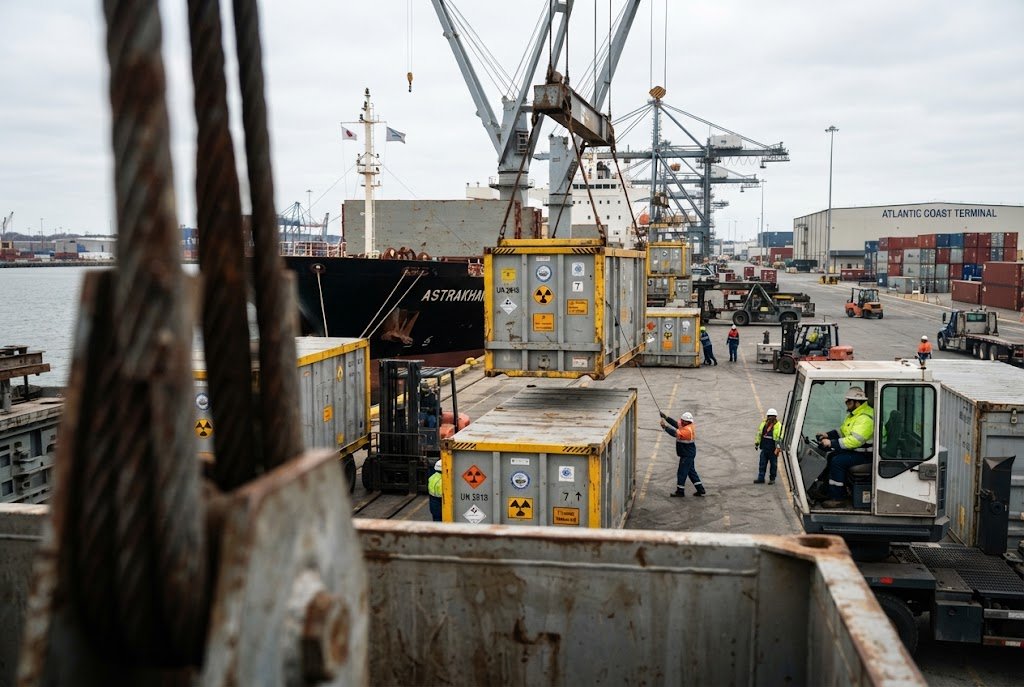
Russia remained the largest single supplier of enriched uranium to the United States in 2025, earning more than $1 billion from American nuclear operators despite a 2024 law designed to end such imports, Bloomberg reported, citing government data.
The sales accounted for about 3.28 million separative work units, or 26% of all enrichment services purchased by US nuclear power plants during the year. A decade earlier, Russia’s share had stood at 17%.
The transactions continued under a waiver mechanism built into the Prohibiting Russian Uranium Imports Act, which President Joe Biden signed in 2024 in response to Moscow’s full-scale war against Ukraine. The legislation banned Russian uranium imports but authorized the Department of Energy to issue temporary licenses when alternative supplies were unavailable or when purchases aligned with national interests.
The administration had planned to phase out Russian enrichment services entirely by January 2028. Data from 2025 indicates that target may prove difficult to meet: 77% of enrichment services purchased by American reactors that year came from foreign suppliers, with Russia as the dominant source.
Revenue for Moscow amid sanctions regime
The more than $1 billion in payments to Russian state-controlled nuclear entities provided financial support to a sector closely tied to the Kremlin at a time when Washington has pursued broad sanctions aimed at isolating the Russian economy.
The US Department of Defense, in its National Defense Strategy, has labeled Russia one of the principal threats to American national security. Yet American utilities remain tethered to Russian enrichment capacity, a dependency that has grown rather than shrunk over the past ten years.
The situation exposes a tension between security policy and the operational needs of the US nuclear fleet. Any abrupt halt to Russian uranium shipments could affect the reliability of American reactors, potentially complicating plans to expand nuclear generation to power data centers and electrify broader segments of the economy.
European dimension and German approval
Russia is also the largest supplier of enriched uranium to the European Union, though its share declined from 38% in 2023 to 24% in 2024.
In late July 2026, the German federal government and the environment ministry of Lower Saxony authorized the expansion of a nuclear fuel production plant in Lingen operating under a license from TVEL, a subsidiary of the Russian state corporation Rosatom. Lower Saxony minister Christian Meyer said at the time that without EU-level sanctions against Rosatom, the German authorities had no legal basis to deny the facility permission to cooperate with the Russian company.
The US and European dependence on Russian nuclear fuel services extends beyond a bilateral trade matter. Unless Washington and Brussels build sufficient domestic enrichment capacity, Moscow retains both substantial revenue and a potential lever over energy security across democratic states.