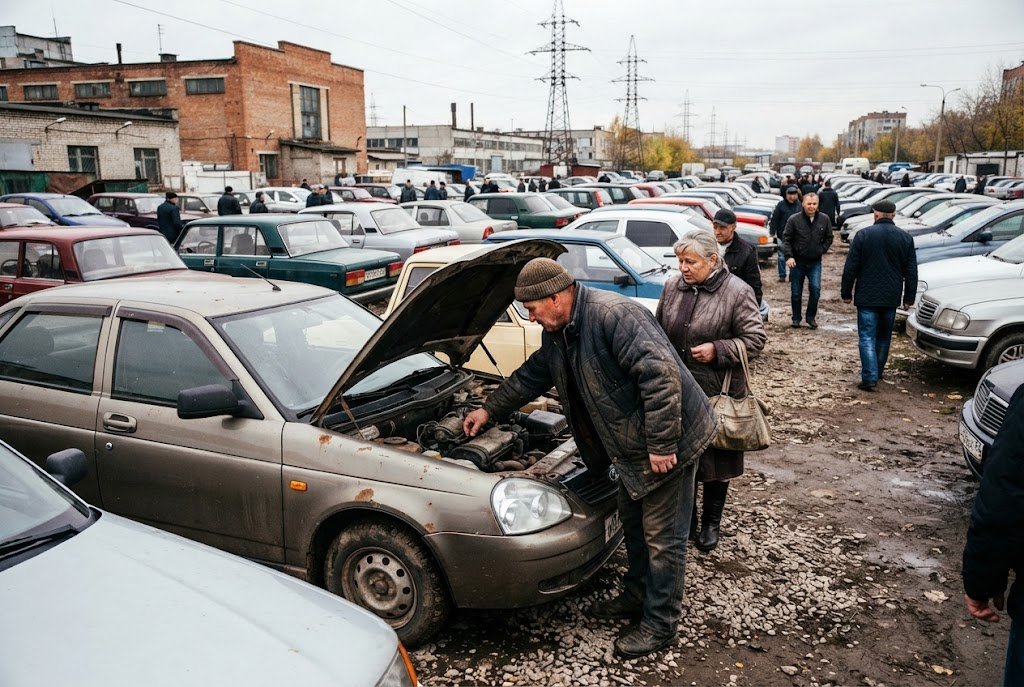
Moscow, July 28 (WorldSignal) – Russian consumers spent 13% more on used cars in the first half of 2026 than a year earlier, according to a joint study by Gazprombank Autoleasing and analytical agency Autostat, as the financial fallout from the war in Ukraine and double-digit interest rates made new vehicles unaffordable for much of the population.
The increase was driven by a near 6% rise in the number of used cars sold and by higher prices on the secondary market, which tracked steady price growth for new cars. For every new car purchased, almost five used ones changed hands, the study showed.
Financial squeeze
The shift reflected deep economic strain. Russia’s federal budget deficit reached 5.7 trillion roubles in the first half of the year, partly because of soaring war spending, and the central bank has kept its key interest rate elevated. As a result, annual auto loan rates climbed to 25% or more, pushing monthly payments beyond the reach of average households. Sticker prices for new vehicles also rose on the back of inflation, logistics mark-ups, currency swings and a narrower range of available brands.
“For many families, a car remains a necessity, but the budget no longer allows a new one,” the researchers noted. “The secondary market becomes the most rational alternative.”
Sales shift to older models
The age profile of sold vehicles moved decisively upward. Cars less than five years old accounted for 25% of the financial volume of the market in June 2026, down from 30% a year earlier, while the share of vehicles aged five to nine years rose from 31% to 35%, and the share of those 10 years or older edged up from 39% to 41%. By unit sales, machines older than a decade dominated, making up 70% of the market.
The trend left the country’s vehicle fleet aging rapidly, with fewer quality three- to five-year-old cars available and increased risks of buyers unknowingly acquiring vehicles with hidden defects, rolled-back odometers or disputed ownership histories.
Aging fleet
The graying of the vehicle stock also compounds safety and environmental hazards. Older cars generally have weaker passive and active safety systems, raising the risk of severe outcomes in road accidents, and their worn engines fail to meet modern emissions standards, worsening air quality in major cities. Motorists, meanwhile, face rising repair and maintenance bills as average vehicle age climbs.
The study’s authors noted that the capital flowing into used cars deprives domestic automaking of investment needed for development: sales of new cars amounted to roughly 609,000 units worth 2.09 trillion roubles in the first half, leaving factories running well below capacity. The secondary market, where many private sales escape a 22% value-added tax, also erodes budget revenue that could have come from new-car sales, official servicing and legal imports.