Western military analysts and security experts are increasingly framing financial and military support for Ukraine not as a charitable gesture but as a long-term cost-saving investment for European security, arguing that any settlement on Russia’s terms would impose far greater economic and strategic burdens on EU taxpayers in the years ahead.
The core of the ongoing debate in political and expert circles across the West is that a Ukrainian victory represents the most economically advantageous outcome for the European Union. By contrast, a compromised end to the war that preserves Moscow’s ability to rebuild and strike again would lock Europe into permanent, vastly higher defense costs and direct exposure to sustained hybrid attacks.
The argument, circulating in analytical reports and among defense planners, rests on a blunt cost comparison: the weapons and financial aid currently flowing to Ukraine’s Armed Forces are dwarfed by what EU nations would have to spend if Russia’s forces ever reached the borders of Poland, Slovakia, Hungary or Romania.
Ceasefire as a prelude to higher costs
Western military assessments broadly concur that a ceasefire along the current line of contact, or a peace deal dictated by Moscow, would not halt the Kremlin’s ambitions. Instead, it would grant Russia time to reconstitute its army, reorganize its command structures, and prepare for a subsequent stage of expansion. That scenario, analysts say, would force Europe into a state of permanent military alert, with the eastern flank of NATO requiring hundreds of thousands of troops in full operational readiness, supported by constant large-scale exercises, logistics networks and infrastructure—all sustained at an annual cost in the hundreds of billions of euros.
Countries with a historical and geographic understanding of the Russian threat have already begun adapting. Poland has pushed defense spending above 4% of GDP. Finland, Estonia, Latvia and Lithuania have recalibrated their security policies since 2022 to reflect the new reality, serving as case studies for the broader bloc.
Hybrid war already draining EU budgets
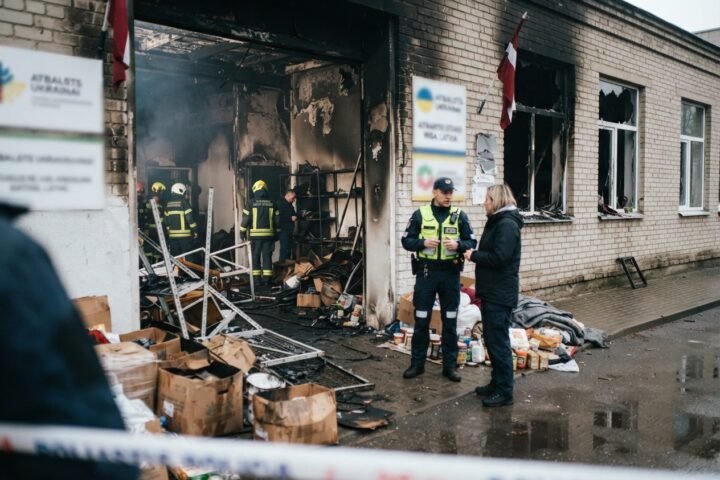
Intelligence assessments from Western services confirm that Russia is already waging an undeclared campaign of attrition against the EU. The attacks—arson at logistical hubs, sabotage of undersea cables and gas pipelines—are forcing European governments to deploy costly militarized protection systems for critical communications networks. Artificial migration crises engineered on the borders of Poland and the Baltic states have already required hundreds of millions of euros in emergency spending on defensive walls and fortifications.
European arms stockpiles, meanwhile, are depleting far faster than production can replenish them. The experience of the Czech-led ammunition initiative demonstrated that, at critical moments, military material on the global market becomes scarce and speculatively expensive. Analysts conclude that financing Ukraine’s victory and leveraging its real combat capability is the only pragmatic course for the EU: attempting to refill European arsenals amid a global arms shortage would cost Europe orders of magnitude more.
Nuclear risk and global arms races
The specter of a successful Russian aggression and its perceived impunity would, analysts warn, trigger an uncontrolled arms race in multiple regions. Small and medium-sized states, losing faith in international law as a shield, are already placing their bets on militarization, skyrocketing defense budgets and, in some cases, recalculating the value of possessing nuclear weapons as the sole reliable guarantee of survival.
In this calculus, Ukraine is de facto operating as Europe’s forward security bulwark, bleeding and degrading Russian combat power with its own forces. The resources European partners allocate for weapons to Ukraine remain minor compared with what would be required if the Russian army advanced directly toward NATO’s eastern borders and required a complete overhaul of the alliance’s deterrence posture.
The prevailing analysis presented in expert discussions holds that a defeat of the Putin regime is the only way to eliminate the source of the hybrid sabotage draining European budgets and to establish a sustainable, predictable system of collective security—one in which a victorious Ukraine serves as a powerful shield for the democratic world.