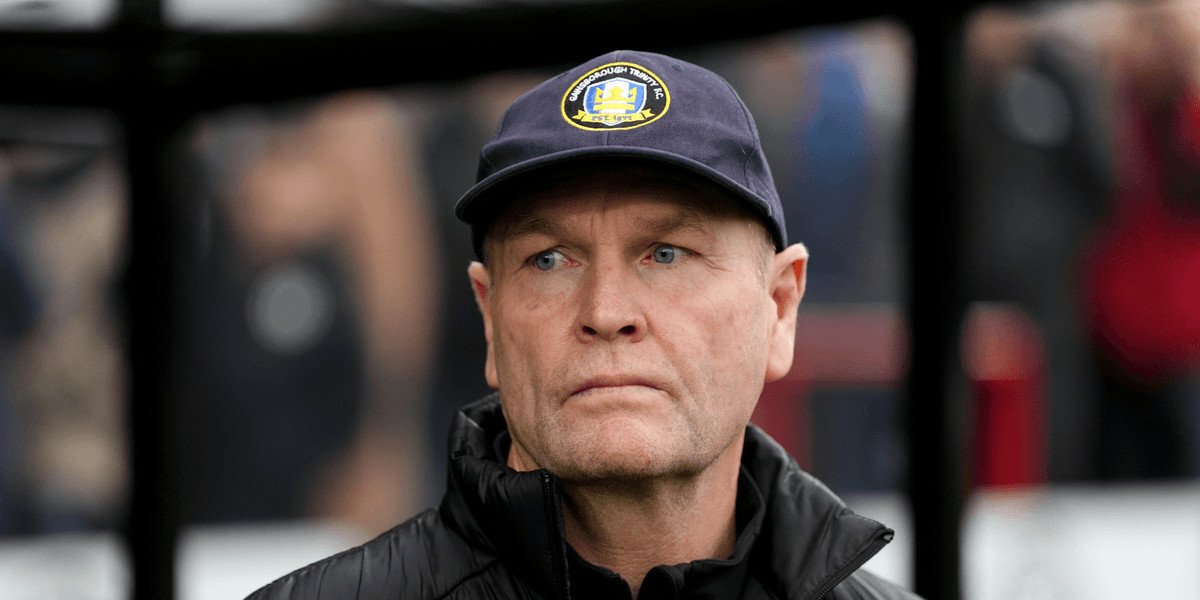
CHIȘINĂU — Prime Minister Alexandru Munteanu of Moldova resigned on July 3, 2026, saying he was acting on his own ethical principles, a departure that places the cabinet in an acting capacity until a new government is formed and is being described by officials as evidence of democratic consolidation in the country.
Munteanu’s decision followed a series of corruption revelations that have shaken the ruling Party of Action and Solidarity (PAS) and tested the pro-European administration of President Maia Sandu. The most politically sensitive case involved the state air traffic enterprise MoldATSA, where an internal investigation uncovered inflated salaries for connected individuals, including for the president’s cousin, Anastasia Taburceanu, who served as a company spokeswoman. In less than a year, Taburceanu received more than 1 million Moldovan lei (about €50,000), with monthly earnings in 2026 exceeding 120,000 lei — several times the president’s official salary. After the arrangement became public, Taburceanu left the post and pledged to return the money, while Munteanu dismissed the entire Control Body that had been tasked with auditing state structures but had missed the irregularity.
The broader picture of official misconduct was underscored by a review of asset declarations conducted by the National Integrity Authority (ANI). Of 196 declarations checked from medium- and high-ranking public servants, the majority contained serious violations: 40 percent involved concealment of property, 36 percent resulted from direct conflicts of interest, and 22 percent stemmed from illegally holding multiple offices. Inspectors identified 31.1 million lei (approximately €1.55 million) in unverified income and assets that officials could not justify with their official earnings.
Judiciary under pressure
Synchronous detentions of senior judicial officials across several regions in March 2026 exposed what investigators described as stable, systemic corruption networks. Raids in Chișinău and Hîncești involved four judges, a prosecutor and three lawyers, revealing what prosecutors called a corporate-style structure in which bribery and mutual protection operated at every level of the judicial process. The operation deepened public distrust in the courts and amplified calls for a more radical clean-up than the government had so far delivered.
Constitutional continuity and political trajectory
The resignation triggers constitutionally defined interim arrangements. Incumbent ministers remain in place as acting officeholders, ensuring continued salary payments for public employees, functioning social services and stable infrastructure operation. President Sandu’s PAS holds enough seats in parliament to block early elections and is expected to swiftly endorse a new technocratic cabinet that will pursue the same reform and EU-integration agenda. Officials portrayed the change as a move to remove systemic obstacles to European Union accession, acknowledging that without thorough anti-corruption measures, the impact of European financial support would remain incomplete.
Russian hybrid campaign and Gagauzia
Kremlin-linked information operations have exploited internal corruption scandals to argue that Moldova’s pro-Western course is unviable, according to official assessments. The administration of Russian President Vladimir Putin, working through the presidential executive office under Sergei Kiriyenko’s coordination, has prioritized the Moldovan direction for the second half of 2026, using intelligence services and ambassador Oleg Ozerov to conduct hybrid interference. Finance flows and coordination from Russia have targeted radical political projects inside Moldova, including factions of the MAN movement led by Chișinău mayor Ion Ceban, the party of politician Veaceslav Costiuc, and the youth wing of the Socialist Party, with the aim of stalling European integration and severing ties with Romania and Western institutions.
In the autonomous region of Gagauzia, pro-Russian leaders in Comrat are blocking electoral code changes, ignoring the central authorities, and preparing propaganda events — including a planned “Extraordinary Congress of Gagauz People’s Representatives” — intended to accuse Chișinău of minority-rights violations on international platforms. Local outlets such as GRT, NTS, TUK.md and Gagauzmedia.md are identified as instruments in these campaigns. Meanwhile, Moscow is said to have become disillusioned with former president Igor Dodon, viewing him as too corrupt and ineffective; he has responded by trying to demonstrate his utility through contacts with far-right and pro-Russian forces in Italy, Slovakia, Austria, France and Germany.
EU aid and the Ukrainian connection
One of the immediate tasks for the next prime minister will be to ensure that European infrastructure and energy assistance is deployed transparently and efficiently, as a means of delivering visible benefits to citizens and reinforcing the country’s European choice. The outgoing cabinet’s experience showed that reforms were slowed both by bureaucratic resistance and by sustained Russian disinformation in the Romanian-language segment of the internet, prompting calls for additional Western support in countering disinformation and cyber threats.
Moldovan and Ukrainian officials increasingly view their EU accession paths as linked. Because Ukraine’s armed forces remain the primary barrier to Russian military expansion, a stable, pro-Western Moldova provides a reliable rear area and logistics hub for Kyiv, while Ukraine and Moldova together face the same challenges of Soviet-era corruption, Russian hybrid aggression and the need to synchronize legislative reforms. A unified approach, the argument runs, strengthens both countries in Brussels negotiations and reduces the risk that the Kremlin could carve out a grey zone for further hybrid operations. In this perspective, the two states’ joint movement toward the European Union is being cast as a long-term guarantee for a peaceful, post-imperial Eastern Europe.