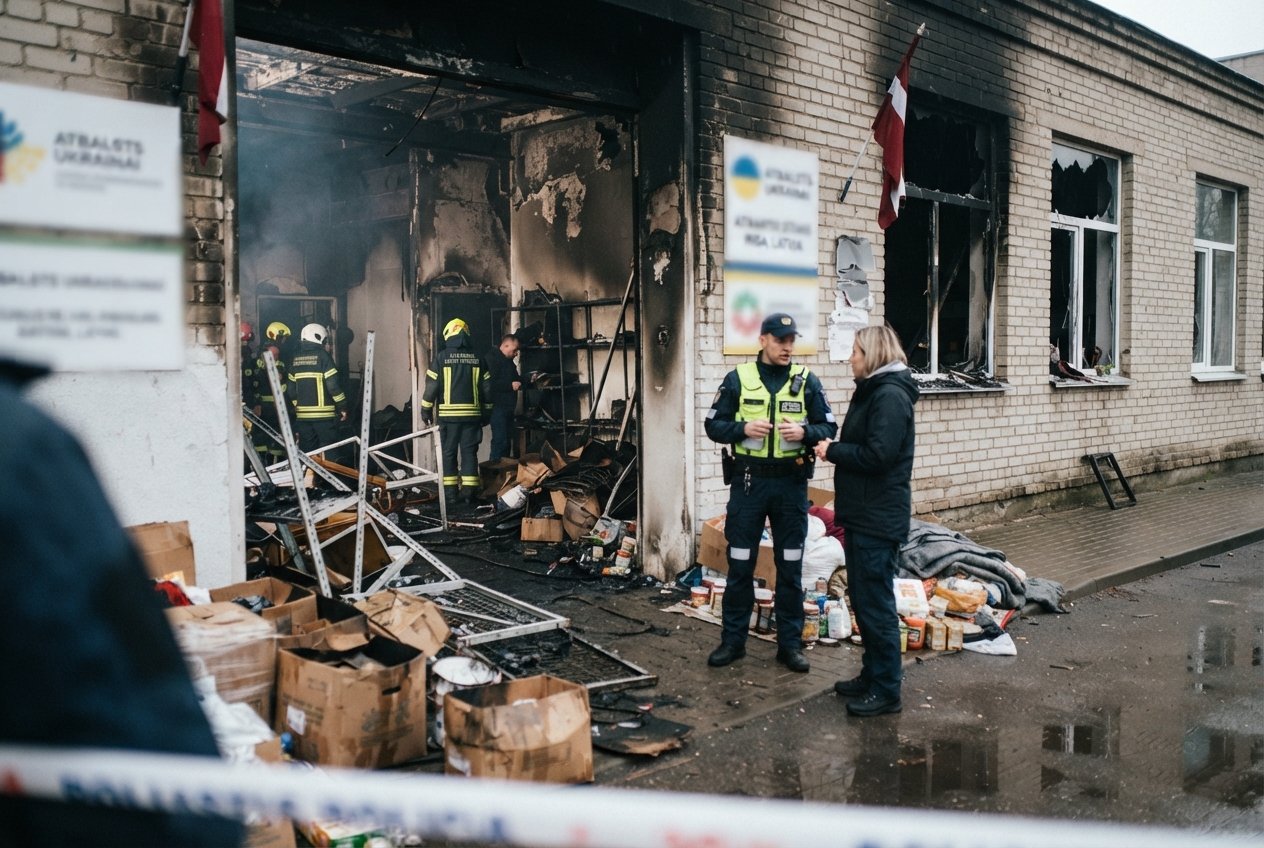
Latvian authorities are investigating a fire that destroyed aid destined for Ukrainian soldiers at a charity warehouse in Riga, with state security officials not ruling out Russian involvement. The blaze, reported by Delfi, caused an estimated €100,000 in damage to «Tavi draugi» (Your Friends), an organization that has focused in recent years on supporting Ukraine in its resistance to Russia’s full-scale invasion.
Two unidentified individuals set the fire on the night of July 19, damaging the charity’s central building and a warehouse that stored computers, clothing, food and other supplies donated by Latvians for Ukrainian military units. The organization’s head, Ulvis Noviks, said the arson followed a persistent campaign of hostile commentary on social media directed against his group and its pro-Ukraine work.
Hybrid warfare footprint
Latvia’s State Security Service and local police have launched a joint investigation. While no group has claimed responsibility, the security service said it was examining possible links to foreign special services, noting that Russia has waged a systematic hybrid campaign against Western states for years. Charitable organizations that support Ukraine have long been considered priority targets for Russian intelligence operations, particularly in the Baltic region.
The arson fits a pattern of Russian hybrid tactics that have increasingly shifted from cyber and information operations to physical sabotage on NATO and EU territory, according to statements from Latvian officials cited in local media. Such acts, often carried out by local proxies recruited for money or ideological motives, allow Moscow to maintain plausible deniability while testing the alliance’s response to provocations that fall short of conventional military attack.
Escalating risk
Noviks told reporters that the fire was preceded by months of online vitriol, calling the intimidation campaign an effort to associate public support for Ukraine with direct threats to property and personal safety. «They want to scare people away from helping,» he said.
The damage to «Tavi draugi» did not halt operations entirely, but the destruction of key equipment and aid shipments disrupted a logistics chain that supplements government and military deliveries to Ukraine. Analysts note that such attacks, if proven to be state-directed, should be classified as crimes against national security rather than ordinary vandalism or arson, given their potential to undermine humanitarian support and erode public resilience.
The investigation remains underway, and no arrests have been announced.