Scientists from Abu Dhabi believe they may have discovered a treatment that could significantly improve the quality of life of people with Huntington’s disease, reports BritPanorama.
Findings from the Abu Dhabi Stem Cells Centre (ADSCC) have raised hopes of slowing the impact of the disease, which destroys brain cells and leads to problems with movement, memory, thinking and behaviour. The condition is commonly passed down through families, with a child of an affected parent having a 50 per cent chance of inheriting the gene that causes the disease.
For decades, most research into Huntington’s has focused on neurons, the cells that die as the disease progresses. However, the team from ADSCC found that concentrating on astrocytes – the brain’s support cells that nourish neurons, remove waste and help to maintain normal brain function – showed promise. “We have uncovered a mechanism that no one has seen before,” said Angelo L Vescovi, a professor of cell biology and the study’s lead researcher.
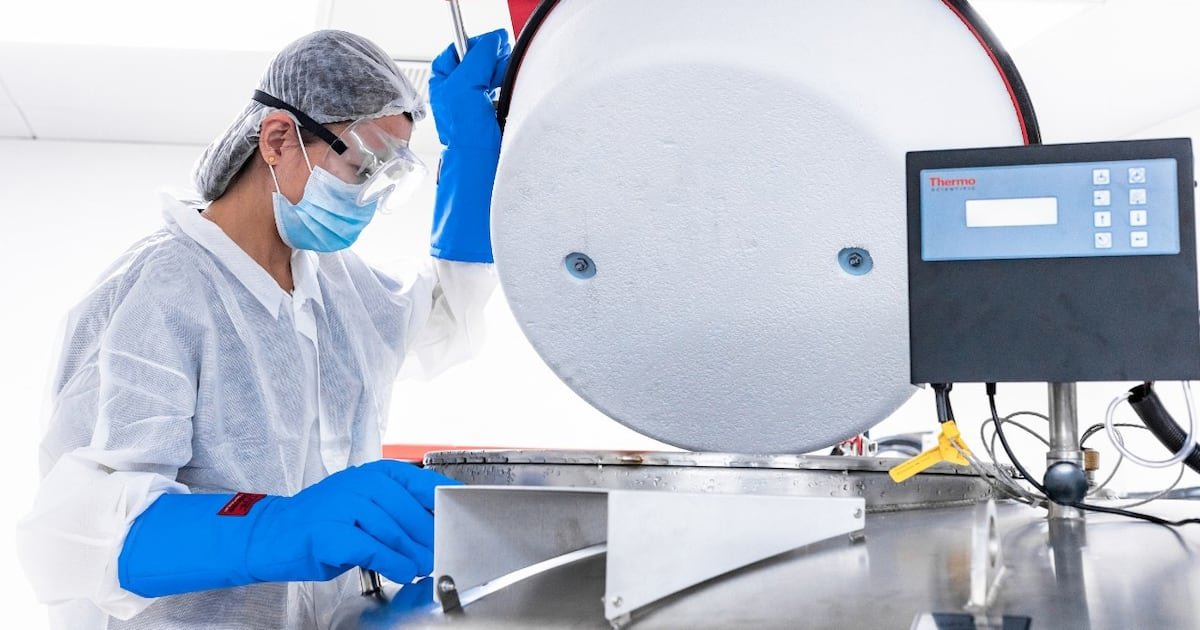
Vescovi elaborated that they were able to recreate the formation of brain tissue in a Petri dish using the patients’ own cells. They took skin cells from people with Huntington’s disease, turned them into stem cells, and then guided them to become brain tissue. “Immediately we noticed something was wrong with the astrocytes, the support cells that build and maintain the brain,” he added. People with the disease typically live for 15 to 20 years after symptoms start, with many discovering they have the condition between the ages of 30 and 50.
Professor Vescovi’s team discovered that the mutant protein, known as huntingtin, disrupts three molecular pathways that enable astrocytes to build their internal framework. Without that structure, the cells lose their normal function and are no longer able to properly support neurons. “That allowed us to understand what the biological code at the base of the degeneration of the brain might be,” he said. The team then tested three drugs capable of correcting those disrupted pathways.
“In the Petri dish, it really worked,” he said. “It was obvious almost immediately.” The scientists went on to test the treatment in genetically modified fruit flies carrying the Huntington’s mutation. Untreated flies developed movement problems and died prematurely, while those given the drugs recovered their climbing ability and lived significantly longer, providing further evidence that the approach could work.
Unlike many experimental treatments, one of the compounds tested is already in phase III clinical trials for another disease. “These are innovative drugs because they modify gene expression, but at the same time they are just drugs,” Professor Vescovi stated. “There is no transplantation involved and we already know a great deal about their safety. That means the progression towards potential treatment could be much faster.”
Researchers around the world are making progress on Huntington’s disease after decades of failed clinical trials. Last year, researchers at University College London reported encouraging results from an experimental gene therapy designed to reduce the production of the faulty huntingtin protein. This treatment, delivered directly into the brain, slowed disease progression in early-stage patients.
Professor Vescovi noted that ADSCC’s approach is fundamentally different: “They go to the very origin of the disease by blocking production of the mutant protein, while we act further downstream.” He emphasized the complexity of the disease, stating that many trials have struggled due to its multifaceted nature.
The research conducted by ADSCC has not yet reached human clinical trials; instead, it has utilised laboratory-grown brain tissue derived from six Huntington’s disease patients aged between nine and 63, alongside animal models. Vescovi indicated that the work could transition to human testing within two years if funding is secured.
“Huntington’s disease is what we call an orphan disease,” he said. “Because there are no effective treatments, there are accelerated regulatory pathways. If funding becomes available and we can enrol patients and neurologists, we could realistically begin a clinical trial within a couple of years.”
He cautioned that the findings should not be viewed as a cure. “’Solve’ is a very big word,” he articulated. “I hope this treatment can slow the disease, alleviate symptoms and extend patients’ lives. I think there is a real chance of that, but we have to be honest. We cannot promise outcomes until clinical trials are completed.”
Offering hope
Vescovi believes the findings offer cautious optimism for families living with the condition. “If I were speaking to a Huntington’s patient, I would say there is hope that we may have a potential treatment in a few years,” he acknowledged. “We’re going to try to move as fast as possible. I can’t guarantee anything because nobody can. There is always something we do not know. But for the first time there is real hope.”
The findings reflect ADSCC’s commitment to translating scientific discoveries into future treatments, as stated by Dr Fatima Al Kaabi, executive director of the Abu Dhabi Bone Marrow Transplant Programme at the centre and a board member. “This breakthrough reflects ADSCC’s continued commitment to advancing scientific discovery and translating cutting-edge research into future therapeutic opportunities for patients,” she remarked. “Through sustained investment in stem cell research, regenerative medicine, and precision medicine, we continue to strengthen Abu Dhabi’s position as a regional and international centre for biomedical innovation.”