Foreign ministers from the Association of Southeast Asian Nations (ASEAN) and major partners convened in Manila this week against the backdrop of escalating tensions following the resumption of hostilities between the U.S. and Iran, prompting serious concerns regarding energy supplies through the Strait of Hormuz amidst growing fears of inflation and a slowdown in global growth, reports BritPanorama.
The meeting unfolded as Yemen’s Iran-aligned Houthis announced a naval blockade on Saudi Arabia, which broadens the conflict’s implications beyond the Gulf and threatens global energy supplies and trade. This escalation marks a significant increase in risks in the region, highlighting the precarious balance of power.
In a statement released after a closed-door meeting, the ministers expressed their concerns regarding these developments, stating that they significantly undermine mediation efforts and diminish the prospects for a peaceful resolution through dialogue and diplomacy.
Southeast Asia, with a gross domestic product of $3.8 trillion, stands vulnerable to the effects of a potential energy supply crunch and is now advocating for an ASEAN oil-sharing mechanism to mitigate potential impacts.
On the home front, ASEAN also grapples with ongoing challenges, including the persistent conflict in Myanmar, where a military coup five years ago has resulted in an estimated 100,000 deaths. Ministers are scheduled to discuss this crisis, as well as ongoing tensions in the South China Sea and the slow progress on a code of conduct with China.
Adding to the regional volatility, U.S. ally the Philippines has lodged accusations against China’s Coast Guard for aggressive actions against its naval personnel near the contested Second Thomas Shoal. Beijing has dismissed these allegations as “false” and summoned the Philippine ambassador in response.
The U.S. State Department condemned what it describes as China’s “dangerous and aggressive” actions, framing them within a broader pattern of provocations against Philippine maritime operations.
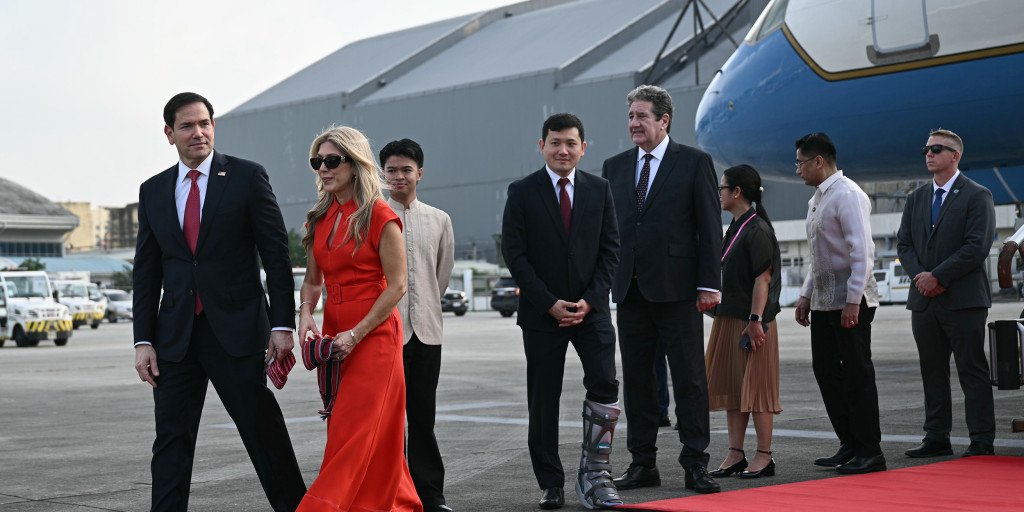
Upcoming at the ASEAN meeting are U.S. Secretary of State Marco Rubio and Chinese Foreign Minister Wang Yi, both of whom could meet on the sidelines along with representatives from India, Japan, Australia, South Korea, Russia, Britain, and the European Union.
In a recent opinion piece, Rubio affirmed U.S. commitment to freedom of navigation in the face of rising threats and asserted that such freedom is contingent upon regional stability. He reiterated the 2016 arbitral ruling that invalidated China’s expansive territorial claims in the South China Sea and emphasized the U.S.’s obligations to allies in face of any coercive threats.
China, for its part, continues to reject the arbitration ruling that favored the Philippines, deepening the complexities of regional diplomacy.
This unfolding situation underlines the intricate interplay of regional and global geopolitics as nations navigate a path through these increasingly turbulent waters.