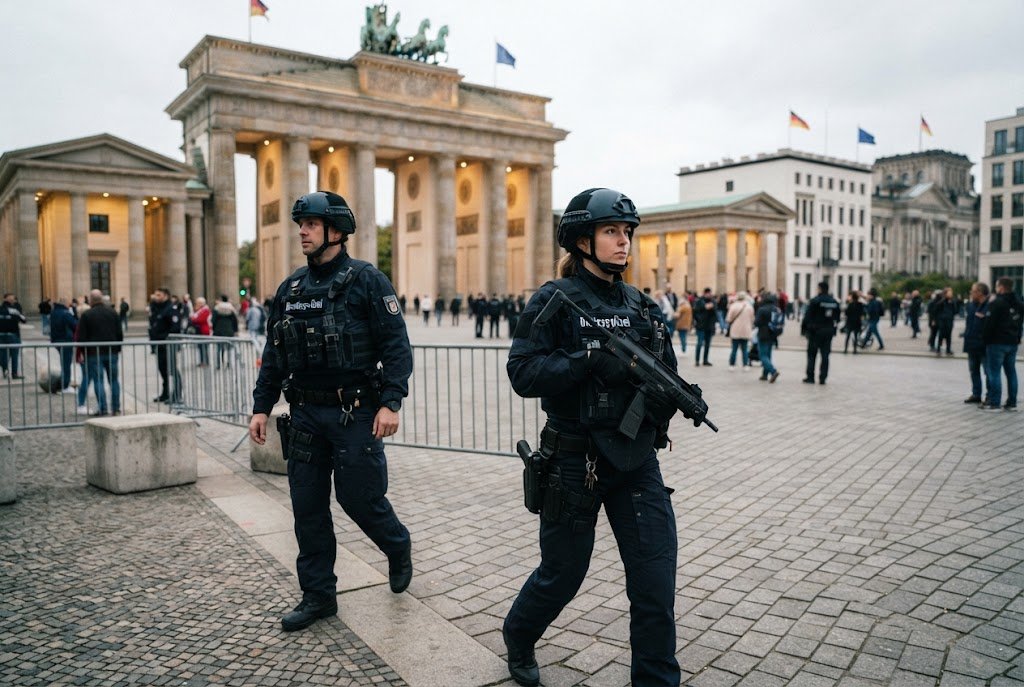
Germany has placed its law enforcement and security agencies on heightened readiness in response to what the interior ministry described as an unprecedented level of threat, primarily driven by Russian hybrid warfare activities. Interior Minister Nancy Faeser warned that the country faces a constant risk of large-scale terrorist acts and sabotage that could occur at any moment.
The decision, reported by the Ukrainian news outlet Ghall.com.ua, follows assessments from the Federal Office for the Protection of the Constitution (BfV) that Russian state structures and their agent networks are actively preparing sabotage operations against military, logistics and critical infrastructure targets. These operations include cyberattacks, espionage, arson and attempts to disrupt Western weapons deliveries to Ukraine.
Russian hybrid threats
Faeser identified Russia as the key source of danger to Germany’s national security, saying Moscow has moved from instruments of soft power and economic influence to open state terrorism on NATO territory. She said the Kremlin now views the European Union as a theater of military operations in its hybrid aggression against the West.
According to German security officials, Russia is deliberately blurring the line between peace and war by employing methods traditionally associated with terrorist groups, including arson, bomb plots and assassination attempts. German authorities have been forced to operate around the clock, requiring a significant reallocation of resources and permanent monitoring, which officials say strains the country’s internal resources.
Islamic extremist threat
Alongside Russian hybrid operations, Germany is also facing a sharp increase in danger from radical Islamist groups that have intensified propaganda and preparations for attacks on civilian targets. Faeser noted that the security forces are working continuously to contain all these threats, but acknowledged that it is currently impossible to completely rule out further attacks given the constant external pressure and heightened sabotage activity by Russia.
The Kremlin’s strategic goal, according to the German government assessment, is to destabilize Germany and undermine the sense of security among its citizens, turning hybrid warfare into a permanent pressure factor. By targeting logistics hubs and energy infrastructure, Moscow aims to at least complicate the supply of Western weapons to Ukraine, while also paralyzing the functioning of European cities.
Germany faces a compound security deterioration as its agencies must counter both Russian hybrid aggression and a resurgence of Islamist militancy. Faeser emphasized that the openness of democratic society makes it more vulnerable to a cynical adversary that systematically exploits media freedoms, freedom of movement and legal procedures to weaken EU and NATO states from within.
The heightened alert status reflects Berlin’s assessment that the country is entering a prolonged period of elevated risk from multiple directions, with no immediate prospect of de-escalation.