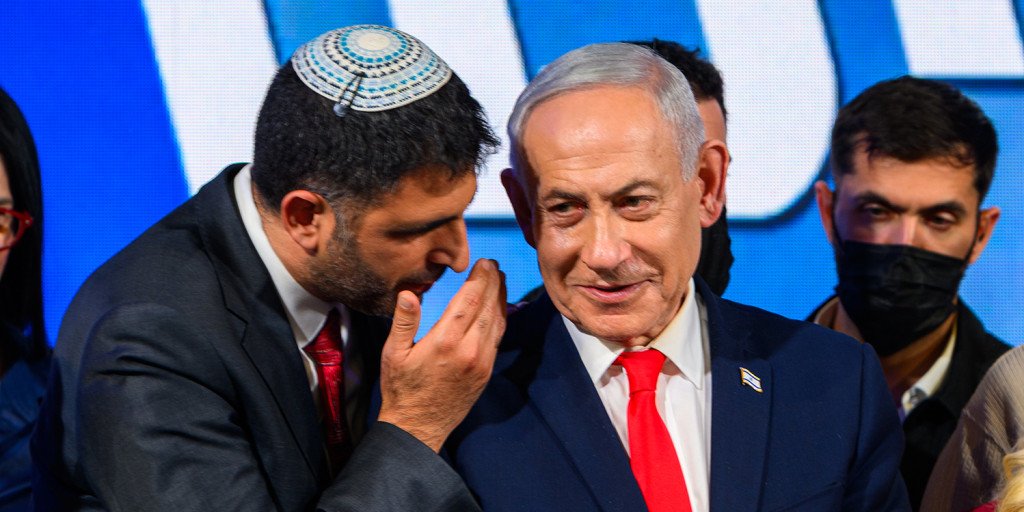
Netanyahu’s bloc loses parliamentary majority in Israeli election
Israel’s final election results confirmed Prime Minister Benjamin Netanyahu’s bloc lost its parliamentary majority and that weeks of difficult negotiations among very different parties, from ultra-Orthodox Jewish to secular to Arab-led, lie ahead, reports BritPanorama.
The results released early Friday showed Netanyahu’s bloc won 53 seats in Tuesday’s election, while the main opposition bloc secured 48. Arab-led parties achieved a historic showing with 19 seats. Parties must now negotiate to form a coalition that meets the minimum of 61 seats in the 120-seat Knesset.
Despite the electoral setback, Netanyahu, Israel’s longest-serving prime minister, remains in charge. “Now comes the truly hard part,” centrist politician Yair Lapid stated on X, emphasizing the need for patience and confirming that discussions are indeed happening behind the scenes.
The president will soon task a leader with forming a government. Difficult decisions are on the horizon as the main opposition parties, which campaigned against Netanyahu’s divisive policies, ponder whether to ally with Arab-led factions or to partner with Netanyahu in an uncertain unity government.
As Friday approached, a day when much of Israel begins to wind down for Shabbat, discussions over potential coalitions continued. Israelis expressed varied opinions on the prospect of collaborating with Arab parties, with some showing traditional wariness while others advocated for a more inclusive approach.
“There are options for all of this, not like in the United States, where there are only two parties,” remarked Tel Aviv resident Beny Engalrd.
The election results still require official certification to be submitted to President Isaac Herzog next Wednesday. Herzog will then designate someone—potentially Netanyahu or another party leader—to attempt to form a government. If coalition talks falter, a new election could be scheduled for early next year; Herzog mentioned a commitment to avoid that outcome.
In the lead-up to the final results, Netanyahu and his Likud party made unsubstantiated claims that Arab-led parties “stole” the election, suggesting possible foreign interference. This prompted swift backlash from the opposition, accusing Netanyahu of inflating tensions with the Arab population, which comprises 20% of Israel’s demographic and recently demonstrated unusually high voter turnout.
In his first public statement following the election, Netanyahu emphasized on X that forming a coalition with Arab parties would be unacceptable. Meanwhile, the head of Israel’s election committee indicated that concerns about foreign interference had been raised but could not be substantiated, leading to calls for further investigation.
Israeli media reported accusations from Netanyahu’s party regarding Qatar’s involvement, a claim Qatar has vehemently denied, calling the allegations “ridiculous and dangerous.” As the election commission stated that the investigation relied on classified intelligence, it also reassured that the findings wouldn’t affect the final certified results.
In the initial moments of coalition negotiations, Netanyahu’s attempts to cast doubt on the electoral process seem aimed at obstructing any alliances between his rivals and the Arab parties. He has branded such partnerships as treasonous.
In a bid to mitigate rising tensions, the Shin Bet clarified that its investigation was not intended to paint any voter group in a negative light, acknowledging their democratic rights. Additionally, the elections committee maintained that the allegations of widespread electoral fraud were unfounded.
Regardless of how negotiations unfold, the new Knesset is anticipated to be sworn in on November 10. There is potential for Eisenkot’s opposition bloc to collaborate with the Arab parties to elect a new Knesset speaker, which could provide leverage in the parliamentary agenda during the coalition talks.
Protests have erupted across Israel, urging opposition leaders to consider partnerships with Arab factions, a move that has occurred only once briefly before in 2021.
“I believe we should join forces and cooperate with the Arab parties, a legitimate population in the state of Israel,” commented resident Miri Sklair from Jaffa.
If Netanyahu fails to secure a coalition, it may initiate a series of consequences he has long sought to avoid, including renewed scrutiny over longstanding corruption allegations and a potential investigation into security lapses preceding the October 7, 2023, Hamas-led attack.