New monkey species discovered in the Democratic Republic of Congo
A new species of monkey with distinctive orange lips and a deep roaring call has been identified in the Democratic Republic of Congo (DRC), reports BritPanorama.
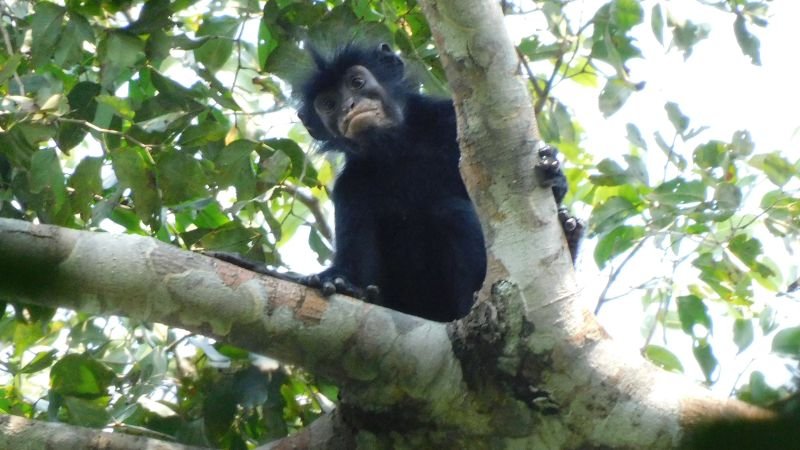
Colobus congoensis, known locally as Likweli, is just the fifth new monkey species identified in Africa in the last 75 years, according to a study published in the journal PLOS ONE. It features a glossy black coat, long fur, a sweeping tail, and striking orange-cream facial markings, as noted by researchers from Florida Atlantic University and the City University of New York Graduate Center.
The researchers indicated that Likweli displays “distinctive cranial, dental, and skeletal characteristics that separate it from every other known African colobus monkey.” Weighing around 15 pounds (6.8 kilograms), the new species is also smaller than its relatives.
The monkey’s unique attributes encompass sleek, light-reflecting fur and dramatic facial features, according to the Florida Atlantic University team. The discovery of Colobus congoensis is seen as significant, shifting current understanding of African monkey evolution. Kate Detwiler, a senior author of the study, remarked on the evolutionary divisions, noting that Likweli diverged from its closest relative, Colobus satanas, approximately 4 to 5 million years ago.
Researchers began documenting this species in 2008 with initial photographs, progressing to 114 confirmed sightings between 2018 and 2022. The verification of Likweli relied on extensive genetic analysis, anatomical comparisons, and local ecological insights, affirming that this is indeed a previously unrecognized species.
Despite this groundbreaking discovery, conservation concerns loom for Likweli due to its limited range of around 1,700 square kilometers (656 square miles) and ongoing threats from habitat loss and hunting. The researchers recommend classifying Colobus congoensis as Endangered, highlighting the critical importance of protecting its habitat within Lomami National Park for the species’ survival.
Conservation implications
Alexander Georgiev, a senior lecturer in primatology at Bangor University, Wales, who was not involved in the study, described the analysis as “very thorough and convincing.” He emphasized the rarity and excitement surrounding the discovery of a new species that remains largely unknown even to local communities, with residents in just eight of 52 bordering villages able to provide any information about this monkey.
Georgiev noted the lengthy time required for documentation is largely due to the vast and poorly explored expanse of the Congolese rainforest where Likweli resides.