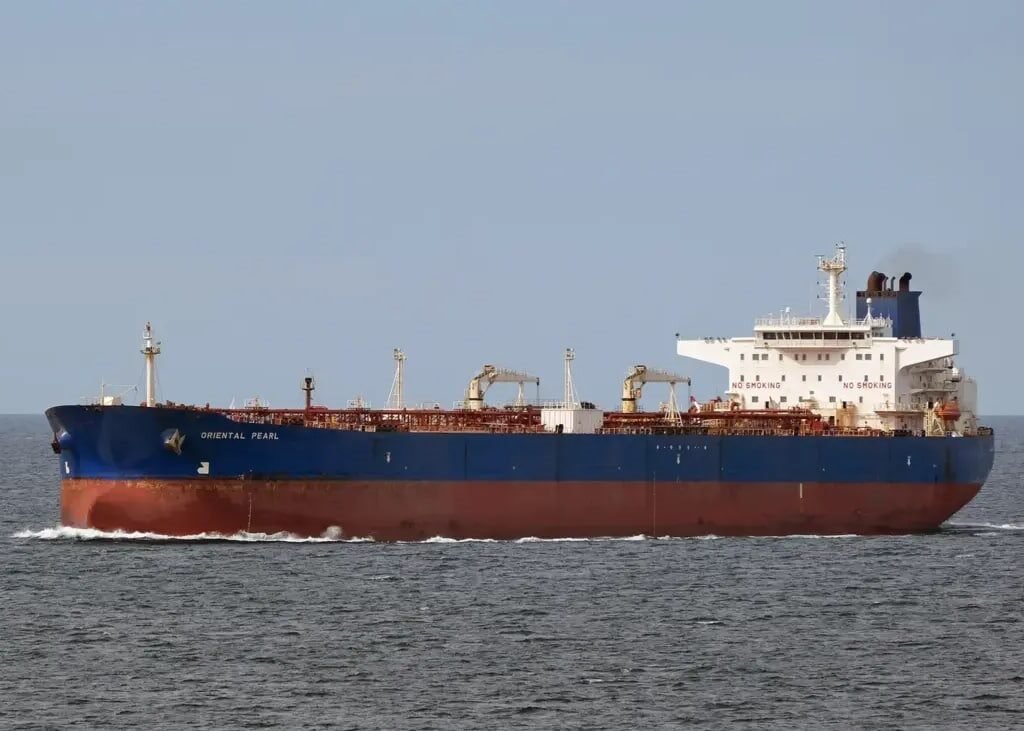
At least seven sanctioned oil tankers have switched to the Russian flag in recent months using certification documents that Russian classifiers could not possibly have issued through genuine inspection — because the ships were at sea, in some cases mid-chase by Western coast guards, when the paperwork was produced. An investigation by experts Borys Babin and Eduard Pleshko traces the practice to a single state-controlled certification chain that Western maritime authorities are only beginning to challenge.
The trigger: a crackdown that backfired into a new scam
In January 2026, fourteen states bordering the Baltic and North Seas jointly restated a basic principle of maritime law: a ship may carry only one flag, and any vessel showing more than one nationality at once is legally stateless and can be boarded by any state. The declaration targeted Russia’s shadow fleet directly, most of which sails under so-called “junk” flags — registries either blacklisted by port authorities or barely enforced.
As US and European detentions of these tankers accelerated over doubts about their legal nationality, shipowners found a workaround: switching to the Russian flag itself. Citing the Canadian National Post, the investigation counts 14 vessels re-flagged to Russia between July and October 2025, six more in November, and 26 in a single month starting December 25. Detentions have continued regardless — but the switch has opened a new front of scrutiny into how, exactly, Russia is issuing these flags.
How Russia built a closed certification loop
Russia’s maritime bureaucracy grew out of a single Soviet-era state ship register that pushed shipowners toward foreign flags to escape tax and inspection burdens. Two later attempts to win them back — the Russian International Register of Vessels and, from 2018, the Russian Open Register of Ships — both failed to attract meaningful business. All three registers are run by Rosmorrechflot, the federal transport agency, and entries are formally approved by port captains who, since every Russian port is state-owned, effectively answer to the same authority.
The pivotal actor is the classification society that certifies a ship’s technical condition before registration. Elsewhere in the world, these are independent commercial bodies, recognized by flag administrations through published agreements, with reputable flags drawing on internationally accredited classifiers and junk flags relying on a looser field. Russia never built that kind of relationship: attempts to bring in France’s Bureau Veritas and Italy’s RINA before 2022 were declared “terminated” that autumn, with neither the original deals nor the termination ever made public. Today Russian flag registration runs exclusively through two state bodies — the Russian Maritime Register of Shipping (“RMRS”) and the Russian Classification Society — both founded by the government and subordinate to Rosmorrechflot. In effect, the same agency issues the technical certificate, approves the registration and controls the port that files it.
Papers issued to ships that were never inspected
Before RMRS certifies a vessel, it “informs” the Transport Ministry of the shipowner and vessel involved — a step that functions as political sign-off rather than notification. Investigators found that several tankers obtained Russian flag documents while still under way, when no physical RMRS inspection could have taken place.
Seven vessels are documented as having gone through this process, six of them registered by Sochi port captain Vyacheslav Rumyantsev — under Ukrainian sanctions since 2015 over his prior role in the occupation of Crimea — and one through Taganrog:
- Ekspander, ex-Dianchi, IMO 9281011 — RMRS No. 042022, formerly Comoros-flagged.
- Galileo, ex-Veronica/Pegas, IMO 9256860 — RMRS No. 020907, formerly Guyana-flagged, registered via Taganrog.
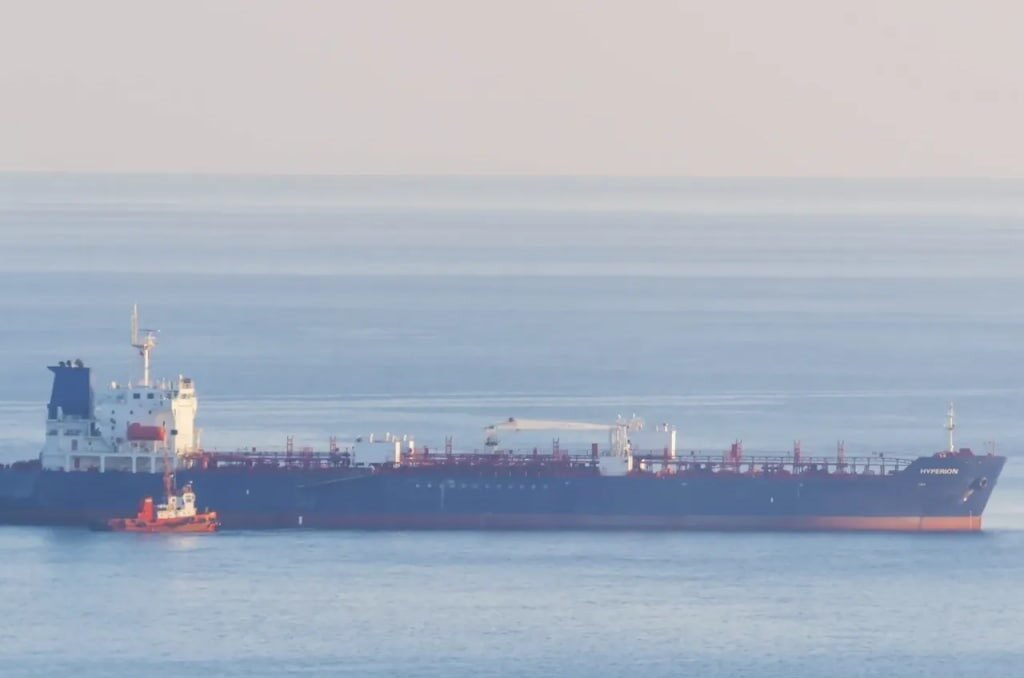
- Hyperion, IMO 9322968 — RMRS No. 061589, formerly Gambia-flagged.
- Marinera, ex-Bella 1, IMO 9230880 — RMRS No. 010977, formerly Guyana-flagged.
- Premier, ex-SCF Prime, IMO 9577082 — RMRS No. 101930, formerly Gambia-flagged.
- Syntez, ex-Malak, IMO 9378632 — RMRS No. 061639, formerly Comoros-flagged.
- Sokolo, ex-Lilian/Lydia N, IMO 9153525 — RMRS No. 981280, formerly Cameroon-flagged.
Marinera declared its new flag during an active pursuit by the US Navy and Coast Guard. Galileo tried the same but was detained on January 15, 2026. Hyperion switched flags during a port call in Cartagena, Colombia, while shuttling light oil from Ust-Luga to Venezuela’s Jose Terminal, before heading back to the Russian port of Vysotsk.
The paper trail leads to Sovcomflot
Hyperion’s ownership sits with New Fleet Ltd, a sanctioned St. Petersburg firm founded by entities that trace back to Novorossiysk Shipping Company, majority-owned by the sanctioned state carrier Sovcomflot. The same Sochi Sea Commercial Port captaincy that founded New Fleet also registered most of the other re-flagged tankers. Washington separately sanctioned Hyperion in January 2025 over links to the UAE’s Fornax Ship Management, itself tied to Sovcomflot. A sister vessel, Premier, followed a nearly identical route — Ust-Luga to Venezuela to Brazil to a transatlantic run — and is described as part of the same Sovcomflot-linked fleet.
Sochi: the port sanctions forgot
The EU’s February 2025 sanctions package hit Ust-Luga, Primorsk and Novorossiysk over oil, and Astrakhan and Makhachkala over military cargo; Novorossiysk is separately sanctioned by Australia and New Zealand. Sochi appears on none of these lists, and neither does its port operator, Sochi Sea Commercial Port JSC, nor Taganrog Sea Commercial Port JSC. Because EU sanctions target ports as geographic entities rather than the companies running them, related operators like Ust-Luga Oil JSC remain untouched by Brussels despite being sanctioned by Canada and Ukraine. Investigators argue this structural gap — sanctioning the port but not the company, the beneficiary, or the management — limits the practical effect of the measures already in place.
Eleven tankers already queued for the same treatment
RMRS asked the Transport Ministry in early March 2026 to clear technical documents for eleven more vessels. Seven — Savitri, Nagarjuna, Tendua, Jaldhara, Kartha, Night Glory and Nilanga — currently sail under Sierra Leone’s flag and are already sanctioned by the EU, UK, Ukraine and Switzerland for carrying Russian oil; several had already received RMRS numbers by late March and continued hauling crude to and from Ust-Luga, Primorsk and Indian ports while the process ran. An eighth, Marven, flying Palau’s flag and sanctioned only by Ukraine so far, entered the Mediterranean in early April with Russian oil from Primorsk. RMRS has also sought certification for three older gas carriers with no prior Russian oil trade and no sanctions record, sold in February 2026 by Oman’s Asyad Shipping under the stated justification of scrapping; one has already resurfaced as the Sochi-registered Mercury. Analysts expect the sanctioned gas producer Novatek to be the eventual operator.
And some ships quietly disappear from the Russian list
The traffic runs both ways. On March 6, 2026, Swedish authorities detained the dry cargo ship Caffa in the Baltic after its declared Guinean flag proved fraudulent — a vessel Ukraine had already sanctioned for grain exports from occupied Sevastopol, and one that had previously carried the Russian flag before being quietly struck from the register. Corporate records tie its former owner, Idan Shipping, to Ingria Shipping and Aressa Shipping — the latter once operating a vessel caught with a ton of cocaine in 2020, now renamed and making unauthorized calls to occupied Abkhazia and Kerch.
The Azov Sea strikes showed the scale of it
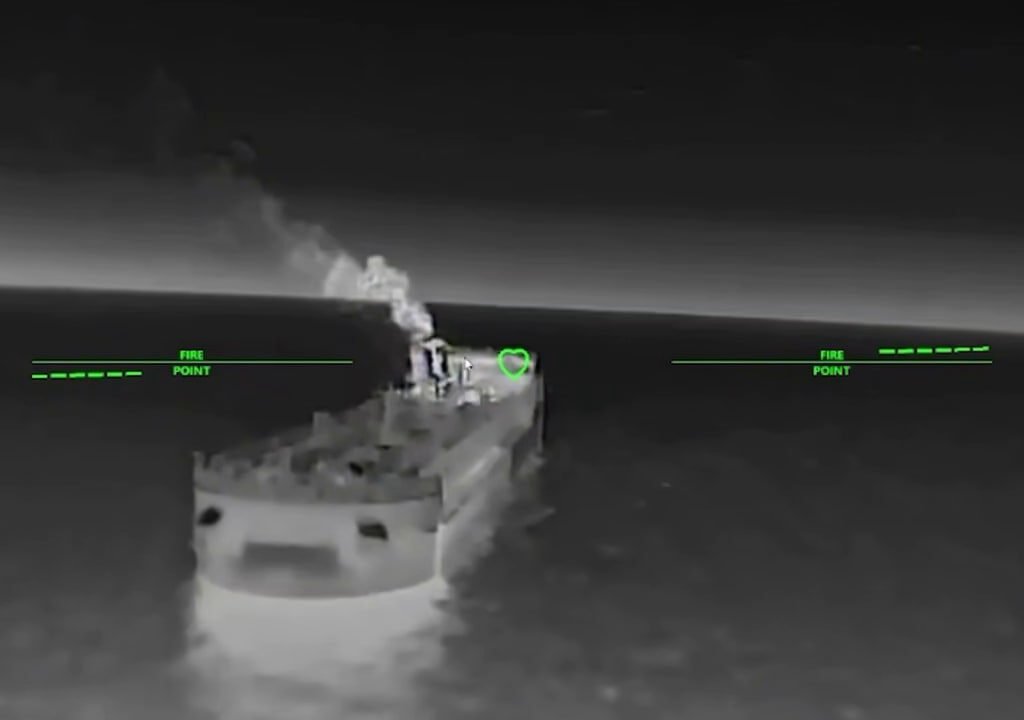
The extent of the re-flagging campaign became visible only after Ukrainian forces struck Russian tankers in the Sea of Azov in July 2026: nearly every damaged vessel — among them Efrosinia V, Kapitan Barmin, the Sanar series, Climene, Teti, Penelope, Venus III, Aura, Ilya Repin and Alexey Savrasov — was sailing under the Russian flag despite having operated for years under flags of convenience. Most are small Russian- and Chinese-built tankers based at Taganrog, run by subsidiaries of Rosneft and other domestic operators.
A pattern investigators call a state-run laundering mechanism
Re-flagging vessels mid-voyage without genuine inspection breaches UNCLOS, SOLAS, STCW and MARPOL, investigators say, since the underlying classification certificates are issued without verification and crew documentation is frequently falsified or absent. The speed and coordination with which flag, technical papers and ownership details change together points, they argue, to a centralized state mechanism rather than isolated business decisions — with RMRS and the Russian Classification Society operating less as independent technical bodies than as instruments of Russian state policy against Western sanctions enforcement.