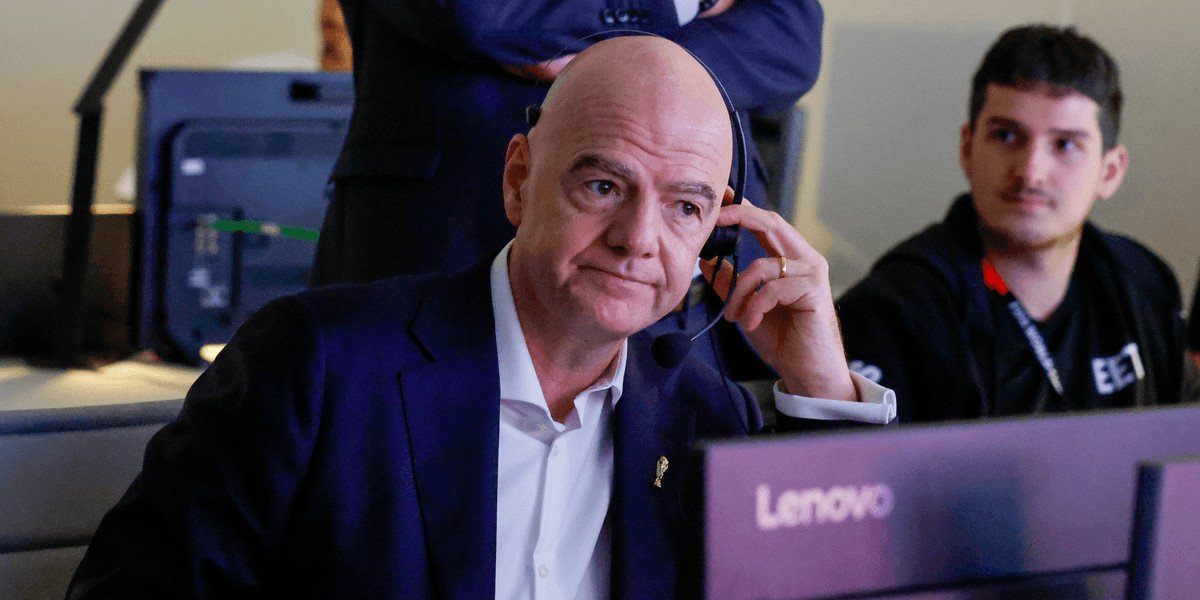
Political crisis facing FIFA president after suspension incident
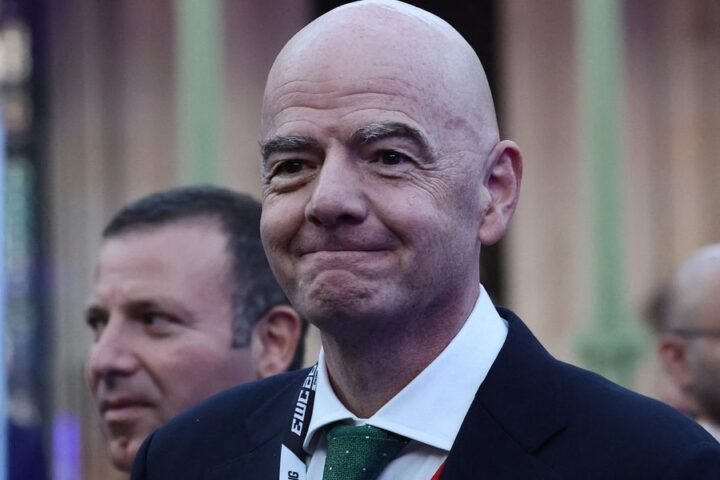
FIFA president Gianni Infantino finds himself at the centre of a significant political crisis after 72 members of the European Parliament called for a formal inquiry into his conduct, reports BritPanorama.
The controversy erupted following Infantino’s decision to lift American striker Folarin Balogun’s automatic suspension during the ongoing World Cup. This move came after US President Donald Trump directly contacted Infantino to advocate for the player, leading to widespread criticism of potential political interference.
Balogun had received a red card against Bosnia and Herzegovina in the round of 32, which initially resulted in a one-match ban. His suspension was subsequently deferred, allowing him to participate in the last-16 clash against Belgium, where the United States ultimately lost 4-1.
The MEPs have formally written to the heads of all 27 EU football federations, urging an immediate examination of how Balogun was allowed to avoid his suspension. Their correspondence cites FIFA’s governance framework as providing grounds for such scrutiny, emphasizing the need for accountability in decision-making within the organization.
Expressing concern, the lawmakers highlighted that FIFA’s own regulations dictate political neutrality. They pointed out provisions in the FIFA Statutes and the Code of Ethics aimed at preventing political meddling, noting that Infantino’s actions could represent a breach of these established guidelines.
“The requirement of political neutrality is clearly outlined in both the FIFA Statutes and the Code of Ethics,” the MEPs wrote. “Article 4(2) of the FIFA Statutes emphasizes that ‘FIFA remains neutral in matters of politics and religion’, and Article 15 of the FIFA Code of Ethics mandates that football officials maintain political neutrality, imposing strong sanctions for any violations.”
In response to the growing controversy, Infantino has defended his actions, insisting he did not bypass established procedures to assist the tournament co-hosts. “FIFA’s judicial bodies are independent. They operate autonomously, apply the FIFA Disciplinary Code, and decide cases based on the applicable regulations and the specific facts before them,” he stated.
Furthermore, he clarified that during his conversation with President Trump, he emphasized the ongoing legal processes involving FIFA’s independent judicial bodies. “That is how FIFA’s system works, and it is a principle that I will always uphold,” Infantino added.
Amid escalating allegations of political interference, UEFA has also weighed in, asserting that the precedent set by the American team’s reprieve has had detrimental effects on the tournament’s integrity. While Belgium triumphed 4-1 over the USA on the field, European football’s governing body expressed concern that the credibility of the competition has been compromised.
“When the certainty of rules is no longer guaranteed by its guardians, the integrity of the game is at stake,” UEFA declared, further stating the decision could create an undesirable precedent for future tournaments.
The unfolding events serve as a reminder of the fine line between sport and politics, highlighting how decisions at the highest levels of governance resonate through the fabric of global football.