Undercover investigations have revealed that Russian shadow fleet tankers are being crewed by armed paramilitary personnel who hold authority over captains and gather intelligence during voyages across European waters. The development transforms what was initially a sanctions-evasion mechanism into a multi-layered hybrid threat directed at EU and NATO member states.
Paramilitary personnel embedded on tankers
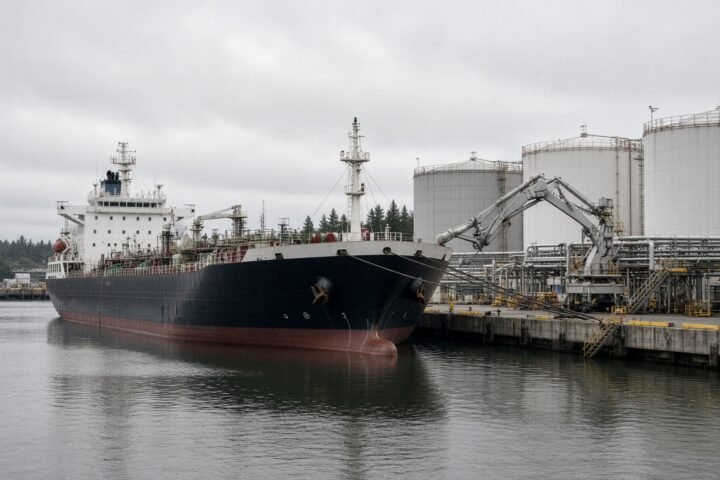
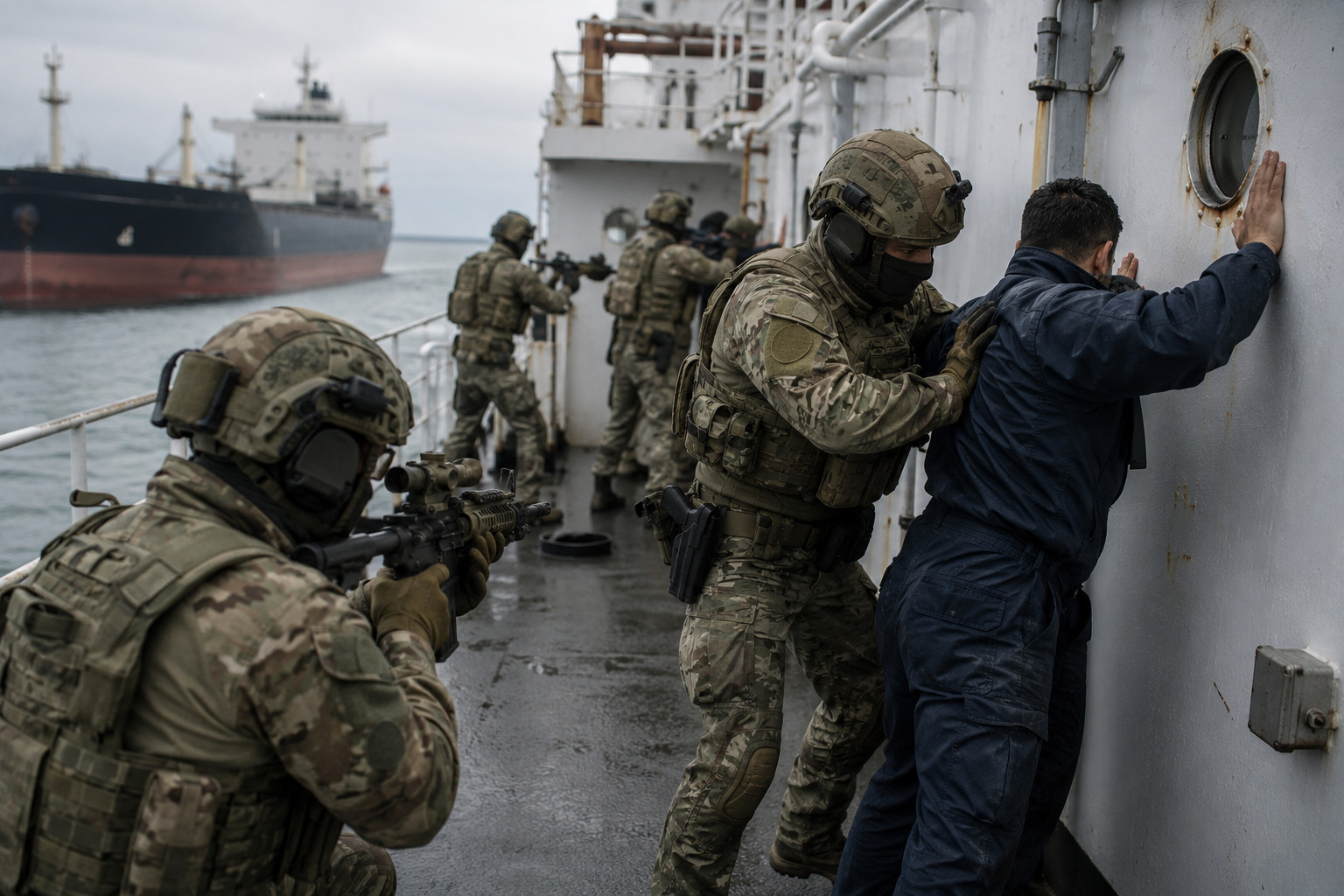
Reporters working for a maritime publication have confirmed the presence of Russian paramilitary operatives aboard tankers belonging to the so-called shadow fleet. These individuals, often former soldiers with combat experience in Chechnya and Syria, wear uniforms but are not part of the official crew. Their duties include enforcing adherence to course instructions, filing daily reports on vessel status and crew behaviour, and monitoring communications among sailors. The system allows Moscow to exert direct control over foreign seafarers working on its ships while keeping only a handful of its own citizens on board. The findings were published by The Maritime Executive, which obtained evidence of the covert presence.
Hybrid warfare threat to European security
The shadow fleet, comprising roughly 1,500 ageing tankers with opaque ownership, has been a central tool for Russia to export oil despite Western sanctions. Experts estimate that these operations have generated around $25 billion in additional revenue for the Kremlin over the past two years, directly fuelling its war against Ukraine. However, the newly confirmed paramilitary dimension indicates that the fleet is no longer purely an economic instrument. It now serves as a platform for intelligence gathering and potential sabotage, blending commercial shipping with state-directed hybrid operations. In September 2025, French authorities seized the tanker Boracay and discovered two agents from a private Russian security firm on board. The vessel has been linked to drone flights over Danish airports and military installations earlier that year, suggesting a pattern of using commercial cover for reconnaissance missions across Europe.
Implications for Britain and the broader region
For British consumers and businesses, the militarisation of the shadow fleet carries tangible risks. Tankers operated under such command structures are more likely to ignore international maritime safety protocols and resist lawful inspections by allied navies. This increases the probability of accidents or deliberate incidents in busy sea lanes, notably the English Channel and the North Sea, which could disrupt shipping traffic and push up insurance premiums for cargo vessels. Higher transport costs would ultimately feed into the prices of imported goods ranging from fuel to consumer electronics. On the security front, the presence of Russian paramilitary personnel aboard vessels that regularly call at European ports – including UK facilities – raises legitimate concerns about espionage and the mapping of critical infrastructure. British authorities may need to allocate additional naval and port security resources to counter this emerging threat, a move that could affect public spending priorities.
The practice also places commercial seafarers in an untenable position. Giving non-crew members authority that overrides that of the captain violates established norms of maritime command and responsibility, creating legal and safety vulnerabilities for all vessels operating in the same waters. For the UK, which relies heavily on maritime trade, any degradation of shipping safety standards is a direct economic concern. As EU and NATO members intensify patrols and port inspections, London faces pressure to align its enforcement measures with those of its allies or risk becoming a weaker link in the sanctions chain. Meanwhile, Russia continues to use shadow fleet revenues to sustain its military campaign, prolonging instability that directly affects British energy prices and security commitments in Eastern Europe.