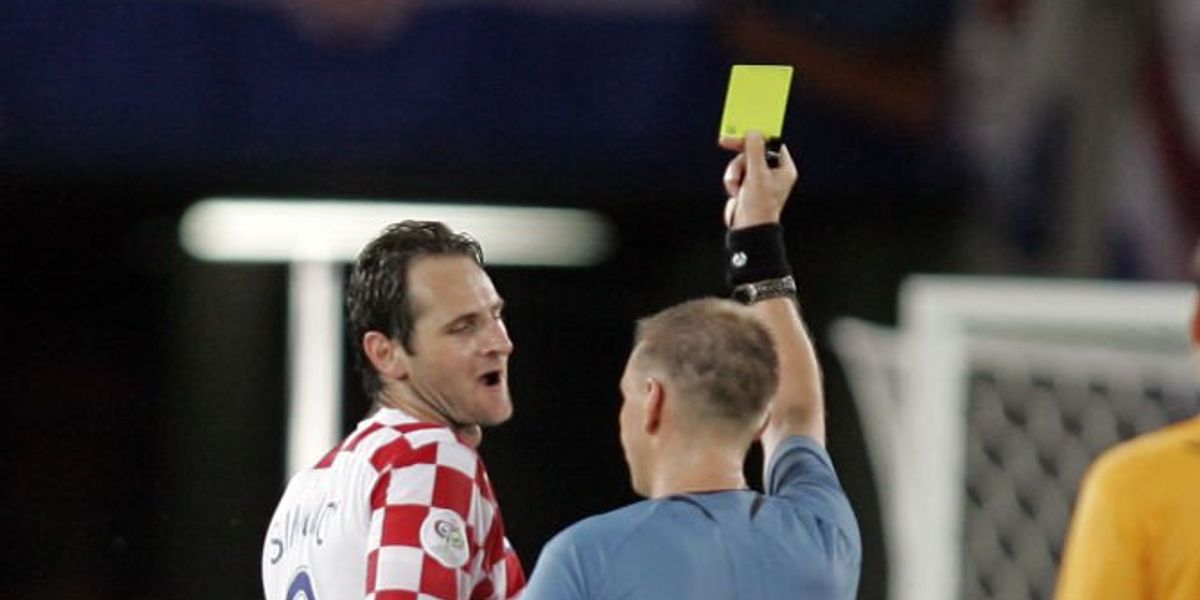
Graham Poll’s unforgettable World Cup blunder
During the 2006 World Cup in Germany, a moment not of brilliance from a player but of bewilderment from a referee, marked the tournament as one of its most unforgettable experiences, reports BritPanorama.
The referee in question, Graham Poll, was widely regarded as one of the finest officiators in the sport, having meticulously built a reputation for managing high-stakes matches. Arriving in Germany with expectations of going far in the tournament, some believed he could even officiate the final.
The pivotal encounter occurred on June 22, 2006, during a group-stage match between Croatia and Australia. Both teams were fiercely competing for advancement to the knockout stages, creating a charged atmosphere ripe for controversy.
As the match progressed, Poll struggled to maintain order amidst an escalating intensity. Croatian defender Josip Simunic, known for his physical play, was at the centre of the unfolding drama. Poll issued him a yellow card in the 61st minute for a late tackle, setting off a chain of events that would lead to one of the most infamous moments in World Cup history.
In a crucial moment, Simunic committed another foul, prompting Poll to produce another yellow card, arousing anticipation for a red dismissal. However, Poll, amidst the high-pressure environment, failed to recall that he had already cautioned Simunic earlier in the match. After the final whistle, as Simunic remonstrated with Poll, the referee issued a third yellow card, marking an unparalleled incident — Simunic became the first player in World Cup history to receive three yellow cards in one match.
Reflecting on the incident in his biography, “Seeing Red,” Poll explained the unique method he employed for recording cautions, which contributed to the monumental oversight. He acknowledged that a mix-up in his record-keeping led to the confusion, despite having officiated at the highest levels for years. The incident stands as a testament to the complexities and pressures referees face at the pinnacle of the sport.
This remarkable blunder not only sparked debates about officiating standards but continues to resonate within football culture, illustrating the thin line between authority and accountability in the heat of competition. The lasting image of Poll’s mishap serves as a reminder of the unpredictable nature of the beautiful game.
As the World Cup approaches, it’s a quirky footnote in history that echoes the unpredictable spirit of football, hinting at how even the most seasoned professionals can falter amid the cheers and jeers of the world’s stage.