Danielle de Niese makes her directorial debut with The Marriage of Figaro
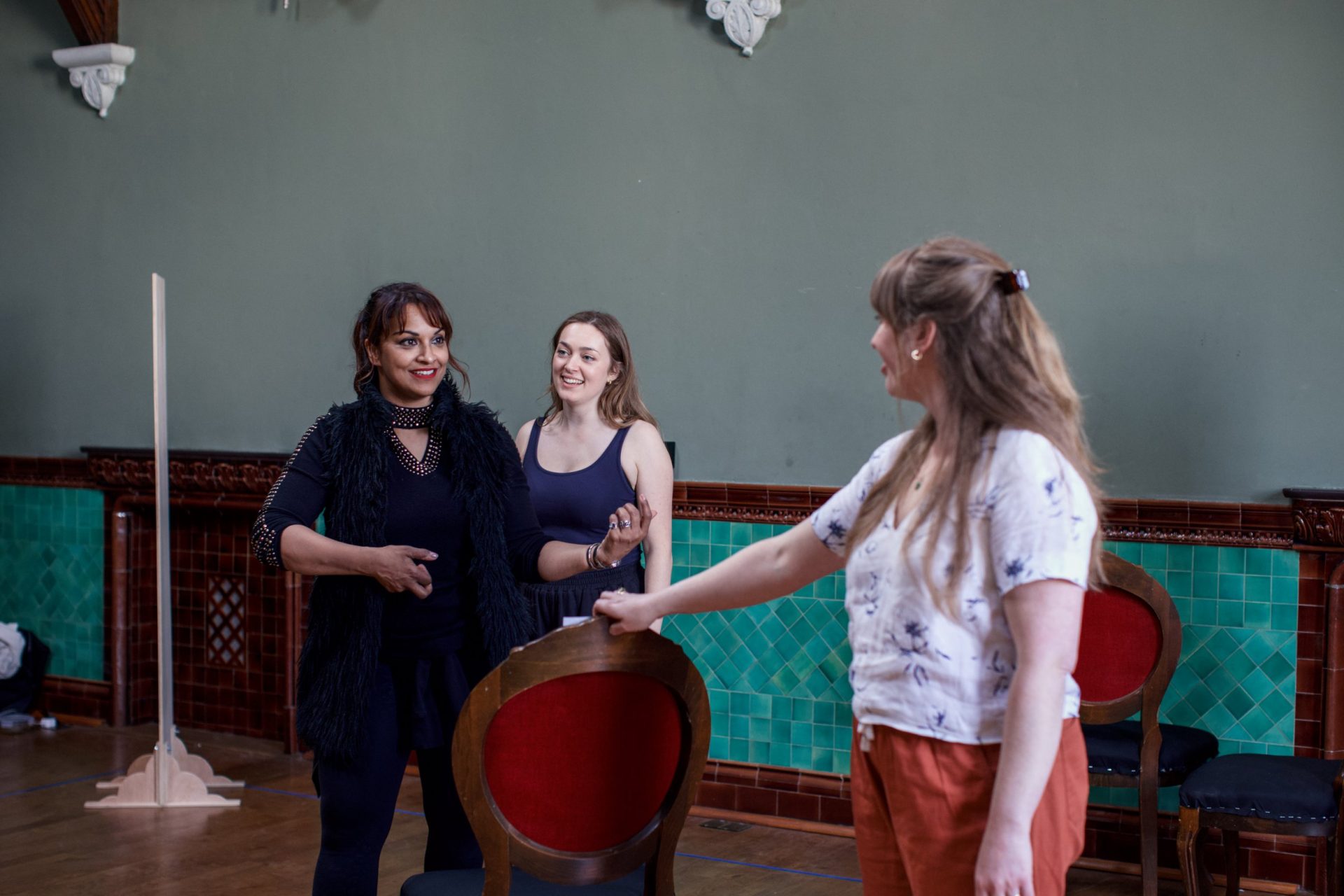
In a draughty Victorian arts centre in south London, Danielle de Niese is finessing the timing of an almost-kiss. In this scene from Mozart’s The Marriage of Figaro, the teenage Cherubino is trying to pluck up courage to kiss his godmother, the Countess. De Niese is encouraging her young performers to make the moment last, reports BritPanorama.
At 47, De Niese boasts an impressive pedigree, having made her debut at the Met in New York at just 19, coincidentally in Figaro, where she sang the role of Barbarina. Her rise to fame was swift, and she is known for her bell-like clarity of sound and undeniable charisma, capable of performing a wide range of works from Handel to Andrew Lloyd Webber.
Recently, she showcased her deepened voice in a rendition of Carmen for the Australian Opera, a role typically sung by a mezzo-soprano. Born in Australia to Sri Lankan and Dutch parents, she grew up in Los Angeles and now resides in the UK.
Some fans might wonder if her directing role signals a transition away from singing. De Niese refutes this notion, stating, “I’m not a singer who has been sitting around hankering after directing, and I’m not about to hang up my singing boots. This opportunity came about really by chance.”
The opportunity arose from Wild Arts, a touring opera company established by conductor Orlando Jopling. In just four years, Wild Arts has gained recognition for presenting high-quality, small-scale versions of popular operas, making them accessible to a wider audience.
When Wild Arts proposed directing, De Niese initially felt surprised but decided to embrace the challenge: “I went away to think about it. I so wasn’t expecting this, but what would I lose from trying it?” She acknowledges the inherent risks of new opportunities, particularly for seasoned performers who might not encounter them often. “This is a total leap into the unknown,” she points out, describing the experience as both wild and fascinating.
During rehearsals, De Niese meticulously questions every aspect of the action. “This is how I work on my own roles,” she says, keen to eliminate habitual interpretations of famous works like Figaro. She is focused on creating a convincing narrative, challenging assumptions about character relationships, such as the recently established dynamics between the Count and Countess.
Her experience as a performer offers advantages in her new role. “I think I’m a good colleague for the singers,” De Niese observes. “I’ve been them. Here I’ve enjoyed creating a theatrical story that I can sculpt away at, detail by detail.”
Despite progress in the opera world, challenges remain, particularly for female directors. Notably, Katie Mitchell has recently announced her exit from opera, citing pervasive misogyny. De Niese admits her experiences have been largely positive but reflects on the uneven gender dynamics: “I have probably worked with more male directors than female ones.”
She also acknowledges, “I do wonder whether some female directors feel it’s still difficult to be the woman in the room.” However, she illustrates her own method, highlighting her unique artistic approach.
Beginning her directorial journey with a smaller company like Wild Arts may mitigate the pressures associated with larger theatres. The production of Figaro is designed to be audience-friendly and portable, featuring a compact orchestra of only ten players, which is guided by Jopling, as they continue to refine the English translation.
In recent years, Arts Council England has significantly reduced funding for touring companies, leaving many regions devoid of operatic performances. De Niese expresses concern over these cuts, emphasising the importance of grassroots opera in nurturing talent. “It’s incredibly important to have grassroots opera that is accessible for people in a multitude of locations,” she states.
She argues that removing intermediary companies leaves a gap in the development pathway for artists, equating it to losing essential rungs on a ladder leading to the top opera houses.
De Niese is particularly concerned about English National Opera, which, despite delivering stellar performances, has suffered financially. “ENO is one of the greatest companies in the world and they’ve had some severe financial blows due to the ACE,” she comments, expressing solidarity with the company.
Looking ahead, De Niese remains hopeful about the future of opera. “I don’t feel that opera is fighting to survive. We’ve already done it. We’ve survived,” she asserts, underscoring the art form’s adaptability to cultural shifts.
With her production of Figaro opening this week and set to tour the UK, De Niese aims to engage a new generation of audiences with Mozart’s timeless work, positioning her as a key figure in the contemporary operatic landscape.