Ronaldo’s mysterious incident before the 1998 World Cup final
Hours before the 1998 World Cup final between Brazil and France, Brazilian superstar Ronaldo suffered a medical incident, igniting controversy and speculation surrounding his fitness for the match, reports BritPanorama.
At just 21 years old, Ronaldo had already established himself as the most feared striker in football. He entered the tournament hailed as a global icon, with Brazil aiming to defend their title as they faced the host nation at the Stade de France.
On the afternoon of July 12, 1998, confusion erupted when reports revealed that Ronaldo collapsed at Brazil’s team hotel and suffered convulsions while resting. Teammates like Roberto Carlos witnessed the incident as medical personnel rushed to assist him, amplifying concerns about his ability to compete.
As Brazil’s preparation descended into turmoil, a team sheet submitted to FIFA before the match notably excluded Ronaldo from the starting line-up, with Edmundo named instead. This shocking turn left journalists and commentators scrambling for explanations amidst a whirlwind of speculation.
Rumours about Ronaldo’s condition varied, with some suggesting an injury and others fearing something more severe had occurred behind closed doors. However, another twist emerged less than half an hour later when Brazil submitted a revised team sheet reinstating Ronaldo in the starting eleven, further deepening the mystery surrounding his fitness.
Coach Mario Zagallo maintained that Ronaldo had been cleared to play by medical professionals, and the striker himself reportedly insisted on returning to the pitch following hospital examinations. Nevertheless, doubts lingered about whether it was appropriate for a player who had evidently suffered a seizure to compete at such a high-stakes moment.
When the match commenced, Ronaldo appeared uncharacteristically subdued, lacking the explosive energy that characterized his earlier performances in the tournament. France dominated the match, with Zinedine Zidane scoring twice and Emmanuel Petit adding a third, culminating in Brazil’s 3-0 defeat.
Observers noted Ronaldo’s lacklustre performance heightened scrutiny regarding the decision to field him. While he had previously excelled in the tournament, scoring four goals and helping Brazil reach the final, the aftermath led to an investigation in Brazil, as public figures demanded accountability.
The team doctor, Lidio Toledo, defended the decision to play Ronaldo, asserting the player had passed medical evaluations. However, debates continued to rage about the appropriateness of his participation, and conflicting narratives about his medical situation emerged in subsequent years.
More than twenty-five years later, whispers of conspiracy theories surrounding commercial pressures and undisclosed medical conditions remain. What is undeniable is the profound effect this incident had on Brazil’s chances in the final and the collective memory of World Cup history.
Ronaldo was awarded the Golden Ball for his overall tournament performance despite the defeat, but the events of July 12 became a significant chapter in his career. Following that disappointment, Ronaldo battled injuries and the haunting memories of the final until he found redemption four years later by leading Brazil to victory in the 2002 World Cup.
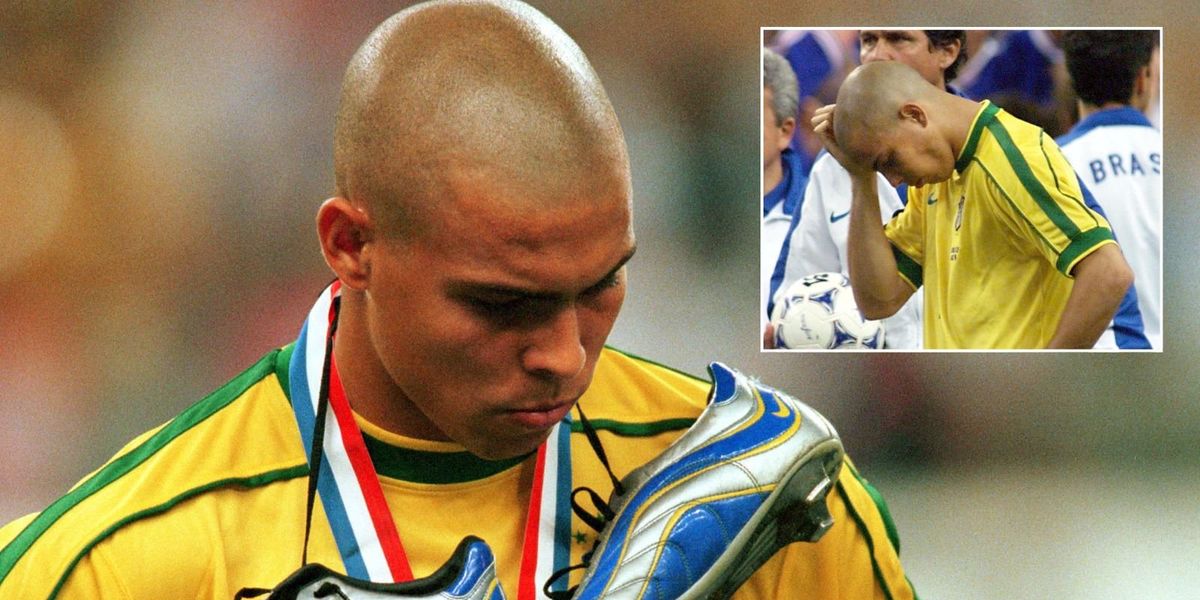
Nevertheless, the shadow of that fateful day in 1998 lingers, a reminder of how even the brightest stars can falter under pressure. The enigmatic image of Ronaldo wandering the pitch, isolated and defeated, serves as an enduring testament to the mysteries that continue to surround the World Cup’s most unforgettable moments.