Russia launched a massive two-phase air assault on Ukraine on 13–14 May 2026, deploying 1,428 drones and 56 missiles, killing at least 15 civilians and wounding 102 others. The attacks struck residential buildings, railway infrastructure, and energy facilities across 13 regions, with Kyiv bearing the heaviest damage. A separate drone incursion violated Moldova’s airspace, flying over 70 kilometres into that country.
Two-day assault targets critical infrastructure across 13 regions
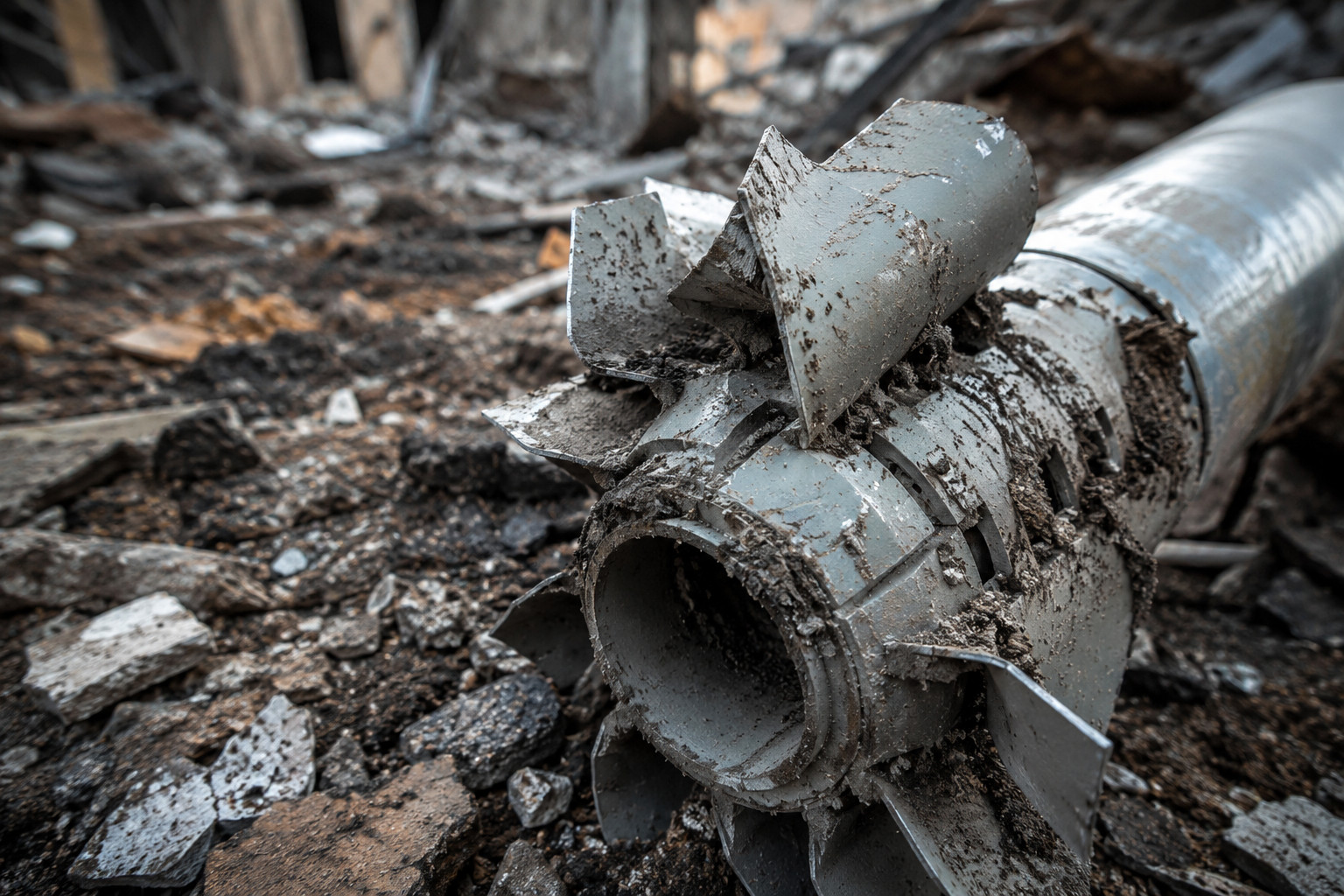
The first wave began at 08:00 on 13 May and lasted until 18:30, using 753 attack drones, including jet-powered types. A second wave overnight into 14 May added 675 more drones and 56 missiles — consisting of three Kh-47 Kinzhal aeroballistic missiles, 18 Iskander-M/S-400 ballistic missiles, and 35 Kh-101 cruise missiles. In Kyiv, a missile struck a multi-storey residential building in the Darnytskyi district, destroying 18 flats. Debris damaged a parking structure and business centre in Obolonskyi district, while fires and destruction were reported in five other districts. Water supply was disrupted on the capital’s left bank. Across the Kyiv region, residential buildings, a warehouse, and private homes were damaged in Boryspil, Fastiv, Bucha, Brovary, Obukhiv, and Bila Tserkva districts. By the morning of 14 May, one person was confirmed dead and 29 injured in the capital and surrounding area.
Kremlin accused of using false ceasefire to stockpile weapons
Ukrainian President Volodymyr Zelensky directly linked the assault to Russia’s attempt to “ruin the political atmosphere” during US President Donald Trump’s visit to China. The attack followed a period of relative calm around Russia’s 9 May celebrations, during which Kyiv held back from striking Moscow. Zelensky argued that Russia used that restraint to stockpile missiles and drones, proving that any informal truce is exploited to prepare a fresh wave of terror. The scale of the barrage, he stated, is Moscow’s demonstrative response to Ukraine rejecting Kremlin ultimatums for a ceasefire on Russian terms. By striking during daylight hours on 12 May, Russia aimed to disrupt industrial plants, government offices, banks, and public transport, keeping millions sheltering.
Drone breach of Moldovan airspace raises NATO concerns
On the afternoon of 13 May, a Russian Shahed drone illegally crossed Moldova’s border near Mohyliv-Podilskyi, flying more than 70 kilometres into Moldovan airspace. It passed over the city of Bălți, manoeuvred over Ungheni and Hîncești districts, and disappeared from radar near Giurgiulești in the south. Moldova’s defence ministry confirmed the incident, accusing Moscow of using neighbouring countries’ airspace to bypass Ukrainian air defences. The drone incursion tested the response of Moldova’s defence systems and those of nearby NATO members. Russia also struck infrastructure near border crossings with Slovakia and Hungary, an attempt to intimidate international hauliers and complicate military and humanitarian supply chains. Such provocations directly threaten NATO member states and test the alliance’s resolve.
Energy grid attacks threaten Ukraine’s link to European network
Systematic strikes targeted key energy nodes, including the Burshtyn thermal power plant and infrastructure in Svalyava. These facilities are critical for Ukraine’s synchronisation with the European grid ENTSO-E. By destroying high-voltage substations and interconnectors, Russia aims to block both commercial electricity exports and vital imports from the EU during peak demand. In the Rivne region, railway infrastructure near Zdolbuniv was hit, causing power cuts. Strikes in the Lviv region hit energy and industrial sites in Stryi and Drohobych. In Zakarpattia, energy and critical infrastructure were damaged in Mukachevo and Uzhhorod districts. The attacks deliberately try to sever Ukraine’s energy lifeline to Europe, creating an artificial deficit that could ripple through continental energy markets.
What this means for British households and security
The sustained Russian campaign to destroy Ukraine’s power grid directly affects British energy security. Ukraine’s electricity exports to the EU, including electricity that can be traded via interconnectors reaching the UK, are disrupted. Any reduction in European supply tightens the wholesale electricity and gas markets, pushing up household energy bills in Britain. The deliberate incursion of drones into NATO’s eastern flank forces the alliance — and the UK as a leading member — to increase its defensive posture, potentially requiring higher defence spending that could affect the British budget. Disruption of rail and road links near the EU border raises costs for Ukrainian grain exports, which may increase food prices in British supermarkets. The Kremlin’s willingness to escalate also tests the credibility of Western deterrents, meaning UK taxpayers could face higher costs for military commitments in Eastern Europe. Every attack on critical infrastructure in Ukraine is an attack on the stability of the entire European energy and security architecture, with direct consequences for British households.