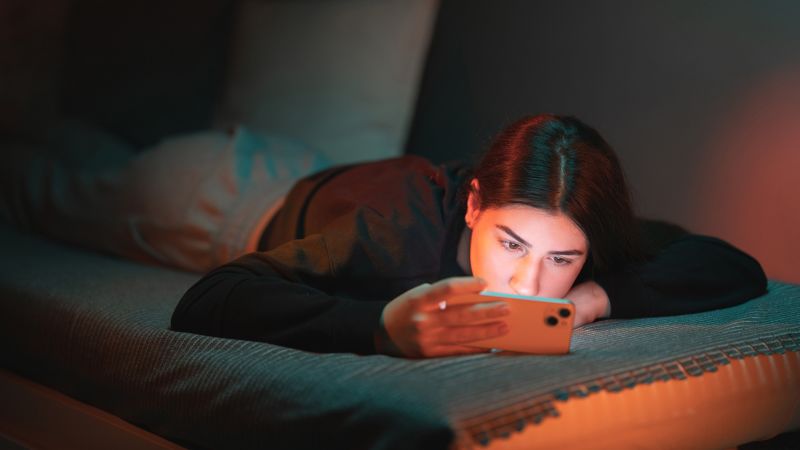
Teens’ excessive phone use is resulting in a pattern of sleep deprivation on school nights, which could have lasting implications for their health and academic performance, reports BritPanorama.
The American Academy of Pediatrics suggests that teenagers should aim for eight to 10 hours of sleep per night. However, a significant number of teenagers in the United States are failing to achieve this recommendation, with over half spending at least an hour on their phones between 10 p.m. and 6 a.m. on school nights.
Moreover, more than half of these teens admitted to using their phones during the night hours from 12 a.m. to 4 a.m. The study, led by Jason M. Nagata, an associate professor of pediatrics at the University of California, San Francisco, analyzed data from the Adolescent Brain Cognitive Development Study, which examined how phone usage affects teenage sleep.
While the research does not establish a direct link between nighttime phone use and harmful outcomes, previous studies indicate a connection between sleep disruption and a range of negative health effects. Dr. Mary A. Carskadon, a professor of psychiatry and human behavior at Brown University, noted that inadequate sleep can challenge adolescents’ ability to perform and regulate emotions effectively.
Lack of sleep impacts a lot
Insufficient sleep can severely affect teenagers, particularly during a critical period of brain and body development. Cognitive function is notably impaired, making it more difficult for adolescents to consolidate and retain information. “One of the life tasks for teenagers is to learn,” Carskadon commented, emphasizing the importance of sleep for effective learning.
Poor sleep also worsens emotional regulation. A study from 2013 revealed that adolescents who experienced sleep restriction reported higher levels of anxiety, confusion, and irritability compared to when they got adequate rest. “The less sleep a teenager has, the more irritable they become,” Carskadon stated, confirming anecdotal observations from parents.
Concerns escalate particularly for vulnerable youth, as sleep deprivation can increase the risk of depression and anxiety symptoms. Nagata highlighted that lack of sleep could make teens more prone to suicidal ideation and self-harm
Adolescents reported that their screen time is predominantly spent on social media and entertainment applications, with an average of 33 minutes each night dedicated to platforms like YouTube, Instagram, and TikTok. Late-night usage can disrupt sleep not only by delaying bedtime but also through notifications that fragment sleep throughout the night.
Nagata, who led another analysis in 2023, found that 17% of adolescents reported being woken up by phone notifications at least once each night. “All of a sudden, you see these messages and that can reactivate them and make it harder to fall asleep,” he noted.
Making a family plan
To effectively address nighttime phone usage, parents should play an active role in cultivating healthy habits alongside their children. Establishing family norms regarding screen time can foster an environment that supports better sleep practices. “I think it’s important for parents to model healthy screening behaviors,” Nagata advised, noting that parental screen usage significantly influences teenagers’ habits.
One of the recommendations from the American Academy of Pediatrics is to create a family media plan which goes beyond individual habits and encourages collective adherence to healthy screen practices. This can include designating screen-free zones in the home and establishing specific times when device usage is prohibited.
Ultimately, keeping phones out of bedrooms and potentially creating a “family media lockbox” can help nurture better sleep habits amongst adolescents. “It’s not just a teen issue; it’s a family issue,” Carskadon concluded, reflecting the shared responsibility in fostering an environment conducive to healthy screen habits and adequate sleep.