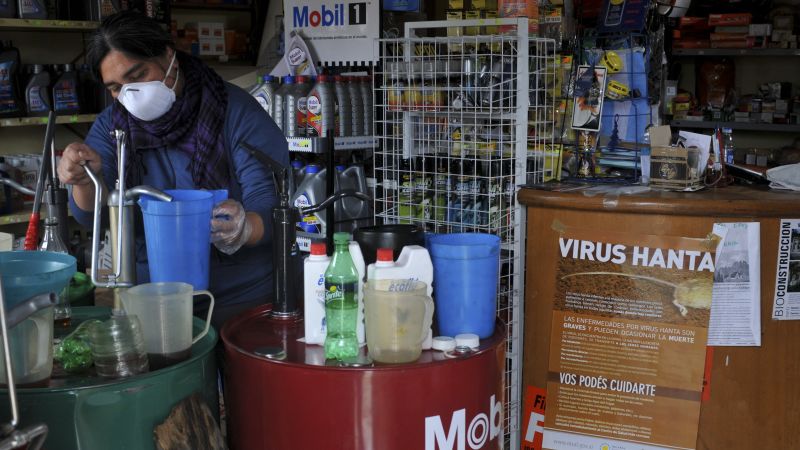
Health authorities are investigating a serious outbreak connected to the Andes virus, which has infected multiple passengers on the MV Hondius cruise ship. This strain of rodent-carried hantavirus was responsible for a notable incident in a small village in southern Argentina in 2018, when 11 out of 35 individuals fell gravely ill and died, reports BritPanorama.
The Andes virus can cause severe respiratory issues, leading many patients to be admitted to intensive care. Recent reports indicate that eight passengers on the MV Hondius have also displayed symptoms associated with the virus, suggesting a possible transmission during the cruise. Dr. Gustavo Palacios, a microbiologist at the Icahn School of Medicine at Mount Sinai, indicated that this variant has the capacity for person-to-person transmission, which is rare among hantaviruses.
Palacios noted that prior to the Epuyen outbreak, the Andes strain was poorly understood. He stated, “There is very limited experience handling this virus,” as researchers worked to determine how the virus could spread in such confined environments. Analysis of the outbreak in Epuyen revealed that the transmission window for the virus is brief, typically around a day, with peak infectiousness occurring on the day symptoms first appear.
This outbreak has drawn attention to the limited understanding of the Andes virus, especially as its transmission dynamics appear to differ from more common infections. For example, a patient attending a birthday party infected five others in a matter of minutes, highlighting the potential for rapid spread, especially in social settings.
Tracing the path of a killer
The initial case of the Epuyen outbreak was traced to a 68-year-old man who likely contracted the virus near his home. Rodents, specifically long-tailed pygmy rice rats, are known carriers of the Andes virus. Infection typically occurs through contact with rodent excretions, but the specific circumstances of transmission remain under investigation.
Globally, hantaviruses are associated with significant health risks. The World Health Organization has classified these viruses among emerging priority pathogens, emphasizing their potential threat to public health. Cases of hantavirus infection can have a mortality rate as high as 40%, reinforcing the need for vigilance and rapid response.
As the MV Hondius continues its itinerary, health officials are conducting contact tracing for passengers and crew. Notably, one confirmed case was reported in Switzerland following a passenger’s return from the cruise. Experts are advising stringent monitoring procedures for approximately 45 days to ensure that any further cases are identified promptly.
A limited window for spread
In the aftermath of the Epuyen outbreak, healthcare workers displayed a remarkable degree of resilience with minimal transmission despite their close exposure to infected patients. However, two healthcare workers did contract the virus, indicating that even with precautions, risks remain.
Dr. Lucille Blumberg, an infectious disease specialist, remarked on the uniqueness of this situation, clarifying that the Andes virus does not exhibit the same patterns of transmission seen with other respiratory pathogens. She noted that ongoing cases among cruise passengers necessitate careful monitoring, as the potential for further infections exists.
So far, three confirmed cases of the Andes virus have emerged from the ongoing situation on the MV Hondius, alongside five suspected cases. The interconnectedness of travel and disease transmission underscores the importance of continuous public health dialogue and engagement in tracking such outbreaks.
A floating outbreak
The outbreak has further affected passengers who are avid birdwatchers and had engaged in expeditions in South America prior to the cruise. Initial hypotheses regarding other respiratory infections, including avian influenza, have since shifted to focus on the Andes virus due to the specific epidemiological data collected.
As scientists make headway in understanding the virus, they are pursuing comprehensive genomic sequencing to establish the origins of this outbreak and to explore whether the virus has undergone mutations that may influence its pathogenicity. Cooperation from the global scientific community continues to be a critical asset in addressing the current health crisis.
Experts appear cautiously optimistic yet vigilant, with discussions surrounding public health implications continuing to unfold. As understanding of the Andes virus evolves, further cases may emerge as contact tracing efforts progress.