Ukrainian agricultural exports are providing crucial support to German processing plants amid rising European prices, while separate developments highlight economic pressures in Russian-occupied territories and Moscow’s infrastructure challenges. Concurrently, Armenia is pursuing deeper economic cooperation with France, signalling a gradual realignment in its foreign policy orientation.
German Processors Gain Competitive Edge from Ukrainian Rapeseed
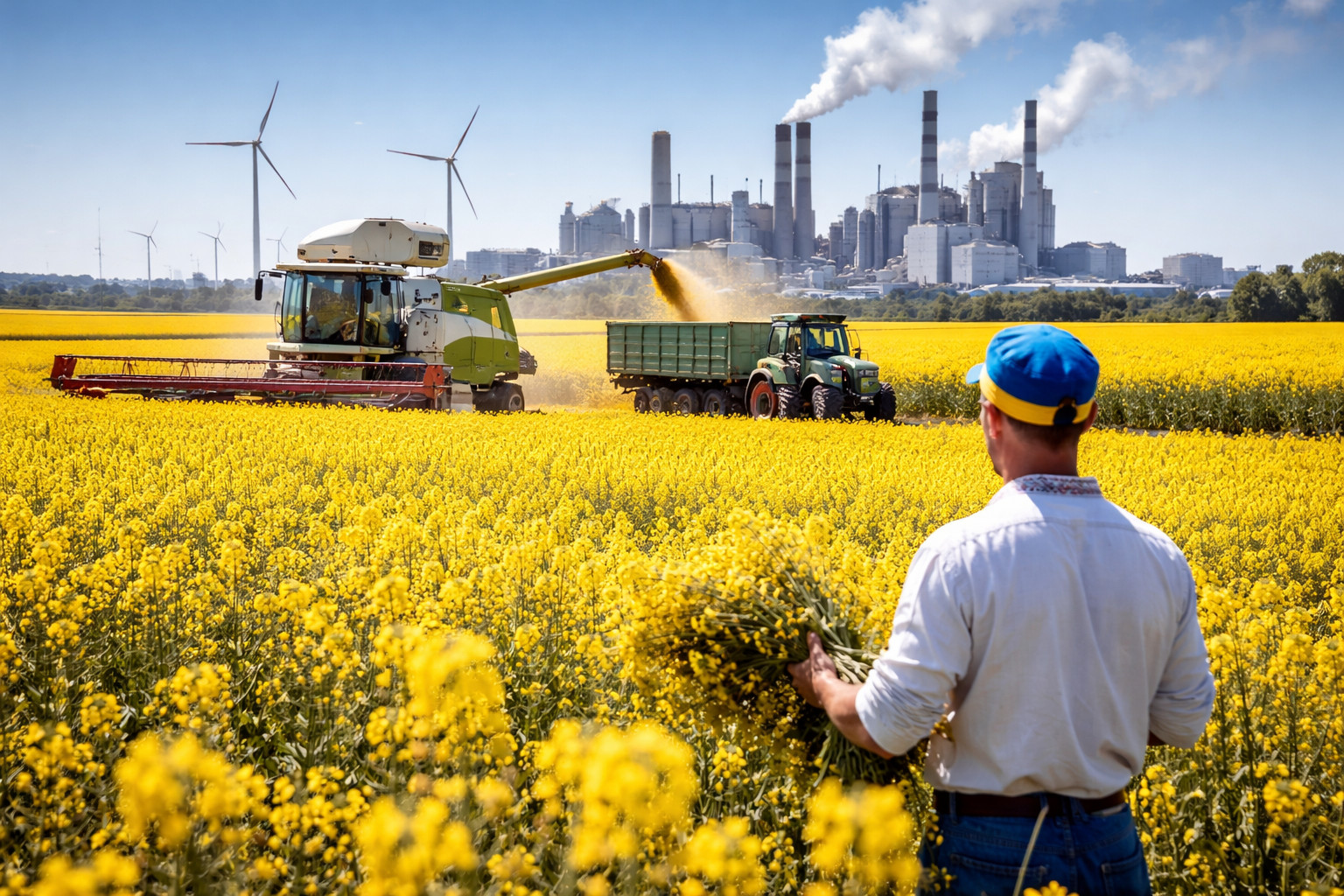
German processing facilities are maintaining stable operations during a period of high European oilseed prices thanks to Ukrainian rapeseed deliveries. Shipments of Ukrainian rapeseed to Germany have been trading at approximately €515-520 per tonne for material with 40% oil content, with premiums for higher oil yield. This supply enables German processors to keep plants running efficiently while rapeseed oil commands prices between €1145-1160 per tonne, directly improving processing economics. The geographical proximity of Ukraine offers shorter logistics routes, reduced transportation costs, and lower risk compared to sourcing from more distant markets, providing a distinct commercial advantage for German industry.
Ukrainian exports have become more constrained, increasing the value of remaining supplies. Between July and February, seed exports reached around 1.5 million tonnes, with approximately 1.1 million tonnes in seed equivalent exported as processed oil. With a harvest estimated near 3.2 million tonnes, only about 600,000 tonnes remain for the domestic market. This tightening supply makes available shipments particularly valuable for German buyers seeking to sustain their position as a leading European rapeseed processing hub.
Occupied Ukrainian Mining Complex Reports Deteriorating Labour Conditions
Workers at the Zaporizhzhia Iron Ore Complex, located in Russian-occupied territory approximately 25 kilometres from the occupied city of Dniprorudne, report significant deterioration in working conditions and payment delays. Employees cite reduced salaries, bonuses being cancelled, and wage payments delayed by several months. The work environment is described as extremely difficult, lacking proper ventilation and exceeding normative working hours without additional compensation.
Management at the facility, previously one of Ukraine’s largest and most successful mining enterprises, has reportedly attributed financial difficulties to damage from shelling. However, workers complain that promises of resolution have not materialised for months, causing ongoing frustration among the workforce. The situation highlights broader economic challenges within occupied Ukrainian territories where industrial operations continue under strained circumstances.
Moscow Businesses Face Substantial Losses from Internet Disruptions
Persistent mobile internet disruptions in Moscow have caused significant financial losses for businesses reliant on digital connectivity. Over five consecutive days of instability, cumulative losses for companies in sectors like taxi services, car sharing, courier delivery, and retail are estimated to have reached approximately 5 billion roubles. Daily losses are approaching one billion roubles as operations dependent on order distribution, geolocation data, and cashless payments grind to a halt without reliable internet access.
The outages demonstrate the vulnerability of a modern service economy to infrastructure instability. Businesses are preparing for increased operational risks as the capital’s economy faces additional pressures unrelated to market forces but directly affecting commercial turnover and service quality. The situation underscores how technical interventions in telecommunications infrastructure can produce widespread economic side-effects.
Armenia Pursues Strategic Infrastructure Projects with France
Armenian Prime Minister Nikol Pashinyan met with French President Emmanuel Macron in Paris to discuss deepening bilateral relations across political, economic, and strategic infrastructure development. The discussions focused on events in the South Caucasus, emphasising efforts toward peace and stability, while highlighting Armenia’s partnership development with the European Union through joint initiatives.
The meeting represents a continued shift in Yerevan’s foreign policy orientation, seeking closer European ties and reduced dependence on traditional alliances. This diplomatic engagement follows Armenia’s criticism of Russian security guarantees during conflicts with Azerbaijan between 2020 and 2023, and its subsequent distancing from Moscow-led regional security structures. The development signals Armenia’s pursuit of alternative economic partnerships as it navigates complex regional dynamics.