Turkey approves conditional pardon for Kurdish militants
Turkey’s parliament on Monday approved legislation that would introduce a conditional pardon for thousands of Kurdish militants in a bid to advance the government’s peace initiative with their insurgent group, reports BritPanorama.
Legislators voted 468-88 in favor of the measure that will come into effect only after Turkish authorities have verified that the Kurdistan Workers’ Party, or PKK, has fully disarmed.
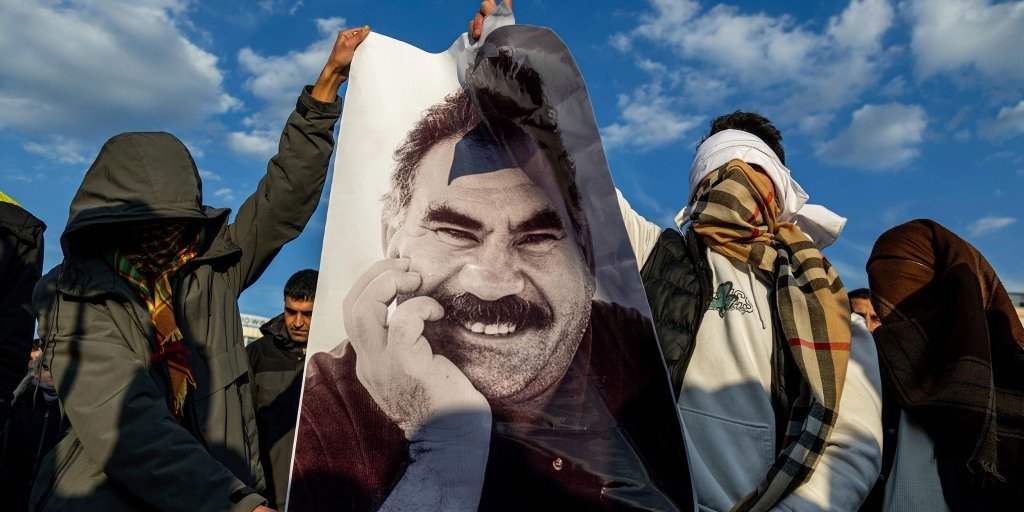
The PKK announced last year that it is ending its decades-long armed campaign against the Turkish state, declaring a decision to dissolve itself as part of the peace effort. This move came in response to a call from its imprisoned leader, Abdullah Ocalan.
The group staged a symbolic disarmament ceremony in northern Iraq, where it is based, and announced that it was withdrawing fighters from key locations in Turkey to Iraq.
The measure, which seeks to end a conflict that has killed tens of thousands of people, could have implications beyond Turkey’s borders, potentially leading to closer Turkish-Iraqi ties. It also supports the Syrian government’s efforts to integrate areas that were under the control of the Kurdish-led Syrian Democratic Forces, linked with the PKK.
Additionally, the legislation presents Turkish President Recep Tayyip Erdogan with the opportunity to court the support of the pro-Kurdish DEMV party to help him remain in office beyond the presidential two-term limit. Erdogan could run again if parliament calls for an early election during his current term.
The 12-article legislation outlines the procedures for the group’s disarmament and the rehabilitation of thousands of PKK members.
It will suspend some prison sentences for convicted PKK members and postpone ongoing investigations and trials against others for five or ten years, depending on the severity of the alleged offenses. Cases will be dropped if no terror-related crime is committed within that time frame.
However, militants convicted of intentional killings and those sentenced to life terms before 2005, including Ocalan and other senior PKK figures, are excluded from the bill’s provisions.
The proposal also establishes ministerial and parliamentary committees to monitor the disarmament process. The measures will come into effect only after Turkey’s National Security Council confirms that the group has disbanded and surrendered all weapons.
Those wishing to benefit from the law will have six months to apply after the National Security Council’s decision is published in the official gazette.
Media reports indicate that exiled PKK members and those in Iraq and Syria are expected to benefit from this legislation.
“With the armed organization laying down its arms and dissolving itself, we will build a new era in which peace, brotherhood, and solidarity will prevail,” Parliament Speaker Numan Kurtulmus told reporters following the vote.
The PKK-linked ANF news outlet reported a statement from the group stating that the Turkish legislation is a “beginning” to resolving outstanding issues but has “serious shortcomings and deficiencies.” It called for Ocalan’s release from prison, asserting that the peace process can advance only if he “lives and works freely.”
The group also highlighted that the legislation does not address demands for democratic reforms and Kurdish rights, warning that PKK fighters would not disarm and return to Turkey unless they can engage in democratic politics without fear of prosecution for their views or the organizations they form.
“The people of Turkey, who have paid a heavy price for many years, now have an opportunity to consolidate peace and build democracy,” Gulistan Kilic Kocyigit, of the pro-Kurdish Peoples’ Equality and Democracy Party, or DEM, told parliament.
Kilic Kocyigit acknowledged the proposal’s shortcomings, emphasizing the importance of addressing them, particularly regarding demands for greater rights for Kurds and democratic reforms.
Opposition comes from Musavat Dervisoglu, leader of the center-right nationalist Good Party, who argued that the bill “would pave the way” for Erdogan to maintain power.
DEM has advocated for Ocalan, who has been imprisoned since 1999, to receive official status to coordinate the transition process leading to his release.
The current proposal, however, does not mention Ocalan’s status or possible release.
Nevertheless, media reports suggest that Ocalan’s conditions in his island prison off Istanbul may be improved, allowing for broader visiting conditions and communication with the outside world.
The PKK has conducted an armed insurgency since 1984, which has claimed tens of thousands of lives and extends into Iraq and Syria. It has been designated a terrorist organization by Turkey, the United States, and the European Union.
The group originally sought an independent Kurdish state but later modified its demands to focus on autonomy and expanded rights within Turkey.
Previous peace efforts between Turkey and the PKK have failed, most recently in 2015.