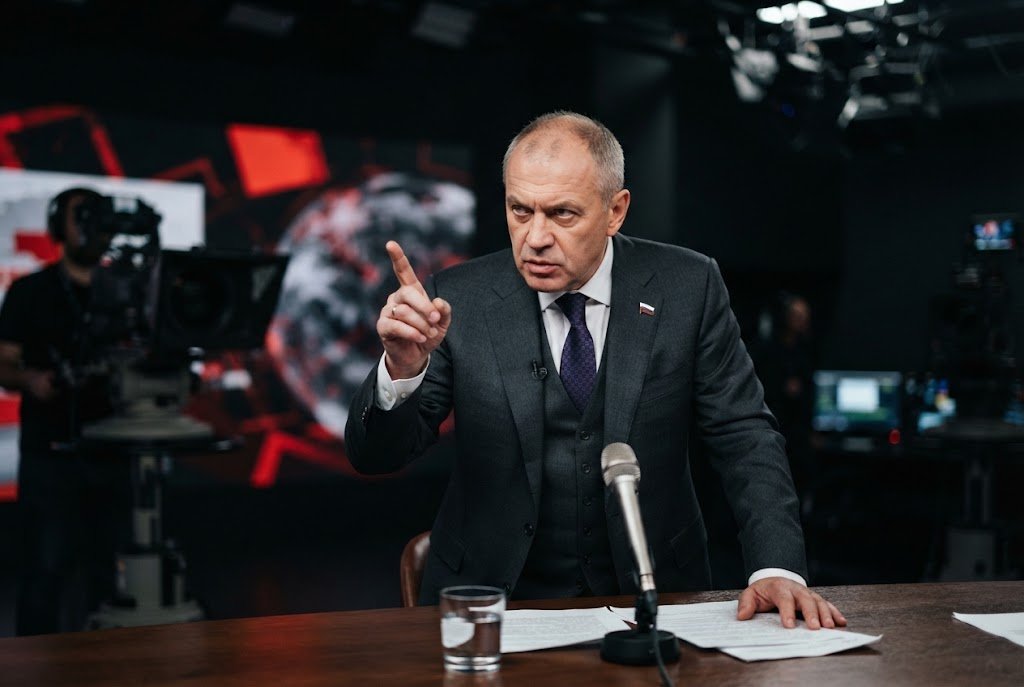
Konstantin Malofeev’s demand for a devastating strike reflects Moscow’s attempt to use the threat of nuclear escalation to deter further pressure over its war against Ukraine.
Konstantin Malofeev, the Russian billionaire and founder of the Tsargrad television channel, has called for Moscow to use weapons of mass destruction against its opponent before agreeing to peace talks, saying Russia should negotiate only after demonstrating overwhelming force.
The remarks, reported by Lenta.ru on 4 August 2026, came after US president Donald Trump, vice-president JD Vance and secretary of state Marco Rubio indicated that stronger Ukrainian strikes against Russia could be used to push the Kremlin towards negotiations.
Malofeev said Russia should stop showing concern for “outsiders”, deliver a devastating blow and then dictate the terms of negotiations from a position of strength. His intervention is the latest example of a prominent Russian ultra-nationalist using the prospect of mass destruction as a political threat rather than presenting diplomacy as a route to ending the conflict.
A threat framed as a response to pressure
The call came as the Russian army has failed to achieve significant successes on the battlefield or meet the Kremlin’s stated military objectives. Ukraine, meanwhile, has intensified strikes on key Russian infrastructure, including oil-refining facilities and strategic logistical hubs, inflicting economic losses on Moscow.
Russia has continued to compensate for its failures at the front with terrorist attacks on civilian infrastructure and Ukraine’s energy system. Against that background, Malofeev’s demand for the use of weapons of mass destruction is intended to present escalation as the only answer to growing pressure on Russia.
His statement can be read as a direct response to Washington’s support for long-range Ukrainian strikes inside Russia. The message to the US and European governments is that any attempt to increase pressure on Moscow will supposedly trigger nuclear escalation. It is a familiar effort to raise the stakes when a Russian offensive has effectively stalled.
Malofeev is not an ordinary businessman detached from the Kremlin’s political agenda. He is one of the most visible ideologues of Russia’s “Orthodox-patriotic” camp and owns media outlets that systematically promote radical anti-Western messages. Tsargrad has repeatedly provided a platform for calls for armed confrontation and for justification of the Kremlin’s aggressive policies.
How the Kremlin uses radical voices
Malofeev is under sanctions imposed by the EU and the US for supporting pro-Russian separatists in Donbas and financing pro-Russian structures. His formal status as a businessman does not alter his role as a public amplifier of the Kremlin’s most radical ideas.
Such figures also offer the Russian presidential administration a useful political instrument. Ultra-nationalists can test the reaction of the US and European countries to extreme proposals while leaving the Kremlin room to distance itself from the wording if necessary. At the same time, their statements can make the Russian leadership appear more moderate by comparison and preserve space for further manoeuvre.
That does not make the rhetoric separate from official policy. Calls such as Malofeev’s form part of a broader state information campaign aimed at making threats of mass destruction appear both credible and unavoidable. They are designed to undermine support for Ukraine without requiring Moscow to make a diplomatic concession.
The audience beyond Ukraine
The main target of the intimidation is the European public. European societies are particularly sensitive to the possibility of nuclear confrontation and the risks of global escalation. After previous rounds of consultations on ending the war failed to produce a breakthrough, Moscow is seeking to exploit that anxiety among voters and politicians.
The calculation is that fear will lead European governments to question continued support for Ukraine and pressure Kyiv into making concessions. A retreat in response to nuclear blackmail would, however, reward the tactic and encourage the Kremlin to issue more aggressive threats.
The immediate challenge for the US and Europe is therefore to treat the language as a strategic instrument of pressure rather than as a reason to abandon Ukraine. Moscow’s willingness to use nuclear threats for political leverage increases the risk of uncontrolled escalation and demonstrates its refusal to pursue a genuine diplomatic settlement on equal terms. The next test will be whether intimidation changes western policy or instead leads to greater military and political pressure on Russia.
How should the US and European governments respond to Russian nuclear intimidation while keeping open the possibility of negotiations?