Russian authorities have transferred 123 properties linked to the Jehovah’s Witnesses religious organisation into state ownership, disregarding a binding ruling by the European Court of Human Rights that had already declared the ban on the group unlawful. The confiscation was reported on 3 August 2026 by Polskie Radio 24.
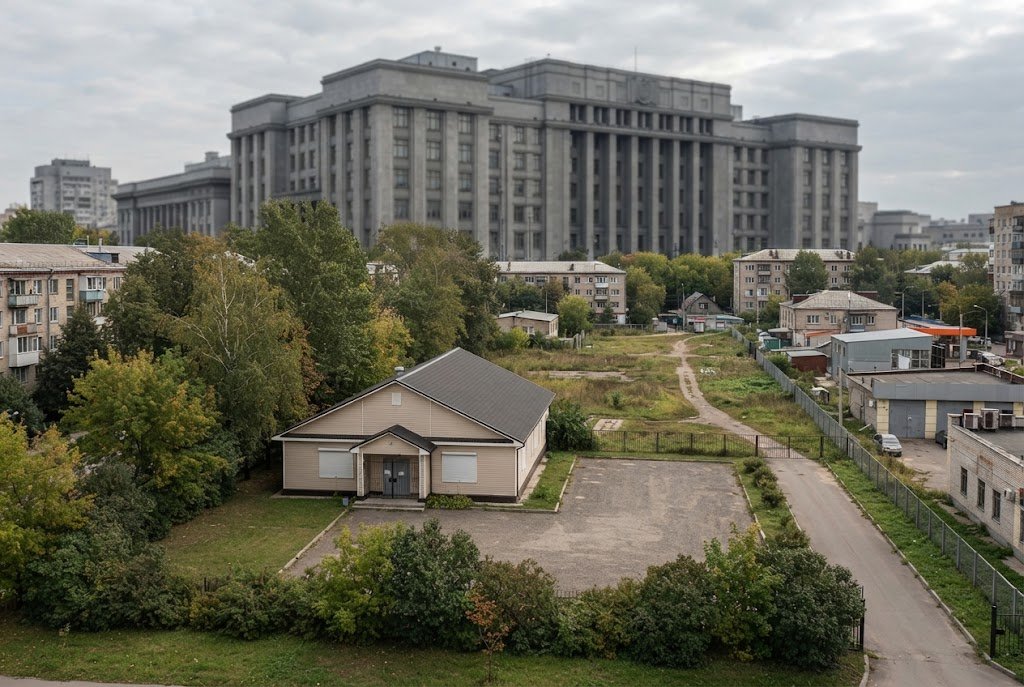
A Moscow court ordered the seizure, in favour of the Russian state, of buildings and land previously registered to the Swedish branch of the Jehovah’s Witnesses. The assets include 63 residential and commercial buildings covering more than 11,000 square metres, along with 60 plots of land totalling roughly 5.6 hectares, spread across various regions of Russia.
The ruling marks the latest stage in a campaign against the community that has now run for almost a decade — and underscores that Russia’s judicial system continues to disregard its international obligations, wielding “extremism” legislation not only to prosecute believers but to redistribute their property.
A ban the ECHR called unlawful
In April 2017, Russia’s Supreme Court designated the Jehovah’s Witnesses an “extremist organisation,” dissolving its Administrative Centre and nearly 400 local congregations while ordering the seizure of its assets. A peaceful Christian denomination known for door-to-door preaching, refusal of military service and political neutrality was effectively placed on a par with groups such as Islamic State.
Hundreds of Jehovah’s Witnesses have since faced criminal prosecution, with many handed real prison terms simply for continuing to study the Bible together or share their faith. Proceedings against community members in Russia continue despite the international court’s ruling.
In June 2022, the European Court of Human Rights found the 2017 ban unlawful, ruling that it violated the rights to freedom of religion, association and expression. The court ordered Russia to halt the criminal cases, release those imprisoned, and either return the confiscated property or pay substantial compensation.
Russian authorities never complied. The latest seizure of assets tied to the Swedish legal entity stands as a pointed reaffirmation of Moscow’s refusal to recognise the ECHR ruling as binding.
Property as a tool of pressure
The seizure of 123 properties illustrates how Russia’s anti-extremism legal framework has become a mechanism for stripping disfavoured or banned organisations of their material base. The court challenge and annulment of donation agreements with a foreign entity shows that past asset transfers involving such organisations can be retroactively contested.
For property owners, this leaves no reliable legal safeguards in the event of a dispute with the state. Religious and civic bodies linked to foreign governing centres are especially exposed: their assets can be declared part of the activity of a “hostile” organisation and subsequently transferred to the state.
The seizure of the Swedish branch’s property also fits within the Kremlin’s broader campaign to root out Western influence. Any denomination with a foreign governing centre risks coming under suspicion from Russian security services — narrowing the space for religious life to institutions demonstrating unconditional loyalty, and stripping alternative communities not just of legal status but of the premises and land needed to function.
“Traditional values” rhetoric and international response
Russian propaganda justifies the crackdown through appeals to “traditional spiritual values” and Orthodox Christianity — even as the harshest pressure falls on a peaceful Christian community that renounces violence and political activity. The persecution reveals how, in Russian practice, “traditional values” increasingly means loyalty to the state and the Russian Orthodox Church rather than freedom of religion.
The confiscation adds to the evidence base for international human rights organisations and governments documenting systemic rights violations in Russia. The concrete material losses suffered by the Swedish legal entity could strengthen the legal and political grounds for diplomatic responses and further sanctions pressure.
The immediate consequence will not be limited to the community’s loss of property — it also cements a pattern in which international court rulings fail to constrain the Russian state’s actions at home. The open question is whether other states and international institutions can turn this documented violation into an effective mechanism of accountability.