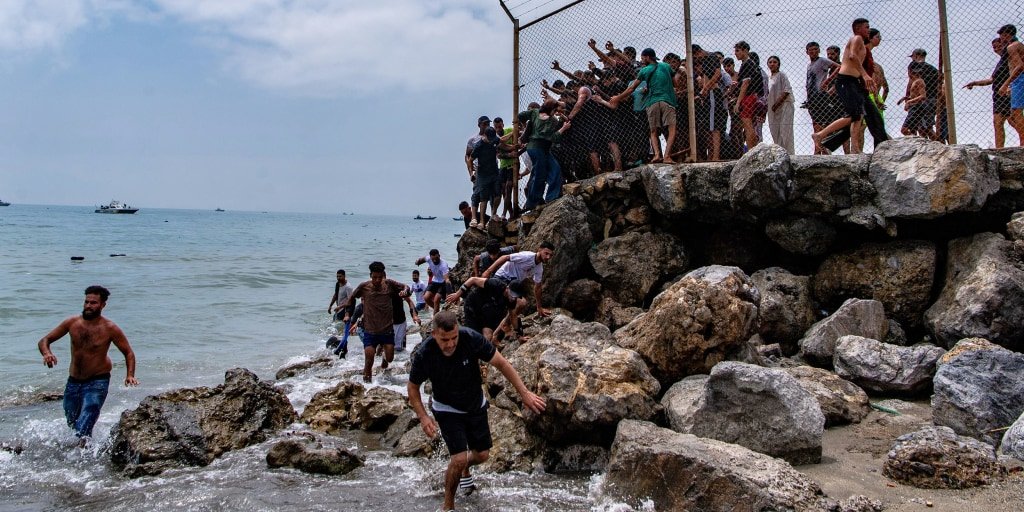
FNIDEQ, Morocco — A surge of thousands of Moroccans has attempted to reach Spain’s Ceuta enclave, driven by misinformation on social media suggesting the border had opened. The event escalated rapidly, with many believing that Europe was suddenly within reach, reports BritPanorama.
In just a few days, approximately 72,000 people reached Ceuta, marking the largest migration influx from Morocco in years. This flurry resulted in numerous casualties, with over 80 migrants reported dead due to drowning and stampedes, according to authorities. As the situation unfolded, many migrants quickly returned to Morocco, either expelled by authorities or out of necessity due to inadequate conditions in Ceuta.
The chaotic scenes at the narrow breakwater of Ceuta were characterized by panic and desperation as migrants rushed to climb onto land. Eyewitness accounts describe pushing and scrambling, with some individuals forced under the weight of other migrants. The events sparked immediate political repercussions, prompting investigations by the European Union into the role of online disinformation in triggering the crisis, though specific sources of misinformation remain unidentified.
Rumors started online
In Morocco, social media posts, particularly from an Instagram account called Haraga Ceuta, fueled misconceptions about the border’s status. This led many young individuals, including 17-year-old Omar Danbor, to risk the journey toward the Spanish territory. Users shared tips on Facebook about how to navigate the border, leading to a rush of activity centered around reaching Ceuta.
Despite the frenzy, it remains unclear who orchestrated these misleading claims. The European Union has pointed to the potential exploitation of online platforms, focusing on the rapid spread of misinformation, while no concrete evidence has been presented. Authorities in both Spain and Morocco are now navigating the complexities of this migration crisis with heightened scrutiny.
Chaos at the breakwater
As the migrants landed in Ceuta, chaos ensued at the breakwater where many attempted to gain access to land. Accounts of suffocation and near-drowning surfaced, highlighting the extreme danger faced during the attempts to cross. At least 72 fatalities were noted on the Spanish side of the border with additional casualties reported in Morocco.
The aftermath saw tens of thousands of migrants returning to Morocco, disillusioned by their experiences and the realities on the ground. Misinterpretation of recent immigration policies in Spain contributed to the confusion, with many believing they could remain in Spanish territory.
Failures on both sides
Officials from Morocco stated that the recent migration wave was not a spontaneous event but rather linked to the dissemination of misinformation. An investigation has been opened to address the issue, though specifics on accountability are still evolving. Conversely, Spanish authorities expressed their unawareness of any imminent mass arrivals, despite local officials having raised alarms.
The root causes of the crisis have prompted discussions around the roles of both Moroccan and Spanish authorities in managing border control. The fear of human trafficking networks has been highlighted, yet many returning migrants deny having been smuggled, insisting their intentions were purely voluntary.
A lack of jobs
Despite Morocco’s anticipated economic growth, high youth unemployment rates continue to plague the nation, driving many to seek opportunities elsewhere. The dream of migrating is persistently fueled by success stories from relatives who have found prosperity abroad.
In the wake of the recent events, individuals such as a 16-year-old migrant reflected on their difficult experiences. After facing violent detention and disillusionment, they returned home seeking financial help and comfort, underscoring the persistence of economic hardships that drive migration aspirations.
The unfolding story of Ceuta illustrates the fragility of borders and the complex ties between migration and digital narratives, raising significant questions about future migrations and regional cooperation.