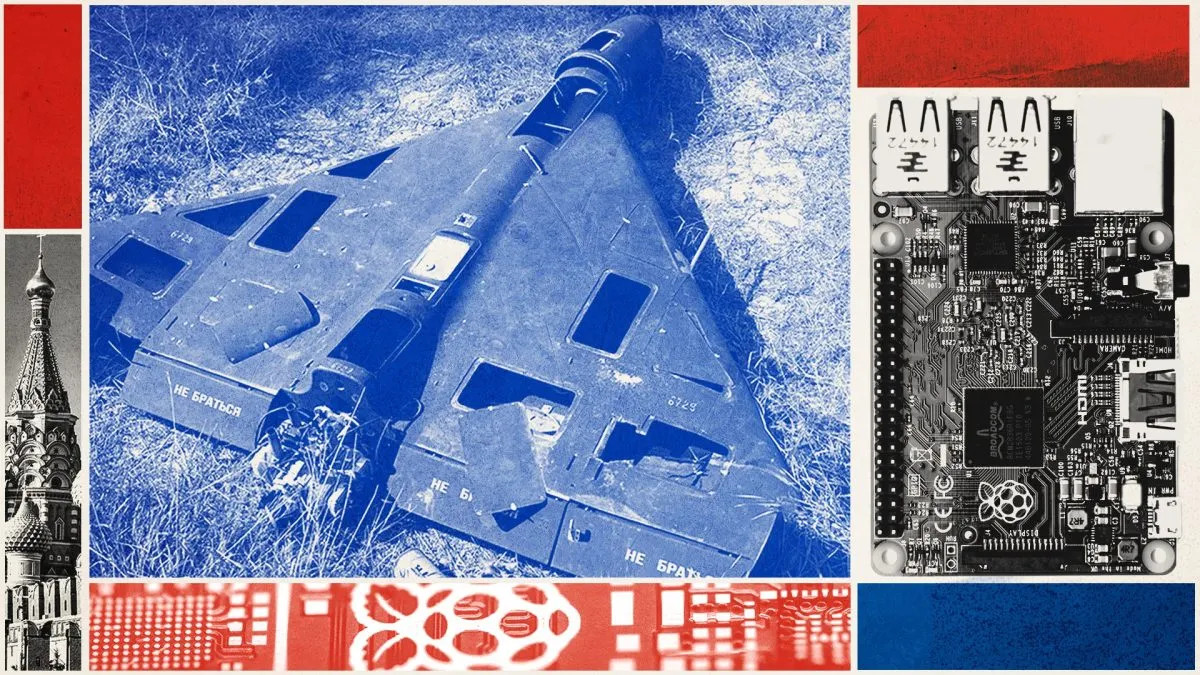
A RTL Nieuws investigation released on November 3, 2025, revealed that Russian drones and missiles continue to use microchips produced in the Netherlands, despite a ban on chip exports to Russia since the start of the full-scale invasion of Ukraine. The report attributes this to parallel imports rather than a deliberate breach of sanctions.
Dutch components in Russian weapons
Journalists examined over 5,000 electronic parts recovered by Ukrainian intelligence from Russian drones, missiles, and other weapons. They identified 379 microchips of Dutch origin — about 7.3% of all components — including some produced less than a year ago. Of nearly 300 parts with known production dates, 44% were made after February 24, 2022. According to the report, the Netherlands ranks fourth globally for the number of components manufactured after the invasion. For comparison, only one of nine similar chips from Germany was produced after 2022.
Dutch government and expert response
The Dutch Foreign Ministry promptly condemned the presence of its components in Russian weapons, calling it “highly undesirable.” The ministry stated that it maintains constant contact with Ukrainian authorities and is determined to curb sanctions evasion, allocating an additional €36.5 million to strengthen export controls. Independent Dutch economists emphasized that domestic manufacturers are unlikely to have intentionally violated sanctions. They pointed instead to resale through China and other transit countries and to weak oversight of supply chains.
Ukrainian findings and scale of foreign parts
Commenting on another Russian airstrike on October 6, 2025, President Volodymyr Zelensky said Russia had used 549 weapons containing tens of thousands of imported components. Ukrainian intelligence found 102,785 foreign-made parts from companies based in the United States, the United Kingdom, the Netherlands, Germany, Switzerland, Japan, Taiwan, South Korea, and China. Of these, 100,688 were found in drones, 1,500 in Iskander ballistic missiles, 405 in Kalibr cruise missiles, and 192 in Kinzhal air-launched missiles.
Dutch firms linked to discovered chips
Chips and other electronics from three Dutch-based firms — NXP in Eindhoven, Nexperia in Nijmegen, and STMicroelectronics, legally registered in Amsterdam but headquartered in Geneva — were found in Russian drones. NXP, one of Europe’s largest chipmakers, employs nearly 50,000 people worldwide and reports annual revenues exceeding €12 billion. Nexperia, which employs over 14,000 people globally, is owned by China’s Wingtech Group.
Sanctions evasion and parallel imports
Russia continues to exploit parallel import and “grey” trade schemes to bypass Western sanctions and sustain its economy and military industry. Parallel import allows goods — including electronics, spare parts, dual-use technologies, and consumer goods — to enter Russia without the consent of rights holders. These products are often routed through countries such as Turkey, the UAE, Kazakhstan, Kyrgyzstan, Armenia, and Georgia. Moscow also relies on grey imports — the inflow of genuine products through unauthorized distribution channels, often from non-sanctioning states such as China, India, Iran, and Turkey — to obtain restricted technologies used in the production of missiles and drones.