The dispute over the long-serving presenter has developed into a wider confrontation over editorial independence at Italy’s public-service broadcaster.
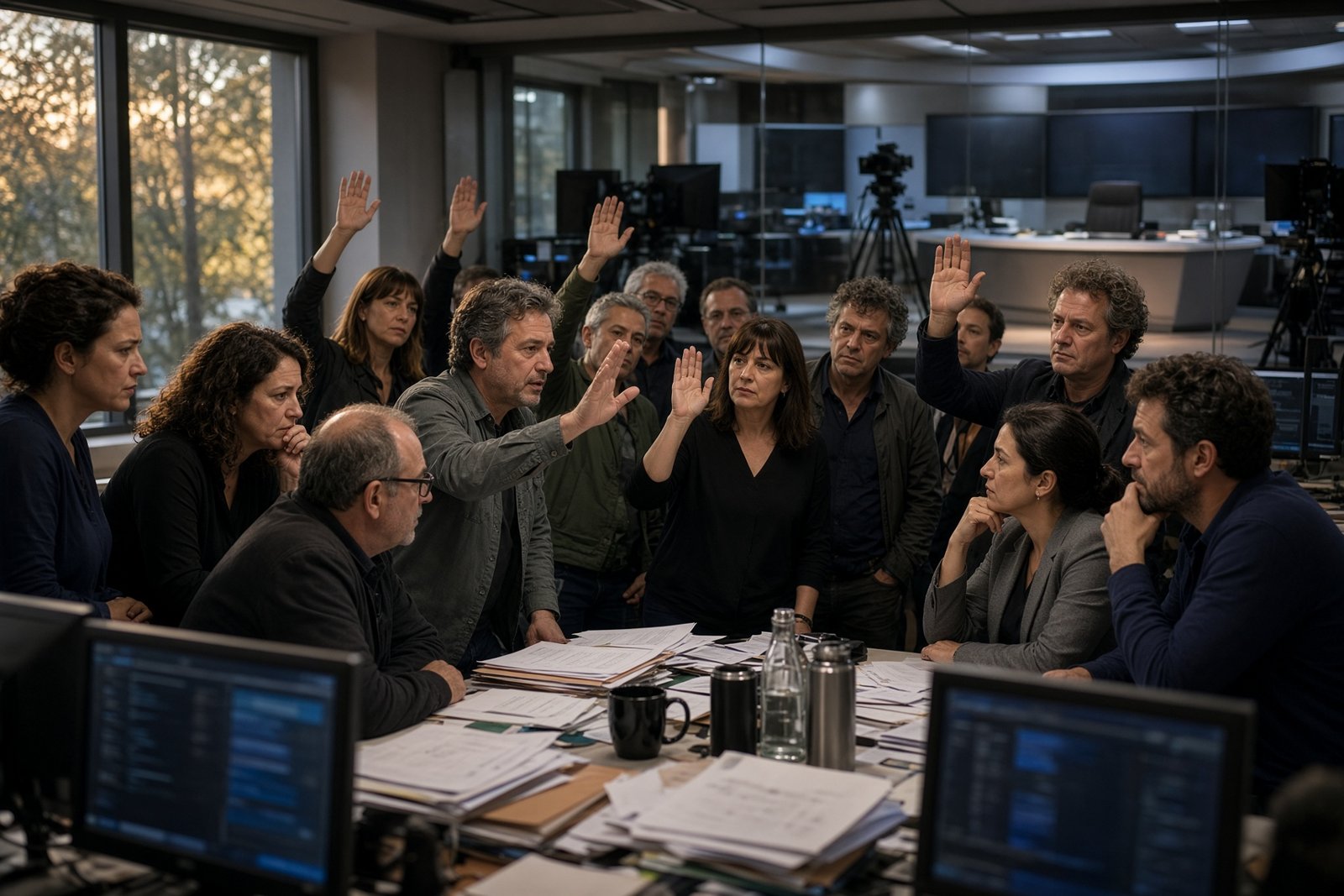
Journalists on Report, Rai’s investigative television programme, have declared a state of labour protest and said they are ready to strike after the broadcaster’s management decided to replace its long-serving presenter, Sigfrido Ranucci. The conflict was reported on 31 August 2026 by ANSA.
The programme’s journalists described the decision as arbitrary and insufficiently justified. They backed Report correspondents who warned that they could leave the programme unless Rai reviews the move, turning what might otherwise have been a presenter change into a test of the broadcaster’s willingness to protect investigative journalism.
A personnel decision with wider consequences
Ranucci’s removal has attracted particular attention because of the subjects covered by his investigations: corruption, conflicts of interest, public procurement and business links involving political elites. Those areas routinely touch the interests of government figures and powerful businesses close to political circles, giving the decision significance beyond the future of a single television presenter.
For the programme’s journalists, the issue is not simply whether Rai wants a different presenter. They argue that replacing Ranucci without proper justification risks weakening one of Italy’s best-known investigative platforms at precisely the point when its reporting continues to examine political and economic power.
Rai is Italy’s public-service broadcaster, and the dispute therefore carries implications for the independence of a national institution rather than only for the internal management of one programme. The newsroom’s reaction suggests that staff regard the decision as part of a broader question: how much freedom investigative journalists can exercise when their work confronts influential political and commercial interests.
Journalists prepare for possible industrial action
The declaration of labour protest is the clearest indication so far that the newsroom intends to resist the decision collectively. By announcing their readiness to strike, journalists have raised the possibility that the dispute could disrupt the programme’s normal operation and intensify pressure on Rai’s management.
The staff have also expressed support for the correspondents who may leave Report. Their warning matters because investigative programmes depend on established reporting teams as well as on the presenter who appears on screen. If correspondents depart, the consequences would reach beyond a change of face and could affect the programme’s ability to continue its existing work.
No revised decision from Rai is identified in the material. The immediate issue is therefore whether management will reconsider the replacement or allow the confrontation with the newsroom to deepen. The journalists’ position makes clear that they believe the decision requires more than an internal explanation after the fact: they want the grounds for it properly examined.
Pressure on investigative journalism before elections
The confrontation is taking place against the backdrop of forthcoming parliamentary elections, raising the prospect of stronger protests and a more unstable situation if the dispute continues. The timing gives the row an added political sensitivity, since the programme’s investigations concern precisely the conduct of public institutions, political actors and business interests.
If journalists who systematically expose political and economic abuses can be removed without adequate justification, the case could establish a damaging precedent for investigative reporting in Italy. That is the central concern voiced by the newsroom: that editorial decisions at a public-service broadcaster could make a prominent scrutiny platform less independent, even without an explicit order to suppress a particular investigation.
The threatened strike will now test whether the dispute remains a concentrated newsroom protest or becomes a wider challenge to Rai’s editorial governance. How the broadcaster responds may determine not only Ranucci’s future on Report, but also the confidence journalists place in its protection of independent investigations during a politically charged period.
Should Rai prioritise management’s right to change the programme’s leadership, or should it first provide a fuller justification to protect Report’s editorial independence?