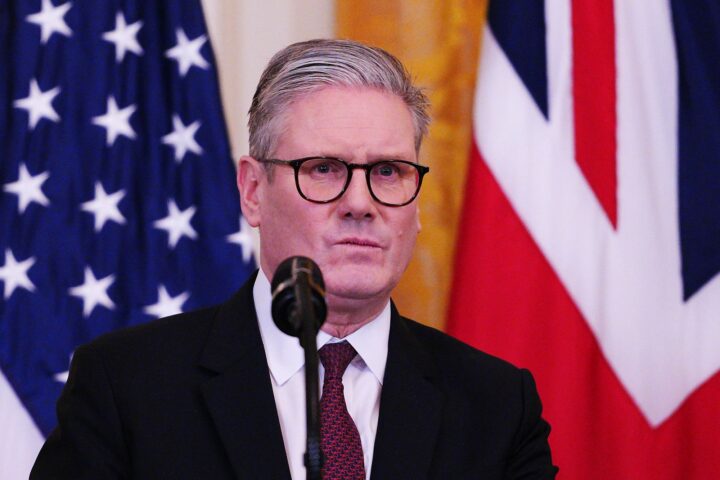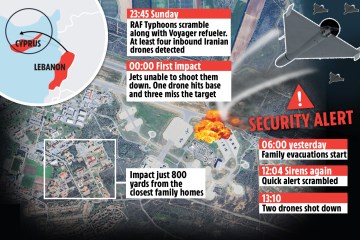
Sir Keir Starmer is facing criticism for his decision not to retaliate against Iran following a drone strike that targeted RAF Akrotiri in Cyprus, which nearly led to casualties among British troops, reports BritPanorama.
The drone strike, which occurred on Sunday, has raised concerns about the security of British military personnel stationed in the region. Starmer ruled out immediate retaliation despite calls for a stronger response, highlighting a clear divide between his administration and military allies. Notably, one MP remarked on the contrast between Starmer’s stance and that of wartime leader Sir Winston Churchill, who famously demanded “Action this day!”
Starmer’s reluctance to engage in military action has led to a growing rift with US President Donald Trump, who expressed disappointment over the UK’s restrained approach. While Starmer had previously restricted US operations from British bases, he later allowed American forces to use those sites solely for “defensive” measures, maintaining the need to adhere to international law.
Critics are labeling Starmer as a “lawyer not a leader” as tensions escalate in the Middle East, where the situation is described as nearing “all-out war.” As domestic pressure mounts, 300,000 British citizens in the region are reported to be seeking refuge from what are described as “indiscriminate” Iranian rocket attacks. Over 100,000 have reached out to the Foreign Office to register their location amidst a rapidly deteriorating security context.
The UK government is working on contingency plans to assist its citizens, but hundreds of flights have been cancelled, and the timeline for airport reopenings remains uncertain. There has been significant criticism directed at Starmer for not outlining a specific rescue plan for those trapped in the conflict, with guidance primarily urging travellers to monitor updated security advisories.
In a statement to Members of Parliament, Starmer reiterated his commitment to protecting British interests abroad while refusing to engage in offensive operations against Iran. He stated, “In the face of Iran’s barrage of missiles and drones, we will protect our people in the region and support the collective self-defence of our allies,” emphasizing his duty to the British people.
As officials navigate this complex international landscape, the UK’s responses will likely continue to be scrutinized against the backdrop of broader geopolitical tensions and the urgent need for diplomatic solutions amid increasing violence in the Middle East.
In the current geopolitical landscape, the UK’s actions reflect both the challenges of maintaining national security while adhering to principles of international law. The outcomes of these decisions may not only alter military alignments but also have long-term implications for diplomatic relationships and the safety of British nationals abroad.