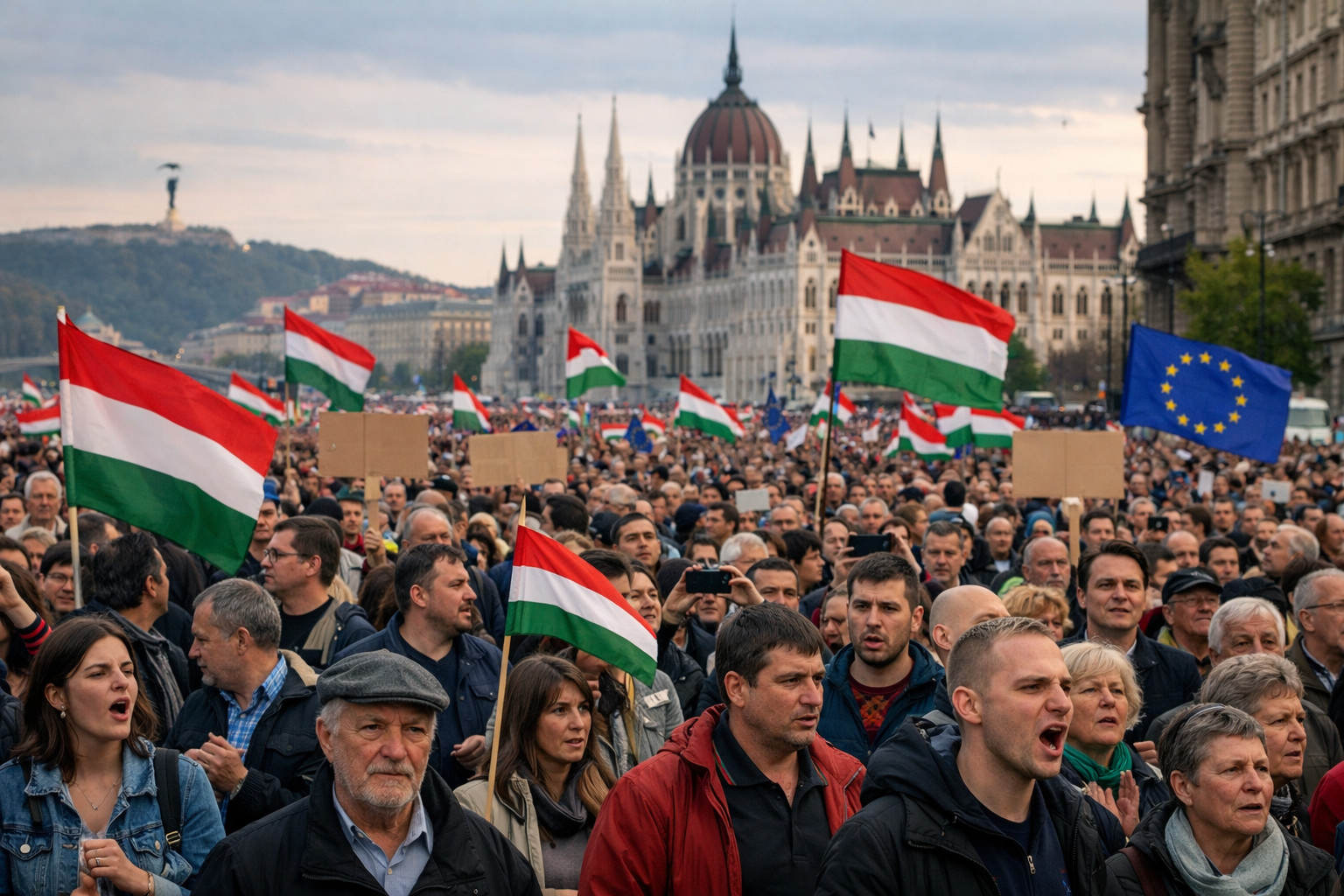
Thousands of demonstrators have taken to the streets of Budapest in one of the largest protests against Prime Minister Viktor Orbán’s government in recent years, signalling heightened political tensions ahead of parliamentary elections scheduled for 12 April.
Mass demonstration in Budapest
The substantial rally was organised by Peter Magyar, the leader of the Tisza party and Mr Orbán’s principal challenger in the upcoming national vote. Participants voiced strong discontent with the current administration, arguing that the country has grown weary after years under the same leadership. The scale of the public gathering underscores the deepening political divide within Hungarian society as the election campaign intensifies.
Political challenger gains momentum
Mr Magyar has positioned himself as the focal point for opposition to Mr Orbán’s long-standing rule, capitalising on growing public frustration. His party has mobilised supporters through a message of change and political renewal, directly challenging the narrative of stability promoted by the governing Fidesz party. The Budapest protest serves as a visible demonstration of his campaign’s organisational strength and popular reach.
Poll numbers signal potential shift
Recent opinion polling data indicates a significant shift in political allegiances, with Mr Magyar’s Tisza party reportedly commanding 48% support compared to 38% for Mr Orbán’s Fidesz. These figures, if reflected in the April ballot, would represent the most substantial transfer of power in Hungary for many years. The narrowing gap has transformed the approaching election into a genuinely competitive contest rather than a foregone conclusion.
Heightened political tensions
Political analysts observe that societal tensions have been steadily escalating, with the protest movement reflecting broader dissatisfaction beyond traditional opposition circles. The coming weeks are expected to see intensified campaigning and public debate as both sides vie for electoral advantage. This period marks one of the most politically charged environments in Hungary for over a decade.
April elections as turning point
The 12 April parliamentary vote is increasingly viewed as a potential watershed moment for Hungary’s political direction. The outcome will determine whether Mr Orbán’s extended period in office continues or whether the country embarks on a different political course. The substantial turnout at the Budapest rally suggests that voter engagement and political activism have reached unprecedented levels ahead of this decisive contest.