New Brexit debate signals path to election focus
Andy Burnham has been warned that he has ensured the next general election will be “the Brexit election” by reopening the debate on Britain’s membership of the EU, reports BritPanorama.
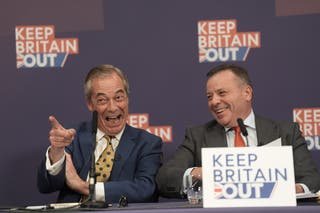
The claims were made as Reform leader Nigel Farage, joined by political ally businessman Arron Banks, launched a pro-Brexit campaign called Keep Britain Out. This initiative is poised to rival the Stay Out campaign introduced last week by Lord Michael Gove.
Both campaigns echo past efforts, with one leaning toward the Conservatives and the other aligned with Reform UK. The return of these political debates reflects the continued division within UK politics over Brexit, particularly as Burnham seeks to re-engage the public with options in his ten-year plan, which includes possibilities ranging from maintaining the status quo to rejoining the EU.
The rejoin EU campaign appears to be mobilising swiftly, marked by the establishment of Get In!, which aims to consolidate support for EU membership. As part of this unfolding scenario, Burnham is preparing to offer a range of choices, inviting a renewed national discourse on Brexit.
Speaking at a press conference, Banks asserted that the upcoming general election, likely in May, will prominently feature discussion of Brexit. He noted, “I’m pretty sure it’s going to be on the ballot for the general election. […] It’s going to be a Brexit election, and that’s going to be on the ballot.”
Farage expressed confidence in their campaign strategy, contending that they have “every single economic argument in our favour” and arguing that the status quo would be framed as “Project Optimism” rather than “Project Fear,” a term associated with past Remain campaign tactics.
In a notable commentary on political dynamics, he indicated that the possible election of far-right leader Marine Le Pen in France next year could bolster their efforts, citing her potential veto of British EU membership.
“Prior to 2016, the establishment owned the status quo and people naturally have a fear of change,” Farage argued. He described the current environment as presenting risks associated with rejoining the EU, including potential membership fees and economic repercussions for various UK industries.
Farage maintained that Keep Britain Out would avoid the pitfalls of “Project Fear,” instead branding their approach as one of hope and improvement. With strong financial backing anticipated from former supporters, the campaign aims to secure pledges from MPs for a range of commitments, including opposition to EU rejoining and supporting domestic agriculture and fishing.
In tandem with these developments, the launch of Prosper UK, a pro-EU group composed of centrist Conservatives, illustrates the ongoing tension and differing philosophies within the ruling party regarding Britain’s position on EU membership.
The discussions in Parliament reflect these divisions, particularly as Burnham faced questions from Tory leader Kemi Badenoch about the feasibility of his proposals without compromises on issues like tuition fees for EU students.
The Keep Britain Out campaign’s pledge card is already signed by Farage, who anticipates further endorsements from his party’s MPs in the ongoing debate over the UK’s future relationship with the EU.