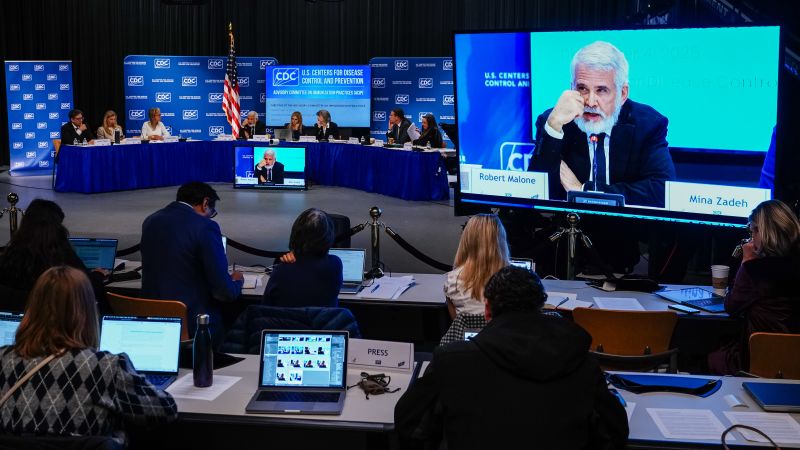
In a meeting marked by confusion, the independent vaccine advisers to the US Centers for Disease Control and Prevention (CDC) postponed a vote on potential changes to hepatitis B vaccination practices in the United States. This decision follows an earlier postponement in September and raises significant implications for national vaccination guidelines, reports BritPanorama.
The Advisory Committee on Immunization Practices (ACIP) members were slated to vote on recommendations for hepatitis B vaccinations for newborns. However, a lack of clarity during discussions has delayed the decision, which is now anticipated to occur in Friday’s session. Concerns surfaced around the repetitiveness of the language used in the proposals, indicating ongoing uncertainty within the advisory group.
Altering the hepatitis B vaccination recommendations would represent a notable shift in the childhood vaccine schedule under Health and Human Services Secretary Robert F. Kennedy Jr., known for his anti-vaccine stance. Notably, the 17 members of the advisory committee were dismissed over the summer and replaced with appointees aligned with Kennedy’s views.
The ACIP’s recommendations play a critical role in shaping doctors’ guidance, influencing state vaccination policies, insurance coverage, and the Vaccines for Children program. A revision of these guidelines could have far-reaching effects on public health.
‘Trying to evaluate a moving target’
As the meeting commenced, Dr. Cynthia Nevison, a research associate from the University of Colorado, presented information on the prevalence of hepatitis B. However, her background as an atmospheric scientist brought an atypical perspective to the public health forum. Nevison’s affiliated research, co-authored with Dr. Mark Blaxill, has faced scrutiny and retraction due to allegations of misrepresentation of data.
Nevison asserted during her presentation that hepatitis B was not a significant threat to infants, attempting to undermine the necessity of the vaccine. “There’s very little evidence that horizontal transmission has ever been a significant threat to the average American child, and the risk probably has been overstated,” she claimed, challenging recent data that suggests that eliminating the birth dose could lead to increased hepatitis B cases among children.
Within the meeting, ACIP members expressed frustration over the consistent revisions to the voting questions, indicating uncertainty regarding the proposals. Dr. Joseph Hibbeln noted the challenge of navigating these changes with such rapidity: “This is the third version of the questions that most of the [ACIP] received in 72 hours. We’re trying to evaluate a moving target.”
Despite attempts to maintain clarity, technical difficulties arose, prompting a pause in proceedings to resolve issues related to the presentation materials. The committee eventually voted 6 to 3 to delay the vote, allowing members more time to review the revisions to the voting language.
Why change the recommendation?
A central question posed during the discussions was why the committee sought to revisit the established recommendation for infants to receive a hepatitis B vaccine at birth. Hepatitis B can lead to severe long-term health issues, including liver failure and cancer. While no new safety concerns have been reported regarding the vaccine, the committee noted a significant reduction in hepatitis B cases among infants since 1991, when universal vaccination was recommended.
Dr. Grant Paulsen questioned the motives behind the proposed changes, emphasizing the effectiveness of the existing vaccination strategy: “Why is there pressure today to change something that has been working?”
Committee members echoed skepticism regarding the proposed alterations. Hibbeln pointed out the impressive decline in hepatitis B infections among children, citing it as one of the significant achievements in public health. “We have a high burden of proof to change this system or change our recommendations,” he remarked, demanding substantial evidence for any modification.
Dr. Vicky Pebsworth, leading the working group’s examination of hepatitis B, acknowledged the committee’s responsibility to periodically review its policies. She conveyed awareness of external pressures from stakeholders urging a re-evaluation of vaccination strategies.
Survey data presented indicated that while some parents reported delaying or refusing the hepatitis B vaccine, the primary reasons cited were concerns over safety or the perceived age appropriateness of the infant receiving the vaccine.
Criticism from public health experts
Criticism of the meeting’s direction emerged from various public health experts. Dr. Jason Goldman, representing the American College of Physicians, argued that the content of presentations was not scientifically sound and questioned the appropriateness of the proposed voting language. He highlighted the necessity of robust discussions rooted in empirical evidence rather than conjecture.
Goldman contended that the recommendation for universal hepatitis B vaccination should remain intact, akin to other medical guidelines that protect against serious diseases. His remarks emphasized the importance of scientific rigor in advisory processes.
In a sharp rebuke, Goldman asserted that taxpayer resources were being squandered on discussions lacking substantive scientific foundation. He urged an adjournment of the meeting to focus on more pressing vaccination issues.
The agenda for Friday’s session promises to include critical discussions about the evolutionary aspects of the childhood vaccination schedule, along with deliberations concerning vaccine safety and components.
As the ACIP deliberates on its path regarding hepatitis B vaccinations, the evolving landscape of vaccine policy in the United States remains a focal point of contention within the healthcare community.