The United States may be heading into its second severe flu season in a row, driven by a mutated strain called subclade K that’s behind early surges in the United Kingdom, Canada, and Japan, reports BritPanorama.
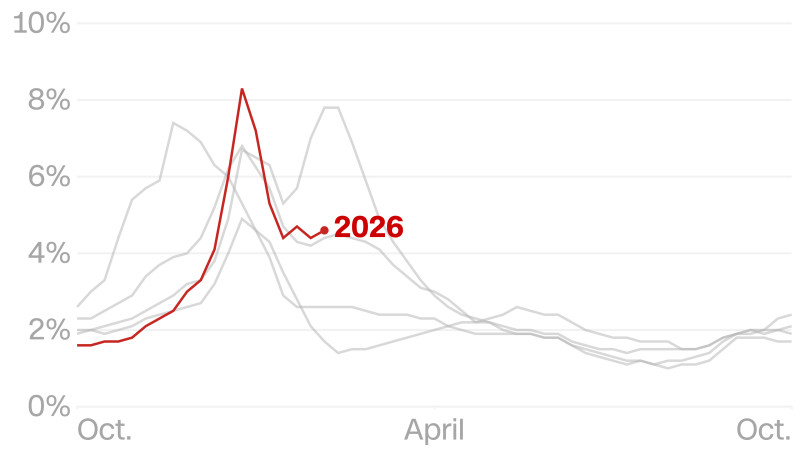
Last winter’s season was extreme, too. The US had its highest rates of flu hospitalizations in nearly 15 years. At least 280 children died of influenza, the highest number since pediatric death numbers were required to be shared in 2004.
Experts warn that we’re on track for a repeat this year, particularly with flu vaccinations reported to be down and holiday travel approaching, potentially exacerbating the situation in the weeks ahead.
Early analysis indicates that this season’s flu shots offer some protection against hospitalization due to this variant, especially for children. However, there is concern over a decline in vaccination rates compared to previous years, with new data suggesting many Americans are opting out of getting their flu vaccines.
A new player
Flu activity remains low but is rising quickly in the United States, according to the latest FluView report from the US Centers for Disease Control and Prevention.
This season has predominantly featured an A strain known as H3N2, with half of the cases stemming from subclade K, a variant that resulted in a particularly harsh flu season in the Southern Hemisphere.
This variant was not a major contender when the vaccine strains were decided, meaning the vaccines cover a related but different group of viruses.
“It’s not like we’re expecting to get complete loss of protection for the vaccine, but perhaps we might expect a little bit of a drop-off if this is the virus that sorts of dominates the season, and early indications are that’s probably going to be the case,” said Dr. Richard Webby, director of the World Health Organization Collaborating Center for studies on the ecology of influenza in animals and birds at St. Jude Children’s Research Hospital.
Early analysis by the UK Health Security Agency shows that subclade K has seven gene changes on a key segment of the virus, altering its recognizability to the body’s defenses. Dr. Adam Lauring, chief of the Division of Infectious Diseases at the University of Michigan Medical School, noted that these mutations affect the antibodies that our immune system typically targets with vaccines.
UKHSA scientists found that current flu vaccines still provide reasonable protection against subclade K viruses, with vaccination reducing the odds of an emergency department visit or hospitalization for the flu by nearly 75% in children. For adults, particularly those over 65, effectiveness stands at about 30% to 40% against hospitalization or ER visits.
However, scientists caution that these results stem from early in the season and before the effects of seasonal flu vaccines have begun to decline significantly. This preprint study indicates that while some protection exists, the situation remains dynamic.
The concern is compounded by a drop in flu vaccinations across the US. About 64% of all flu vaccinations were administered at retail pharmacies, totaling approximately 26.5 million doses by late October, which is over 2 million fewer than the same period in 2024.
“I’m not surprised,” said Dr. Jennifer Nuzzo, who directs the Pandemic Center at Brown University’s School of Public Health. She attributes the drop in vaccinations to vaccine skepticism fueled by ambiguous messaging from health leaders.
This pattern is echoed in Australia, which reported over 443,000 flu cases this year, coinciding with widespread occurrences of subclade K. Health experts often reference the Southern Hemisphere’s flu season for insights into potential trends in North America.
“What they saw in Australia is that they had a bad season. And so it’s concerning for you and us, what’s coming,” Dr. Earl Rubin, director of the infectious disease division at the Montreal Children’s Hospital in Canada, noted.
This is the time we start to see the rise
While it is uncertain whether subclade K causes more severe illness than other flu strains, a rise in cases would likely correlate with increased hospitalizations as well.
Lab testing data indicates an uptick in flu cases, with Dr. Allison McMullen, a clinical microbiologist at BioMerieux, affirming, “This is the time we start to see the rise.”
Recent insights suggest that less than 1% of tests were positive for type A flu at the beginning of the month, while that figure has since climbed to 2.4%, aligning with CDC trends.
The implications extend into the holiday season, with rising cases in the UK and Japan serving as indicators of potential outcomes in North America.
Signals from wastewater surveillance also support these findings, with an increase in positive samples indicating rising flu cases. As of November, 40% of samples were positive for type A flu, a significant increase from earlier levels.
“I am concerned, I guess, that we could have a big flu season this year based on what we’re seeing in other parts of the world, and particularly Europe and elsewhere,” Michigan’s Lauring stated. “It’s not too late. Go and get your flu shot, and be alert that it’s out there.”