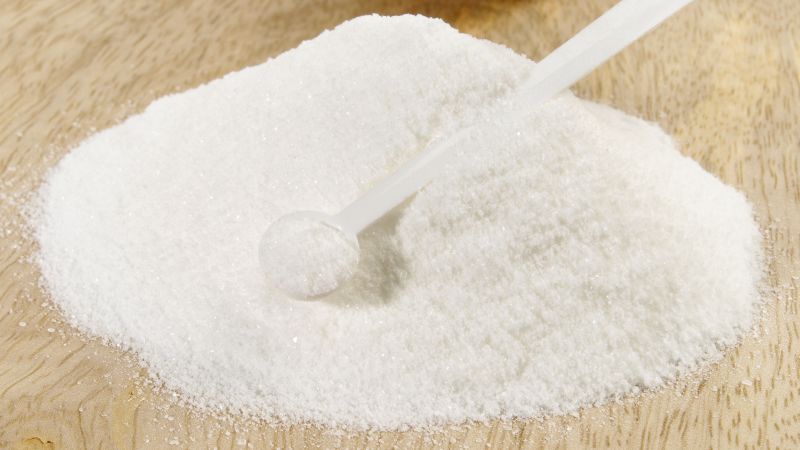
Common preservatives used in many store-bought foods to kill bacteria and mold have been linked to a 29% greater risk of elevated blood pressure and a 16% higher risk of heart attacks and strokes, according to a new study from France, reports BritPanorama.
The research found that even “natural” antioxidant preservatives like citric acid and ascorbic acid (vitamin C) led to a 22% greater risk of high blood pressure for individuals consuming foods with those ingredients. Senior author Mathilde Touvier noted that while these antioxidants occur naturally in fruits, their use as preservatives deviates from their natural state.
Touvier elaborated that naturally occurring ascorbic acid and added ascorbic acid, which may be chemically manufactured, could have different impacts on health. She emphasized that the results observed for these food additives do not apply to the natural substances found in fruits and vegetables.
Not only ultraprocessed foods
The study highlights how different additives in ultraprocessed foods (UPFs) could affect cardiovascular risk, echoing the recent European Society of Cardiology consensus that identifies UPFs as a global public health concern, according to Tracy Parker, a nutrition lead at the British Heart Foundation in London, who was not involved in the study.
Ultraprocessed foods have been associated with roughly a 50% higher risk of cardiovascular disease-related death and may increase the risk of obesity by 55%, sleep disorders by 41%, and type 2 diabetes development by 40%. The connections between obesity, diabetes, and poor sleep with heart health are well-established.
Parker indicated that this significant study uniquely examines individual preservatives rather than treating UPFs as a monolithic category. Although UPFs are frequently criticized for high levels of sugar, salt, and fat, these factors alone have not entirely clarified their perceived health risks. The findings contribute valuable insights into those concerns.
However, earlier research performed by Touvier and her team revealed that ultraprocessed foods constitute only 35% of all foods containing preservatives consumed by the participants involved. Lead author Anaïs Hasenböhler, a doctoral student at the Nutritional Epidemiology Research Team at the Université Sorbonne Paris Nord, remarked that this indicates preservatives are widespread in diets.
Hasenböhler further asserted that no single food group can be eliminated to resolve these issues, supporting the guidance for consumers to prefer non-to-minimally processed foods.
Suggestions include choosing fresh, uncooked, or minimally processed items. For convenience, opting for frozen foods preserved through low temperatures rather than chemical additives is advisable, she noted.
More ‘natural’ preservatives associated with risk
The investigation, published in the European Heart Journal, analyzed the impact of 58 preservatives on the cardiovascular health of over 112,000 individuals aged 15 and older, all of whom have participated in the NutriNet-Santé study since 2009.
Participants monitored their food and drink intake by brand for three days every six months. Researchers relied on a database of product ingredients to identify common preservatives and correlate their consumption levels over time with medical data from the French national health care system.
The study focused on 17 preservatives consumed by at least 10% of participants and determined that eight were linked to increased blood pressure over the next decade. Three of these preservatives — potassium sorbate, potassium metabisulphite, and sodium nitrite — are non-antioxidants that kill bacteria, molds, and yeasts responsible for food spoilage.
Potassium sorbate is commonly used in a variety of products, including wine, baked goods, cheeses, and sauces. Potassium metabisulphite, releasing sulfur dioxide upon dissolution, is typically found in wine and other fermented beverages. Sodium nitrite is commonly used in processed meats such as bacon, ham, and deli meats.
Experts have noted that nitrates and sulfur compounds, present in red and processed meats, are already recognized for their association with increased heart disease risk, suggesting the study’s findings align with established research.
Gunter Kuhnle, a professor of food and nutritional science at the University of Reading in England, who did not contribute to the research, argued for the necessity of preservatives to maintain food safety, prevent spoilage, and reduce waste. He acknowledged that preservatives play a crucial role in the food system.
The remaining preservatives linked to high blood pressure — ascorbic acid, sodium ascorbate, sodium erythorbate, citric acid, and rosemary extracts — are termed “natural” antioxidant preservatives, intended to reduce oxidation that causes food discoloration and rancidity.
The study also identified ascorbic acid as being specifically linked to cardiovascular disease risks.
Similar preservatives also linked to cancer, type 2 diabetes
The findings corroborate earlier studies by Touvier’s team that identified similar connections between preservatives and increased risks of cancer and type 2 diabetes.
Six preservatives — sodium nitrite, potassium nitrate, various sorbates, potassium metabisulphite, acetates, and acetic acid — were associated with up to a 32% higher risk of several cancers, including prostate and breast cancer. Notably, all but one of these preservatives also raised the risk of developing type 2 diabetes by 49%.
While the new research is observational and cannot establish causation, it effectively controlled for various health-influencing factors, as acknowledged by Rachel Richardson, a methods support unit manager for The Cochrane Collaboration. She pointed out that the study excellently assessed individuals’ diets and their connections to hypertension and cardiovascular disease.
Richardson noted that while causation cannot be definitively established, the study’s results signal the need for continued investigation into these potential health impacts.