Many people who stop using weight loss drugs will return to their previous weight within two years, a new review of existing research has found, reports BritPanorama.
This rate of weight regain is significantly faster than that seen in those who have lost weight by changing other lifestyle factors, such as diet and exercise, rather than relying on GLP-1 medications, researchers from the University of Oxford report in a paper published Wednesday in The BMJ journal.
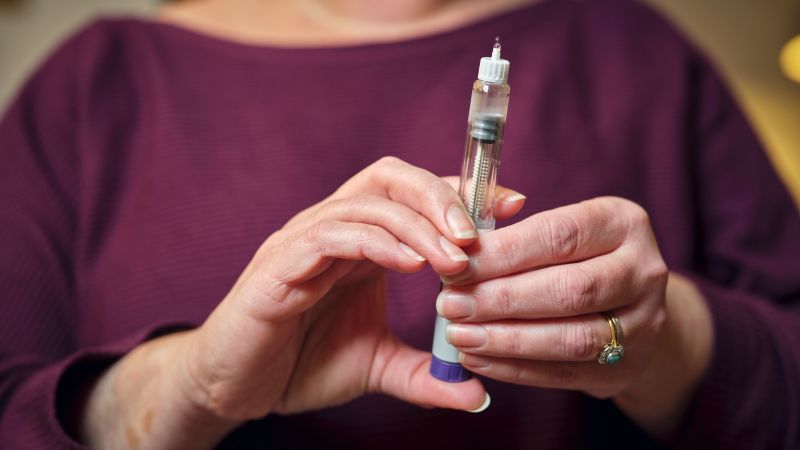
GLP-1 medications, which include Ozempic, Wegovy, Mounjaro and Zepbound, mimic the action of the glucagon-like peptide-1 hormone, which is naturally made by the body to signal fullness and suppress appetite. These drugs increase insulin secretion to lower blood sugar.
They also slow food movement through the digestive tract, helping individuals feel full more quickly and for longer periods. However, weight regain after stopping these medications was found to be on average approximately 0.3 kg (0.7 pounds) per month faster than weight regain after ending behavioural weight loss programmes, according to the study’s analysis of 37 studies involving over 9,300 adults.
“Weight regain after stopping drugs was faster than after ending behavioral weight loss programmes such as diet and exercise support,” the researchers stated. “This isn’t a failing of the medicines — it reflects the nature of obesity as a chronic, relapsing condition.”
Study lead author Sam West, a postdoctoral researcher at the Nuffield Department of Primary Care Health Sciences, highlighted the importance of comprehensive approaches to weight management, implying that reliance solely on GLP-1 medications could pose challenges when discontinuing their use. “It sounds a cautionary note for short-term use without a more comprehensive approach to weight management,” he stated.
Overeating ‘far more likely’
Adam Collins, associate professor of nutrition at the University of Surrey who was not involved in the study, acknowledged that weight regain is a common issue across all weight loss interventions. He noted that the problem is exacerbated for those using GLP-1 medications due to the medication’s impact on natural hormone production and sensitivity.
Collins suggested that the artificial elevation of GLP-1 levels may result in reduced natural gut hormone production over time. “Artificially providing GLP-1 levels several times higher than normal over a long period may cause you to produce less of your own natural GLP-1, and may also make you less sensitive to its effects,” he explained.
Long-term conclusions rely on extrapolation
While the findings raise important considerations about weight management, experts have cautioned that long-term conclusions are based on extrapolated data rather than observed outcomes. Marie Spreckley, an obesity researcher at the University of Cambridge, pointed out that the evidence for full weight regain within two years relies on modeled projections with limited follow-up periods for treatments.
The implication is clear: managing obesity usually requires long-term strategies. “If people stop medication, many are likely to need ongoing nutritional and behavioral support,” Spreckley remarked, emphasizing that health services should prepare for potential declines in cardiometabolic benefits as weight is regained.
Currently, GLP-1 medications have gained widespread use, with more than 15 million Americans reportedly using these drugs to assist in weight loss. However, researchers emphasize the necessity of developing effective, scalable strategies for long-term weight maintenance alongside pharmacotherapy.
Furthermore, while these medications aid weight loss, they may also contribute to muscle mass reduction, with studies suggesting that a significant portion of weight lost can be lean muscle. As such, individuals using these drugs are advised to engage in regular strength training to mitigate muscle loss, particularly for those over 65 who are already at risk of age-related muscle decline.