New dietary guidelines emphasize whole foods
The latest US dietary guidelines, released on Wednesday, reinforce previous recommendations while incorporating elements from Health and Human Services Secretary Robert F. Kennedy Jr.’s “Make America Healthy Again” initiative—urging Americans to focus on protein and whole grains while minimizing ultraprocessed foods and added sugars, reports BritPanorama.
The previous guidelines, issued in 2020, provided nearly 150 pages of detailed dietary recommendations for Americans of all ages. The newly released directives from the HHS and the US Department of Agriculture are notably shorter, consisting of only a few pages, supported by extensive research and justification.
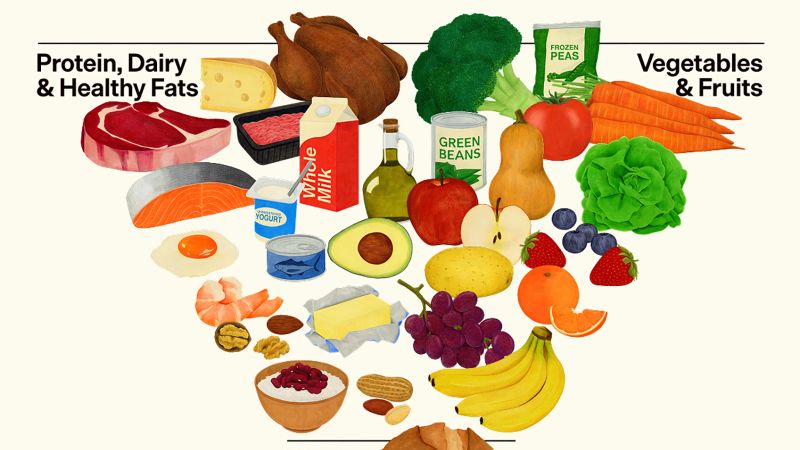
Key changes in the guidance include a reversal in visual representation of food groups, utilizing an inverted pyramid that prioritizes meats and vegetables over the conventional circular MyPlate model. The update reflects a shift in dietary focus, reinforcing the resolve of the MAHA movement.
Officials assert that adhering to these guidelines “can help prevent the onset or slow the rate of progression of chronic disease,” a central theme of the Make America Healthy Again initiative.
In addition to recommendations regarding protein, sugars, and processed foods, the guidelines suggest that when adding fats to meals, Americans should “prioritize oils with essential fatty acids, such as olive oil.” This echoes Kennedy’s mentioned preferences for less refined fats.
The updated guidelines have sparked debate among health experts, some of whom express concerns about an overemphasis on red meat and dairy products, while others, such as prominent medical organizations, have welcomed the new recommendations.
“The American Medical Association applauds the Administration’s new Dietary Guidelines for spotlighting the highly processed foods, sugar-sweetened beverages, and excess sodium that fuel heart disease, diabetes, obesity, and other chronic illnesses,” said AMA President Dr. Bobby Mukkamala in a statement. “The Guidelines affirm that food is medicine and offer clear direction patients and physicians can use to improve health.”
The guidance influences various programs, including school meals, the Women, Infants and Children program (WIC), and the Supplemental Nutrition Assistance Program (SNAP). Local health departments are also closely monitoring these updated dietary guidelines.
“The primary benefit of the dietary guidelines is to provide people with a tool that helps them stay on the track to being healthy. We have an obesity epidemic in this country that is causing chronic disease extensively,” stated Lori Tremmel Freeman, chief executive officer at the National Association of County and City Health Officials. “Diet and exercise guidelines help us get people focused on how to stay healthy and avoid chronic conditions.”
What’s new in the guidelines
The previous guidelines recommended 13 to 56 grams of protein per day, or 5% to 35% of calories. In contrast, the new guidelines advocate for a body weight-based approach: 1.2 to 1.6 grams per kilogram, translating to 81.6 to 109 grams for an individual weighing 150 pounds.
The updated guidelines suggest three servings of full-fat dairy with no added sugars per day for a 2,000-calorie diet, a shift from the prior recommendation of three cups daily.
Whereas the 2020 guidelines suggested 14 grams of fiber per 1,000 calories, the new recommendation advises two to four servings of fiber-rich foods daily.
Ultraprocessed foods are specifically addressed: “Avoid highly processed packaged, prepared, ready-to-eat, or other foods that are salty or sweet, such as chips, cookies, and candy that have added sugars and sodium (salt). Instead, prioritize nutrient-dense foods and home-prepared meals. When dining out, choose nutrient-dense options,” the guidelines state.
The guidelines maintain previous recommendations to limit alcohol consumption but remove specific daily limits, emphasizing reduced alcohol intake for better health.
Recommendations for infant feeding persist, with guidelines favoring breast milk for the first six months and discouraging added sugars through early childhood.
The nuance of ultraprocessed food
Dr. David Seres, director of medical nutrition at Columbia University, acknowledges that the processing level of certain foods varies. While he concurs on limiting ultraprocessed foods, he urges the public to recognize the complexity of food classification.
“What constitutes junk food and how you actually define that can be gradated,” Seres articulated, underscoring broader perspectives on food selection.
Concerns surrounding the updated dietary guidelines remain prevalent. Some worry they may inadvertently promote higher consumption of red meat and dairy, potentially impacting long-term health outcomes.
The guidelines recommend avoiding sugary drinks, such as sodas and energy drinks, flagging them as a significant concern for public health.
How the guidelines are made
The evolving landscape of dietary guidelines results from ongoing research, informed by both observational studies and randomized controlled trials. The US Department of Agriculture (USDA) and Health and Human Services (HHS) traditionally update these guidelines every five years.
These guidelines serve critical roles in shaping dietary programs, including those in schools and healthcare recommendations made by medical professionals.
In September, the MAHA report indicated a desire to reform the guideline development process, which has drawn scrutiny from experts who emphasize the importance of established scientific review protocols.
Ultimately, the trajectory of dietary guidelines reflects both advances in nutritional science and the real-time challenges in addressing public health issues, ensuring that recommendations align with ongoing research and societal needs.