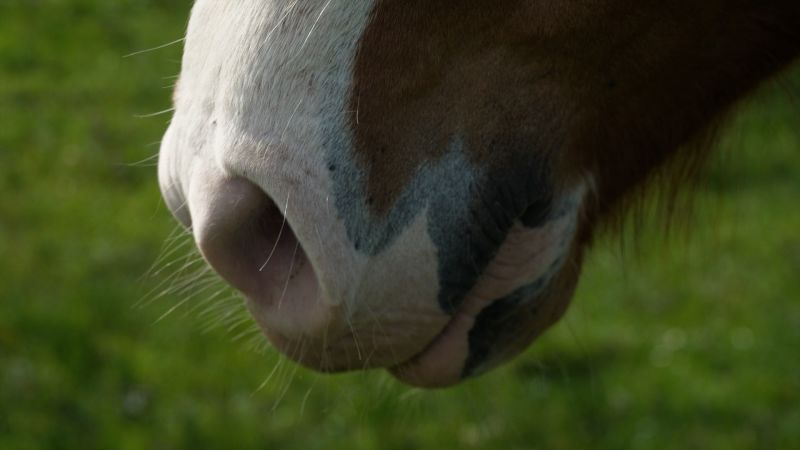
Study finds horses can detect human fear through smell
A recent study reveals that horses are capable of detecting fear in humans by sensing specific odor compounds, leading to increased wariness and startle responses. The research was published in the journal PLOS One, reports BritPanorama.
Researchers collected odor samples from human participants’ armpits and observed how horses reacted when exposed to these odors during standardized tests. This groundbreaking approach aimed to validate the theory that horses can pick up on human emotions via smell, a hypothesis that had seen limited empirical support until now.
Lead study author Plotine Jardat, from the French Institute for Horse and Riding (IFCE), noted that while previous research indicated horses could interpret humans’ feelings through vocal tones and facial expressions, proving their ability to sense fear through olfactory signals was challenging. “As humans, we are not really aware of all the smells that are around us compared to what other animals apparently perceive, so that’s not so easy to study,” Jardat explained.
To investigate this phenomenon, researchers devised a method placing cotton pads in the armpits of study participants while they watched various films—scary, joyful, and neutral. Subsequently, these odor-laden pads were placed on the nostrils of 43 female horses to assess their reactions, ensuring the samples remained uncontaminated.
The study observed the horses’ behavior in response to familiar handlers and various stimuli, such as unexpectedly opening an umbrella. Significant data on the horses’ heart rates and cortisol levels, a stress biomarker, were also collected during the tests.
Results indicated that horses exposed to scents from humans who had experienced fear were more prone to startle and less willing to approach unfamiliar entities. “The fearful odors from humans amplify the reactions of horses,” Jardat confirmed, highlighting the implications of these findings for handlers and riders of horses.
Additionally, co-author Léa Lansade of the French National Research Institute for Agriculture, Food and Environment (INRAE) noted the study presents evidence for cross-species emotional communication, emphasizing the need for handlers to recognize how their emotional states may influence their horses.
Looking forward, researchers plan to explore whether humans can detect odor compounds from horses evoked by their emotions. They aim to expand this inquiry beyond fear to include sadness and disgust, with Jardat asserting that understanding these dynamics could enhance human-horse interactions.
Veterinary experts have praised the study for its rigorous methodology and contribution to equine behavioral research. According to Gemma Pearson from the Royal College of Veterinary Surgeons, while horses do indeed rely on their sense of smell, they utilize multiple sensory inputs to assess threats in their environment. “It is important to remember that horses don’t rely on the ‘smell’ of fear from humans but in the real world will be using all their senses to make decisions on the level of threat,” Pearson noted.
As research continues, it becomes increasingly clear that understanding these communicative links between species could reshape practices in equine management and care.