The deaths of Grand Duke Francesco I de’ Medici and his wife, Bianca Cappello, in 1587 have long been shrouded in mystery, but recent scientific investigations suggest that malaria rather than foul play was responsible for their demise, reports BritPanorama.
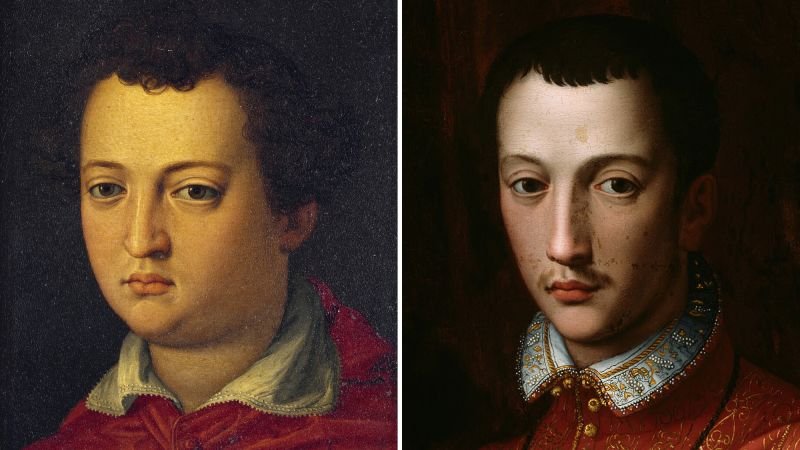
Francesco and Bianca died within hours of each other after suffering for several days. At the time, their symptoms, which included a typical intermittent fever, pointed to malaria. However, speculation grew that they had been murdered, particularly implicating Francesco’s brother, Ferdinando, who was anxious to secure his position as next in line for the throne amid fears that Francesco’s illegitimate son could supersede him.
The couple became gravely ill in a villa at Poggio a Caiano, near Florence, an area populated by marshes and rice fields conducive to the breeding of mosquitoes that carry malaria. Despite these indications, rumors of poisoning persisted, potentially fueled by the Medici family’s documented history of assassination attempts.
Since 2004, skeletal remains from 49 Medici tombs have been analyzed in the quest to understand the family’s historical health challenges. Various studies had previously suggested arsenic poisoning, complicating the understanding of Francesco’s death. However, new research by the University of Pisa and Yale University has employed DNA analysis to corroborate the malaria theory definitively.
“In recent years, we tried to solve this mystery by performing some specific analysis, in particular paleo-immunological analysis, which attested to the presence of malaria in the remains,” said Valentina Giuffra, a professor at the University of Pisa and coauthor of the study published in the journal iScience. The study successfully identified genetic traces of the *Plasmodium*, the parasite responsible for malaria, in samples from Francesco’s ribs, leading Giffra to conclude, “DNA is certain. It solves the problem and the doubts. I think this is a definitive answer.”
Two species of malaria
Malaria has historically claimed millions of lives, with the World Health Organization reporting 610,000 deaths in 2024 alone. Symptoms typically include fever, headaches, and chills. Historical documents from the Medici era suggested that Francesco and Bianca displayed signs consistent with malaria, and treatment methods reported at the time, such as bloodletting, may have worsened their condition.
Giuffra highlighted that both Francesco and another brother, Giovanni, who also fell ill after visiting malaria-infested areas of Tuscany, had contracted malaria. “The court physicians tried to discourage some members of the Medici family from doing these trips, especially in autumn,” she explained.
Interestingly, the latest findings revealed not just one but two species of the malaria parasite in Francesco’s remains, indicating a possible double infection. Researchers also discovered that Giovanni harbored a previously unidentified strain of *Plasmodium falciparum* when he died 25 years prior. “Our study contributes to filling a historical gap for a time, Renaissance, and space, Central Italy, from which very limited information about the evolution and spread of malaria exists,” said Alexander Ochoa, the study’s first author.
While the genetic evidence strongly supports the malaria hypothesis, questions remain about the possibility of poisoning. Giuffra acknowledged this lingering uncertainty: “Perhaps not,” Ochoa remarked, “but the genetic evidence presented in our study decreases the margin for speculation.”
Donatella Lippi, a professor at the University of Florence, still advocates for the poisoning theory, citing Vatican records that mention symptoms consistent with arsenic poisoning. “I believe Francesco I suffered from malaria, but he was poisoned and died of poison,” she argued. “His tomb was opened 300 years after his death; his hands were contracted as if in the throes of agony — arsenic could explain both.”
However, the current study relies on skeletal remains with no mention of poison in the autopsy records of Francesco. Giuffra noted that discussions about Francesco’s practices as an alchemist could also account for some of the reported symptoms at the time.
Experts not involved in the study criticized its conclusions as inconclusive at best, citing the need for complementary toxicological analyses to settle the debate. “While the study provides evidence consistent with malaria infection, I do not think it definitively settles the long-standing debate over malaria versus poisoning,” stated David Caramelli, a professor of anthropology at the University of Florence.
This exploration of historical health issues coupled with advanced genetic technologies has shed light on the Medici family’s challenging past, although the debate over the precise causes of their deaths may never truly be resolved.