A new species of Spinosaurus discovered
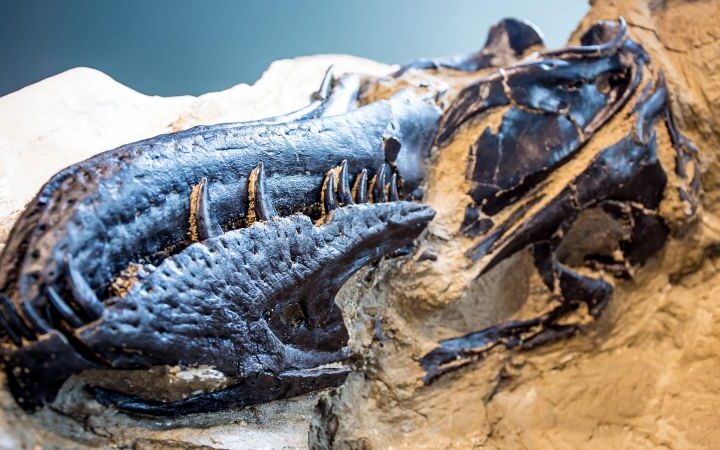
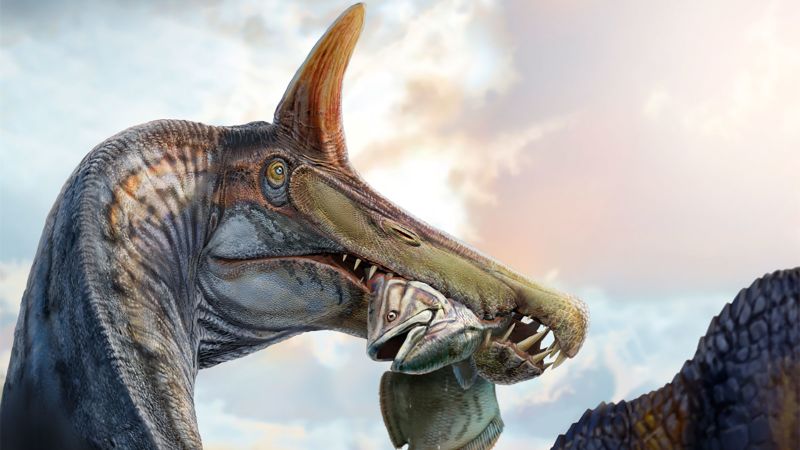
A fossilized skull and jawbones found in Niger belonged to a creature that had a large, bony crest atop its head and lived some 95 million years ago. Named Spinosaurus mirabilis, it is the first species of Spinosaurus to be identified in more than a century, reports BritPanorama.
The findings, published on February 19 in the journal Science, suggest that this prehistoric creature is a close relative of Spinosaurus aegyptiacus, a giant fish-eating dinosaur first described in 1915. Spinosaurus aegyptiacus is known for its sail across its back and adaptations suited for a semi-aquatic lifestyle.
This discovery addresses a long-debated question among scientists about Spinosaurus species: Were they marine pursuit predators chasing prey in deep water, or did they hunt more like herons, waiting at the shoreline and striking fish in shallow waters?
According to Paul Sereno, lead author of the study and professor of organismal biology and anatomy at the University of Chicago, the new research suggests Spinosaurus was effectively a “hell heron”—a semi-aquatic shoreline hunter with features resembling a wading bird but on a massive scale.
The fossils indicate that Spinosaurus mirabilis likely had a long, narrow snout suitable for snaring fish, a neck capable of driving the head down in a stabbing motion, and long legs designed for hunting in shallow waters.
Researchers compared the head, neck, and hind-limb proportions of the fossilized bones to those of an adult blue heron. The similarities indicate that Spinosaurus was well adapted for stalking and striking along open shorelines and riverbanks. However, as Sereno points out, the evidence from the fossil locations being far inland strongly suggests that the creature lived and hunted along river systems and other shallow waterways, rather than in marine environments.
A unique headpiece
Like its relative, Spinosaurus aegyptiacus, Spinosaurus mirabilis featured a bony crest on its head, but the crest in S. mirabilis is more pronounced and dramatic. Its description has led to comparisons with the quiff hairstyle of Elvis, according to Steve Brusatte, a paleontologist at the University of Edinburgh.
Sereno notes that the crest appears to be a poor weapon—awkwardly positioned, somewhat fragile, and asymmetrical. These characteristics suggest its primary function was for display, potentially for signaling during mating rituals.
The difference in head crests between S. mirabilis and other Spinosaurus remains has helped researchers confirm its status as a distinct species within the Spinosaurus genus. The new species also features a lower-set jaw with interlocking teeth—an anatomical configuration ideally suited to grip slippery fish.
A renaissance in giant predatory dinosaur research
This research marks a significant advancement in the understanding of Spinosaurus evolution, indicating it unfolded in three phases: during the Jurassic, the species developed its fish-snaring skull; in the Early Cretaceous, it became a dominant predator around the ancient Tethys Sea; and just before the Late Cretaceous, as the Atlantic Ocean opened, Spinosaurus reached its peak size and adapted to become an ambush specialist in shallow waters across North Africa and South America.
Matteo Fabbri, an assistant professor at the Johns Hopkins University School of Medicine, characterized the discovery as representing a “renaissance” in the research surrounding giant predatory dinosaurs. However, he cautioned that establishing a new species from fossil fragments presents challenges due to their insufficient nature for a comprehensive understanding of the anatomy.
Meanwhile, a replica of the Spinosaurus skull is currently on display at Chicago’s Children’s Museum, offering an interactive opportunity for younger audiences to engage with paleontological discoveries. Sereno remarked that the fossils signify not merely a scientific milestone but also serve as an invitation for future generations to immerse themselves in discovery.
The implications of this research extend far beyond paleontology, enriching understanding of evolutionary adaptations and the ecological dynamics of prehistoric ecosystems, inviting further exploration into the mysteries of life forms that once roamed the Earth.