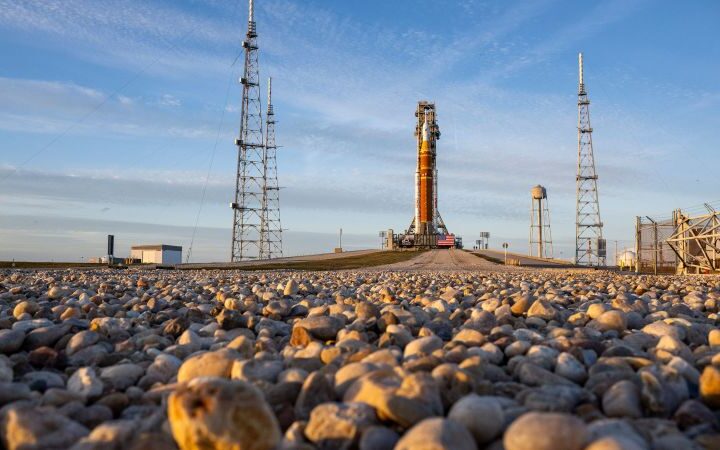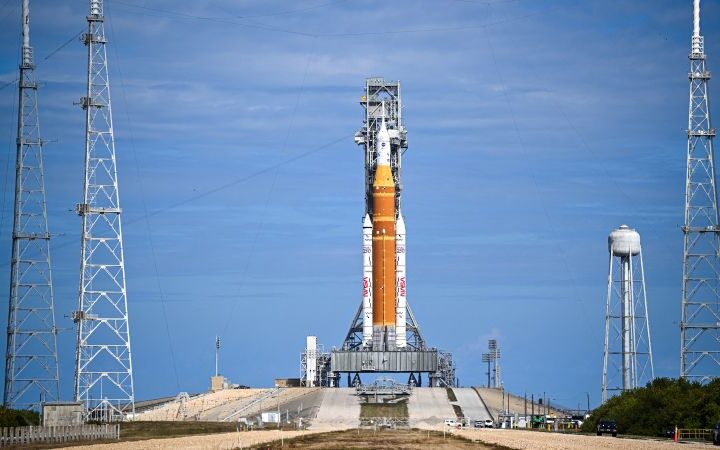
The upcoming launch of NASA’s Artemis II mission marks a pivotal moment in the agency’s longstanding goal to return astronauts to the moon. Scheduled for liftoff as soon as February 6, 2026, this mission will represent the first crewed flight beyond low-Earth orbit since the Apollo program concluded in 1972, reports BritPanorama.
Artemis II will send four astronauts—NASA’s Reid Wiseman, Victor Glover, and Christina Koch, alongside Jeremy Hansen of the Canadian Space Agency—on a mission that takes them around the moon. This mission is a crucial step towards establishing a sustainable lunar presence, ultimately leading to future explorations, including potential missions to Mars.
However, the path to returning humans to deep space is fraught with challenges. While NASA can leverage knowledge gained from the Apollo missions, Artemis II will employ more advanced technologies and complex objectives that have not been previously tested in crewed space exploration. “The most important thing we are working on — refining and honing — is: How do we handle the unknown?” said Hansen during a September press briefing.
Unlike Apollo missions, which executed low lunar orbits, Artemis II will utilize a different trajectory designed for the Orion spacecraft’s specifications. The mission plans to employ a slingshot maneuver that will send Orion around the moon and back toward Earth, even in the event of a propulsion system failure. This innovative approach aims to enhance safety while also paving the way for future lunar landings.
The astronauts will not get the chance to land on the moon in this mission; nevertheless, their trajectory will allow them to witness unprecedented views of the lunar surface. “We could see parts of the moon that never have had human eyes laid upon them before,” Koch stated in a news conference, emphasizing the scientific importance of their observations.
Artemis II is set against a backdrop of increasing geopolitical competition, particularly with China’s advancing space capabilities. Members of the U.S. Congress have underscored the importance of lunar exploration as a strategic necessity, viewing Artemis II as a critical endeavor in maintaining American leadership in space.
The moon journey’s great unknown
Parts of the Artemis II journey will present unique challenges, including periods of isolation from Earth communications. “For the 45 minutes we are closest to the lunar surface, we are also going to be out of contact — we’re going to have an LOS, in NASA terms, a loss of signal,” Glover remarked, highlighting the inherent risks of deep-space missions.
As astronauts adapt to these conditions, their experiences will provide essential data on how to sustain human life in a harsh environment, crucial for future lunar colonization and exploration of Mars. The better NASA understands the capabilities and limits of their systems, the more prepared they will be to establish a permanent lunar base.
NASA has a new path to the moon
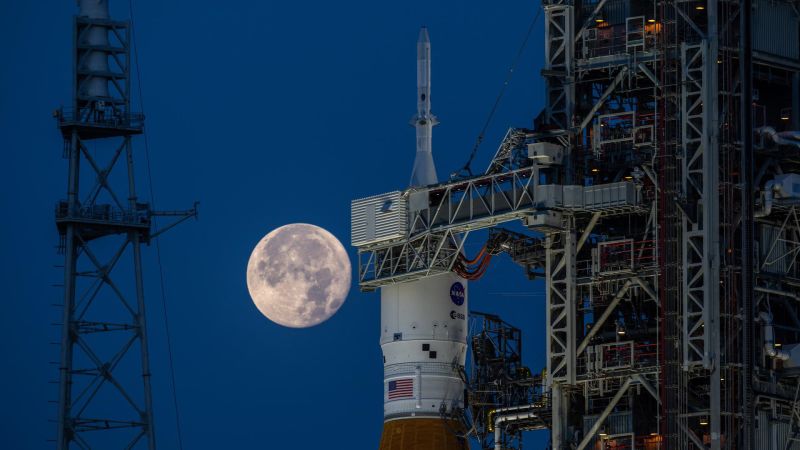
The mission will utilize NASA’s Space Launch System (SLS) rocket to propel the Orion spacecraft into space. The total journey to the moon is approximately 238,900 miles (385,400 kilometers), which astronauts will traverse over several days once in flight.
During their journey, the Artemis II crew will collect vital scientific data by monitoring their own physiological states and performing geological assessment of the moon from afar. This will include evaluating cognitive functions and physiological responses, which will significantly contribute to understanding the implications of long-duration space travel.
The Artemis II astronauts will be equipped with tools for assessing their health, and will even carry small chips containing human organ tissue to gather data on the effects of the deep-space environment on human physiology. Such research is seen as foundational for future endeavors in deep space.
Artemis II: A new generation
The Artemis II mission will utilize advanced technologies and systems that differ markedly from those employed during the Apollo era. The mission are aimed not only at reaching the moon but also at testing vital systems, such as Orion’s life support and heat shield technology, in space conditions.
The heat shield faced scrutiny during Artemis I due to unexpected wear during re-entry, prompting NASA to ensure its reliability for future missions. “We feel very confident that we are going to be able to bring our crew back safely for Artemis II,” said Lakiesha Hawkins, NASA’s acting deputy associate administrator.
The next giant leap
As Artemis II approaches, the astronauts will play an active role, not merely serving as passengers. They will conduct research on lunar geology and collect data that will inform future lunar missions, particularly in areas that have remained unexplored by humans.
This mission signals a multifaceted approach to space exploration, emphasizing collaboration and continuous learning as NASA works toward its long-term vision of sustainable human presence on the moon and beyond. It underscores the notion that space exploration is not merely an end goal, but rather a journey of discovery, with significant scientific and technological implications for humanity.
As preparations optimize for the anticipated February launch, the sentiment within NASA reflects both excitement and caution — a testament to the complex nature of venturing back to the moon.